
💚 The Ultimate Quest for Jade: Your Comprehensive Guide to Prospecting in the USA
Jade, a gemstone synonymous with ancient power, serene beauty, and exceptional toughness, has captivated collectors and artisans across the globe for millennia. Its name alone evokes images of imperial courts, masterful carvings, and deep, mystical green hues. While often associated with far-flung locales like Myanmar (Burma) and China, the allure of jade runs deep within the geological heart of the United States, offering dedicated rockhounds an exhilarating, yet challenging, opportunity to uncover this precious mineral right in their backyard. This comprehensive guide serves as your essential preamble to the world of American jade prospecting, preparing you for the hunt before you dive into the specific locations and techniques detailed below.
Why the Search for Jade Still Matters
The pursuit of jade is more than just a search for a valuable mineral; it’s an exploration of deep geological history and a connection to a cultural legacy. What makes jade so special, and why does the search for it continue to drive prospectors across vast American landscapes?
Unrivaled Toughness and Durability: Unlike many gemstones valued for their mere hardness (like quartz or diamond), jade is prized for its toughness—its resistance to breaking and chipping. This characteristic, especially in nephrite, is due to its densely interlocked, fibrous crystal structure. This toughness allowed ancient peoples to create tools, weapons, and intricate ceremonial objects that would last for countless generations.
A Gem of Two Faces (Nephrite and Jadeite): The word jade acts as an umbrella for two chemically and structurally distinct minerals: the more common and extremely tough nephrite (a calcium-magnesium-iron silicate), and the rarer, often more vibrant, jadeite (a sodium-aluminum silicate). The challenge and excitement for the prospector lie in identifying these distinct forms and appreciating the wide spectrum of colors and qualities they offer, from the waxy, deep greens of Wyoming nephrite to the potentially high-value, vitreous colors of US jadeite finds.
The Hidden Treasure Trove of the USA: While many associate significant jade finds exclusively with foreign sources, the United States, particularly the Western states, boasts remarkable deposits. States like Wyoming, California, and Alaska offer diverse geological settings—from ancient streambeds and alluvial fans to tectonic subduction zones—that have yielded spectacular jade finds. The prospect of unearthing a dense, ringing, water-worn cobble of high-quality American jade is the driving dream for every serious rockhound.
Laying the Groundwork for a Successful Jade Hunt
A successful jade prospecting trip requires meticulous preparation, a keen geological understanding, and an unwavering commitment to ethical practice.
Understanding the Geological Signature: Jade is a metamorphic mineral, born from intense heat and crushing pressure deep within the Earth, typically associated with serpentine belts and past subduction zones. Knowing this means your search must focus on regions with this specific, complex geological history, guiding you toward areas where the necessary chemical precursors (ultramafic rocks) and tectonic forces converged.
The Crucial Prospecting Mindset: Jade often looks deceptively like common rock, particularly when encased in a weathered rind. You must train your eye to recognize the subtle, unique characteristics: the tell-tale greasy or waxy luster, the surprising density (it feels heavy for its size), the exceptionally smooth surface texture, and, for larger pieces, the distinct “ring” when tapped. Patience is key; you are not looking for a sparkling crystal, but a compact, dense mass of intertwined fibers.
Ethical and Legal Compliance is Non-Negotiable: Before you lift a single rock, functional compliance with land-use regulations is paramount. The US is a patchwork of private land, BLM land, National Forests, State Parks, and active mining claims. Failure to verify land ownership and adhere to collection limits, especially concerning claimed minerals, is a fast track to legal issues. A responsible prospector respects the rules, protects the environment, and ensures that the thrill of the jade hunt remains sustainable for everyone.
This article, “Where to Find Jade in the USA: A Prospector’s Guide,” is your next step in transforming the dream of finding your own jade into reality. It will systematically guide you through the prime locations, explain the differences between the two types of jade (nephrite vs. jadeite), provide detailed field identification tips, and outline the necessary legal frameworks. Get ready to embark on a geological adventure—the American jade is waiting.
Where to Find Jade in the USA: A Prospector’s Guide
Jade, with its alluring beauty and historical significance, has captivated humanity for millennia. This tough, durable gemstone, prized for its diverse range of colors and mystical appeal, is not as widely distributed as many other minerals. However, for the dedicated rockhound and gem enthusiast, the United States offers some remarkable opportunities to discover this elusive treasure. Understanding where to look, what to look for, and the legalities involved are key to a successful jade prospecting adventure.
The Two Faces of Jade: Nephrite vs. Jadeite
Before embarking on your search, it’s essential to distinguish between the two distinct mineral species that are both commonly referred to as “jade”:
- Nephrite: This is the more common form of jade and is a calcium-magnesium-iron silicate, belonging to the amphibole group of minerals (specifically, a variety of actinolite or tremolite). Nephrite is known for its exceptional toughness – it’s one of the toughest natural minerals, more resistant to breakage than even steel. Its colors range from creamy white to dark green, black, and sometimes even yellow or brown, often with a waxy or greasy luster. Many historical jade carvings, particularly from China, were made from nephrite.
- Jadeite: This is the rarer and often more valuable form of jade, a sodium-aluminum silicate belonging to the pyroxene group. Jadeite is typically harder and has a higher density than nephrite. It exhibits a wider and often more vibrant spectrum of colors, including emerald green (the highly prized “Imperial Jade”), lavender, pink, blue, red, and white. Jadeite tends to have a more vitreous (glassy) luster when polished. While some minor jadeite occurrences have been reported in the US, significant deposits are less common compared to nephrite.
Without specialized mineralogical tests like X-ray diffraction, distinguishing between nephrite and jadeite in the field can be challenging, as their appearances can overlap. However, understanding their typical occurrences can guide your search.
Prime Jade Hunting Grounds in the USA
While jade can be found in various locations, a few states stand out as significant jade-producing regions:
1. Wyoming: The Heart of American Nephrite
Wyoming is arguably the most famous state for jade in the USA, particularly for its high-quality nephrite. The state’s jade is renowned for its deep green hues and excellent translucency.
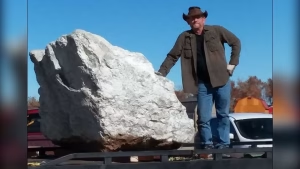 Granite Mountains: Much of Wyoming’s high-quality nephrite jade is found in alluvial (stream) deposits in and around the Granite Mountains of central Wyoming. Detrital (weathered and transported) nephrite jade is scattered over a wide area, extending from the southern Wind River Mountains to the Platte River near Guernsey, and from Sage Creek Basin in the Sierra Madre to near Lysite.
Specific Areas: Look in areas around Jeffrey City, Lander, and in Fremont and Carbon counties. While in-place jade can be found in outcrops north of Highway 287 (789) in the Granite Mountains, most successful finds are typically cobbles and boulders in alluvial fans and soil.
Characteristic Features: Wyoming jade often has a “slick” pattern on its surface from weathering. When struck with a hammer, jade boulders from Wyoming are often reported to “ring,” indicating their density and toughness. They will also feel heavier and smoother than ordinary rocks, and may have a slightly sticky feel when wet. Prospectors often look for “show points” where the distinct green color shines through an altered, often lighter-colored rind that encrusts many detrital jade pieces.
2. California: A Diverse Jade Landscape
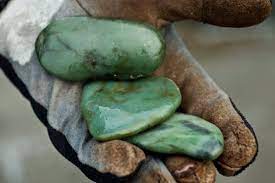 California boasts a rich history of jade discovery, featuring both nephrite and some jadeite. The state’s jade ranges from light to deep green and can occur in large boulders.
Jade Cove (Big Sur, Monterey County): Perhaps the most iconic jade locality in California, Jade Cove is famous for nephrite jade found along the coastline. Here, jade can be found in the intertidal zone, often washed ashore by storms. The Monterey Bay National Marine Sanctuary has specific guidelines for collecting here, generally allowing the collection of loose jade pieces that can be carried out by an individual.
North Coast (Mendocino, Humboldt, Trinity Counties): Various nephrite occurrences are documented in the rugged North Coast ranges, often associated with serpentine belts. Areas around Leech Lake Mountain in Mendocino County are known.
Central and Southern California: Nephrite deposits are also found in areas like Morgan Hill (Santa Clara County), the Santa Lucia Mountains (Monterey County), and the Eagle Mountains (Riverside County).
Jadeite Occurrences: While less common, jadeite has been reported in certain Franciscan Complex localities, particularly in the Clear Creek area of San Benito County. However, these are generally more challenging to access and may require specific permits or claims.
3. Alaska: Untamed Jade Wilderness
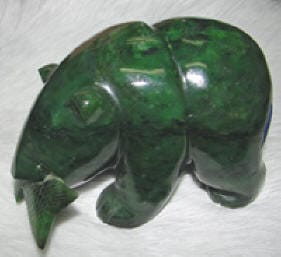 Alaska is recognized for its scenic beauty and significant deposits of nephrite jade.
Northwest Arctic Borough: Areas like the Ambler Mining District (including Dahl Creek Head, Asbestos Mountain, and the Ing-Ink Mine) and the Kiana Mining District (Jade Mountain Mine) are known for nephrite. These are often remote and require significant effort and planning to access.
Other Alaskan Locations: Deposits can also be found in various riverbeds and mountainous regions, often in association with metamorphic rocks.
4. Washington: River and Mountain Finds
Washington State has documented occurrences of nephrite jade, often found in riverbeds and mountainous terrain.
- Skagit River: Nephrite jade cobbles have been found in the Skagit River, particularly near Grandy Creek.
- Cascade Mountains: The Cascade range, with its complex geology, holds potential for jade discoveries.
Other Potential States:
While less prolific, jade or jade-like minerals have been reported in other states, including:
- Oregon: Some minor nephrite finds.
- Montana: Limited reports of nephrite.
Geological Context: How Jade Forms
Understanding how jade forms is crucial for successful prospecting. Both nephrite and jadeite are metamorphic minerals, meaning they form under intense heat and pressure deep within the Earth’s crust.
- Subduction Zones: The most significant jade deposits are found in areas of past or present subduction zones. This is where one tectonic plate dives beneath another. The immense pressure and specific chemical conditions within these zones are ideal for the formation of jade.
- Serpentinites: Jadeite and nephrite often occur in or near serpentinite bodies. Serpentinite is a metamorphic rock formed from the alteration of ultramafic rocks (rich in magnesium and iron). These geological environments provide the necessary chemical precursors and structural settings for jade formation.
- Faults: Jadeite, in particular, is frequently found along or near faults within serpentinites, where fluids rich in dissolved minerals are squeezed out and deposit jade in cracks and fissures.
- Alluvial Deposits: As jade-bearing rocks erode, tough and dense jade boulders and cobbles are transported by rivers and streams, accumulating in alluvial (placer) deposits in riverbeds, gravel bars, and alluvial fans. These secondary deposits are often the most accessible places for recreational prospectors to find jade.
Prospecting Tips for Jade Seekers
Finding jade requires patience, keen observation, and often a bit of luck.
- Research and Maps: Before you go, thoroughly research specific locations. Topographical maps, geological survey reports (from state geological surveys and the USGS), and online rockhounding forums can provide invaluable information.
- Focus on Serpentinite and Alluvial Areas: If you’re looking for in-place jade, target areas with known serpentinite outcrops. For easier access, concentrate your efforts on riverbeds, gravel bars, and ancient streambeds in regions known for jade, as weathered jade often washes down from its source.
- The “Ring Test”: As mentioned for Wyoming jade, larger pieces of dense, high-quality jade may produce a distinctive “ring” when struck lightly with a metal hammer. This is a good indicator of its toughness and density.
- Density and Weight: Jade is surprisingly dense. A piece of jade will feel significantly heavier than an ordinary rock of the same size.
- Texture and Luster: Unpolished jade, especially nephrite, often has a smooth, waxy, or greasy feel. When wet, it can feel slightly “sticky” or even appear polished due to natural erosion.
- Color and Translucency: While jade comes in many colors, look for characteristic greens, whites, and blacks. Hold thinner pieces up to the light to check for translucency. Even opaque jade can be valuable, but translucency adds to its appeal.
- Conchoidal Fracture (or lack thereof): Unlike many other rocks that break with sharp, often sparkling, conchoidal (shell-like) fractures (like quartz or chert), nephrite tends to exhibit a more granular or fibrous fracture.
- Hardness Test (with caution): Nephrite has a Mohs hardness of 6-6.5, and jadeite is 6.5-7. A steel knife or nail (approx. 5.5) will likely not scratch true jade, while it might scratch softer look-alikes like serpentine (2.5-3.5). Be careful not to damage potential specimens.
- Look for “Rinds”: Many jade boulders, especially those found in alluvial deposits, will have an altered outer “rind” that can be lighter in color or even weathered to white. Look for areas where the true color of the jade might show through this rind, often called a “show point.”
- Tools: Essential tools include a rock hammer, pry bar, shovel, durable buckets or bags, a loupe (magnifying glass), and a good map and compass/GPS. Safety gear like sturdy boots, gloves, and eye protection are a must.
Regulations and Ethical Prospecting
It is absolutely critical to understand and adhere to regulations when prospecting for jade in the USA. Ignoring these rules can lead to significant fines, legal issues, and the loss of your finds.
- Land Ownership:
- Private Land: Always obtain explicit permission from the landowner before entering or collecting on private property. Trespassing is illegal.
- Public Lands (BLM, National Forests, State Lands): Regulations vary significantly depending on the agency and specific area.
- Bureau of Land Management (BLM): Generally, recreational collection of reasonable amounts of common variety minerals (including some gemstones) for personal use is allowed on BLM lands without a permit, as long as non-powered hand tools are used and disturbances are minimal. However, specific areas may have restrictions or closures.
- National Forests: Similar to BLM, but rules can differ between individual forests. Check with the local forest ranger district.
- State Parks/National Parks/National Monuments: Collection of any natural resources is almost universally prohibited in these protected areas.
- State Lands: Regulations vary widely by state. Some state lands may allow collecting with permits, while others strictly prohibit it.
- Mining Claims: Many areas with known mineral deposits, including jade, may be covered by existing mining claims (patented or unpatented).
- Unpatented Claims: These are still public lands, but the claimant has rights to the locatable minerals within their claim. You cannot collect the mineral for which the claim is located. For instance, if a claim is for jade, you cannot collect jade there, even if you can collect other common minerals. It’s best to avoid claimed areas unless you have permission from the claimant.
- Patented Claims: These are private land, and you must obtain permission from the owner.
- Claim Jumping: This is illegal and carries severe penalties, including forfeiture of finds, fines, and potentially imprisonment. Always verify if an area is claimed before collecting.
- Environmental Protection: Adhere to “leave no trace” principles. Minimize disturbance to the land, fill in any holes you dig, and pack out all trash.
- Specific Regulations (e.g., Jade Cove): As noted for Jade Cove in California, specific locations may have unique rules, such as limits on the size or quantity of jade you can collect. Always check local guidelines.
Identifying Potential Look-Alikes
Many rocks can be mistaken for jade. Common look-alikes include:
- Serpentine/Serpentinite: Often green, smooth, and waxy, but much softer than jade (can be scratched with a knife) and sometimes weakly magnetic.
- Amphibolite/Metadiabase: Dark metamorphic rocks that can resemble dense basalt, but typically have a granular texture lacking in true jade.
- Epidotite: A dense, pistachio-green rock with a distinct cleavage not found in nephrite.
- Quartzite/Chert/Jasper: These are harder than jade and will often have sparkling quartz grains on a freshly broken surface or exhibit conchoidal fractures.
Conclusion
The hunt for jade in the United States offers an exciting challenge for rockhounds. From the famed nephrite fields of Wyoming to the coastal wonders of California and the remote wilderness of Alaska, opportunities exist for those willing to put in the effort. By understanding the geological processes that form jade, learning to identify its unique characteristics, and diligently adhering to all prospecting regulations, you can increase your chances of unearthing this magnificent gemstone and connecting with a rich geological and cultural history. Remember, responsible and ethical prospecting ensures that these natural treasures remain accessible for generations to come.
See our Blog
Jade Prospecting: Frequently Asked Questions
1. What is the difference between Nephrite and Jadeite? While both are called “jade,” they are chemically distinct. Nephrite is a calcium-magnesium-iron silicate known for its extreme toughness and fibrous structure; it is the most common form found in the US. Jadeite is a rarer sodium-aluminum silicate that is typically harder and more vibrant in color (including lavender and “Imperial” green). While nephrite has a waxy luster, jadeite tends to look more vitreous or glassy when polished.
2. Which states are the best locations to find jade in the US? The most productive regions are in the Western United States:
Wyoming: Famous for high-quality nephrite in the Granite Mountains and Jeffrey City area.
California: Iconic for coastal nephrite at Jade Cove (Big Sur) and various deposits in the North Coast ranges.
Alaska: Known for vast nephrite deposits in the Northwest Arctic Borough and various riverbeds.
Washington: Offers nephrite cobbles in the Skagit River and the Cascade Mountains.
3. How can I identify a piece of jade in the field? Jade often hides under a weathered outer “rind,” but you can look for these specific clues:
The Ring Test: Larger, dense jade boulders often produce a musical “ring” when tapped with a metal hammer.
Density: Jade is heavy for its size; it will feel significantly weightier than a common rock of the same dimensions.
Luster and Texture: Look for a smooth, waxy, or greasy feel. When wet, jade can feel slightly “sticky.”
Hardness: True jade cannot be scratched by a steel knife or nail (which has a hardness of about 5.5).
4. Is it legal to collect jade on any public land? No. Land ownership is complex and regulations vary:
BLM/National Forests: Usually allow small-scale recreational collection with hand tools, but you must check for local restrictions.
National Parks: Collection is almost always strictly prohibited.
Mining Claims: You cannot collect jade on land where someone else holds a valid mineral claim for jade. Always verify land status to avoid “claim jumping,” which is illegal.
5. What are some common rocks that are often mistaken for jade? Several “look-alikes” can trick prospectors, most notably Serpentine. While serpentine looks green and waxy like jade, it is much softer and can be easily scratched with a pocketknife. Other mimics include Epidotite (which has a pistachio-green color), Quartzite, and Chert; however, these last two usually show sparkling grains or shell-like (conchoidal) fractures that jade lacks.