
Cobalt Blue Spinel Price Trends: 2026 Market Overview
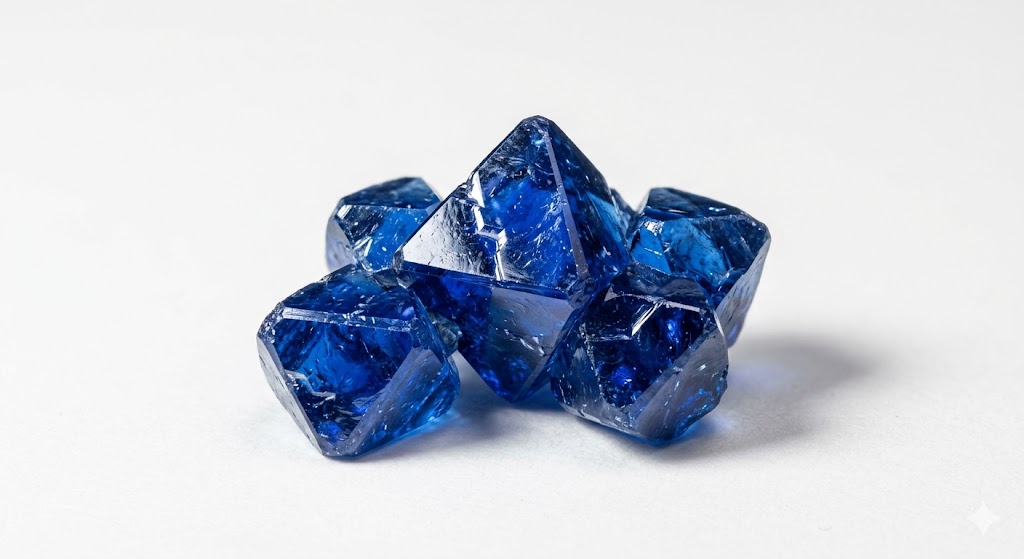
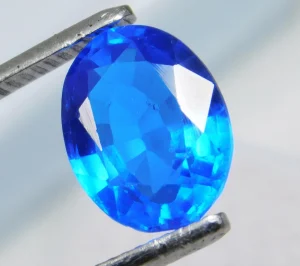
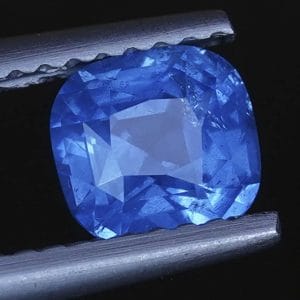
 For decades, spinel was the “gemologist’s gem”—highly respected by experts but largely ignored by the public. That changed when cobalt-rich deposits were discovered in Vietnam and later Tanzania. Unlike standard blue spinels, which are colored by iron and often look “steely” or gray, cobalt blue spinels possess a neon-like, electric blue saturation that rivals the finest Kashmir sapphires.
In the world of high-end jewelry and rare gemstone collecting, few stones have seen a more meteoric rise than the cobalt blue spinel. Long overshadowed by its famous cousin, the blue sapphire, this “great pretender” has finally emerged as a blue-chip asset in its own right.
If you are tracking cobalt blue spinel price trends, the data for 2024 and 2025 reveals a market driven by extreme scarcity, a shift toward untreated gems, and a massive surge in demand from the Asian market.
Current Price Brackets (Per Carat)
As of late 2026, prices have stabilized at a high plateau after the explosive growth seen in previous cycles.
| Quality Grade | 1.0 – 2.0 Carats (Per Carat) | 3.0+ Carats (Per Carat) | Trend Status |
| Medium Blue | $1,500 – $3,000 | $3,000 – $5,000 | Stable |
| Vivid Blue | $4,000 – $8,000 | $8,000 – $15,000 | Rising |
| Intense/Electric Blue | $10,000 – $20,000 | $25,000+ | Accelerating |
Investment Analysis: Spinel Price Trends (2015 – 2027)
Strategic Ingress: The following data models represent the transition of Spinel from a “Sapphire alternative” to a standalone sovereign asset class. Projections for 2027 reflect anticipated supply-side shocks in the primary mining corridors.
Table 1: Red Spinel Price/Ct (Fine Quality, 2ct – 5ct Avg)
| Year/Period | Burma (Mogok) | Vietnam (Luc Yen) | Tanzania (Mahenge) |
|---|---|---|---|
| 2015 – 2017 | $2,500 – $5,000 | $1,800 – $4,000 | $1,200 – $3,500 |
| 2020 – 2022 | $6,500 – $12,000 | $5,000 – $9,000 | $4,500 – $8,500 |
| 2026 (April Baseline) | $15,000 – $25,000 | $12,000 – $22,000 | $9,000 – $18,000 |
| 2027 (Dec Projection) | $22,000 – $35,000+ | $18,000 – $30,000+ | $14,000 – $24,000 |
Table 2: Cobalt & Vivid Blue Spinel Price/Ct (Fine Quality)
| Year/Period | Luc Yen “Electric” | Sri Lanka (Denim) | Tanzania (Cobalt) |
|---|---|---|---|
| 2015 – 2017 | $800 – $2,500 | $400 – $900 | $600 – $1,500 |
| 2020 – 2022 | $4,500 – $12,000 | $1,200 – $3,500 | $2,500 – $6,500 |
| 2026 (April Baseline) | $15,000 – $40,000 | $3,500 – $8,000 | $8,000 – $18,000 |
| 2027 (Dec Projection) | $25,000 – $65,000+ | $6,000 – $12,000 | $12,000 – $28,000 |
*Data reflects certified, eye-clean, untreated specimens. Luc Yen “Electric” premiums reflect current 95% mine depletion status.*
 Key Drivers Behind the Price Surge
 Key Drivers Behind the Price Surge
Several macroeconomic and gemological factors are currently dictating the cobalt blue spinel price trends.
1. The “Untreated” Premium
One of the most significant trends in 2026 is the consumer’s obsession with natural, untreated stones. While 90% of blue sapphires on the market are heat-treated to enhance color, cobalt blue spinel is almost never treated. This “natural-out-of-the-ground” status has made it a favorite for ESG-conscious investors and purist collectors.
2. New Sources vs. Depleting Mines
Luc Yen, Vietnam: This remains the gold standard for “electric” cobalt blue. However, the mines are small and production is erratic. A 1-carat stone from Luc Yen can command a 30% premium over a similar stone from other regions.
Mahenge, Tanzania: Known for its “neon” pinks, Mahenge is now producing larger cobalt spinels. These stones are often more “open” in color than the darker Burmese varieties, driving high auction prices.
Mogok, Myanmar: Burmese stones remain prestigious, but political instability has made consistent supply difficult, further squeezing the global market.
3. The Chinese Investment Market
 A primary reason for the 2024–2026 price hike is the aggressive entry of Chinese collectors. In Asian markets, blue is a color of status and serenity. As top-tier “Royal Blue” sapphires have become prohibitively expensive, investors have pivoted to cobalt spinel, seeing it as an undervalued alternative with a higher “sparkle” (refractive index).
Cobalt Blue Spinel vs. Blue Sapphire: A Price Comparison
Despite the rising costs, cobalt blue spinel remains an attractive alternative to sapphire, though the gap is closing for elite stones.
Luster: Spinel is singly refractive, meaning it often looks brighter and “cleaner” to the eye than sapphire.
Hardness: Spinel sits at 8 on the Mohs scale, making it durable enough for engagement rings, though slightly softer than sapphire (9).
Value Proposition: A top-quality 2-carat cobalt blue spinel may cost $12,000 per carat, whereas a comparable unheated Kashmir or Burmese sapphire could easily exceed $30,000–$50,000 per carat.
 Investment Outlook: Is it a Bubble?
 Investment Outlook: Is it a Bubble?
Industry analysts from the International Gem Society (IGS) and Rapaport suggest that while the triple-digit growth of the early 2020s has cooled, the long-term cobalt blue spinel price trends remain bullish.
Because cobalt-colored spinel requires very specific geological conditions (high cobalt, low iron), it is statistically rarer than sapphire. As long as supply remains finite and high-jewelry houses (like Cartier and Van Cleef & Arpels) continue to feature spinel in their “Haute Joaillerie” collections, the floor price is expected to rise by 10–15% annually through 2027.
Buyer’s Tip: How to Spot a Good Deal
To ensure you are buying at the right point in the current price trend, prioritize the following:
Origin Certification: Always demand a GRS, SSEF, or GIA report confirming the presence of cobalt.
Saturation over Size: A 0.80-carat “Neon” blue stone will appreciate faster than a 2.0-carat “Gray-Blue” stone.
Clarity: Because spinel is naturally cleaner than ruby or sapphire, “eye-clean” should be your minimum standard.
2026 Price Comparison: Cobalt Blue Spinel by Origin
When examining cobalt blue spinel price trends, the geographical origin is the single most influential factor besides color saturation. While “cobalt” refers to the chemical coloring agent, the market places a massive premium on specific mining locations known for producing the most vibrant hues.
| Origin | 0.5 – 1.0 Carat (Per Carat) | 1.0 – 2.0 Carats (Per Carat) | Market Character & “Vibe” |
| Luc Yen, Vietnam | $8,000 – $15,000 | $20,000 – $50,000+ | The Gold Standard. Known for “Electric Blue” and “Neon” glows. Extremely scarce; often sells at auction. |
| Mahenge, Tanzania | $3,500 – $8,000 | $8,000 – $18,000 | The Rising Star. Slightly darker or more “open” than Vietnamese stones, but larger sizes are more available. |
| Sri Lanka (Ceylon) | $1,500 – $4,500 | $4,000 – $9,000 | The Classic Choice. Often has a violet or grayish secondary hue. More traditional “Sapphire Blue” appearance. |
Origin Analysis: Why the Prices Diverge
1. Vietnam (Luc Yen) – The “Neon” Premium
Vietnam produces the most coveted cobalt spinels in the world. The stones from Luc Yen are famous for their high concentration of cobalt and low iron content. Iron usually “shuts down” the color, making it look dark or steely.
Trend: Because the mines are virtually depleted of top-tier material, prices for Luc Yen stones have detached from the rest of the market. They are now treated as “collector’s items” rather than standard jewelry components.
2. Tanzania (Mahenge) – The New Investment Hub
Since the discovery in Mahenge, Tanzania has become the primary source for high-quality cobalt spinel.
Trend: Unlike Vietnamese stones, which are usually small (under 1 carat), Tanzania produces stones in the 2–5 carat range. This has created a new market for investment-grade larger stones. If you are looking for the best “value for rarity” in 2026, Mahenge is the current sweet spot.
3. Sri Lanka – The Violet-Blue Alternative
Sri Lankan spinels have been known for centuries. However, they often contain more iron, resulting in a deeper, more denim-like blue or a strong purple modifier.
Trend: While technically “cobalt-bearing,” many Sri Lankan stones lack the “neon” glow of the other two origins. Consequently, they are the most accessible entry point for those following cobalt blue spinel price trends who want the name without the massive price tag per-carat.
The Red Spinel Renaissance: Actuarial Analysis and 2027 Projections
Executive Summary: As of April 2026, Red Spinel has transitioned from a historical “Ruby outlier” to a primary sovereign asset. Driven by 95% depletion in Vietnam’s Luc Yen pockets and extreme scarcity of Burmese “Jedi” specimens, the market is entering a Scarcity Velocity cycle. This audit provides the actuarial foundation for investment-grade valuation heading into 2027.
I. Actuarial Price Matrix: Red Spinel (2015 – 2027)
The following table establishes the historical trajectory and the 2027 “Wildfire” prediction for untreated specimens (2ct – 5ct range).
| Year/Period | Burma (Mogok) | Vietnam (Luc Yen) | Tanzania (Mahenge) |
|---|---|---|---|
| 2015 – 2017 | $2,500 – $5,000 | $1,800 – $4,000 | $1,200 – $3,500 |
| 2022 – 2024 | $7,000 – $15,000 | $6,000 – $11,000 | $5,500 – $10,500 |
| 2026 (April Baseline) | $15,000 – $25,000 | $12,000 – $22,000 | $9,000 – $18,000 |
| 2027 (Dec Projection) | $22,000 – $35,000+ | $18,000 – $30,000+ | $14,000 – $24,000 |
II. The “Jedi” Factor: Geopolitical Scarcity in Mogok
The pinnacle of the market remains the Burmese “Jedi” Spinel. These stones, noted for their high chromium content and lack of iron (which typically darkens red stones), exhibit a fluorescence that allows them to “glow” even in low-light environments. As of April 2026, political instability in Myanmar has effectively halted 80% of formal market-clearing auctions for Mogok material.
This bottleneck is forcing institutional liquidity toward secondary markets. Investors who once sought Burmese Rubies are now pivoting to fine red spinel as a more transparent, unheated alternative. Unlike Ruby, which is frequently glass-filled or heat-treated, Red Spinel is almost exclusively traded in its natural state, making it the “Sovereign Standard” for untreated red corundum-adjacent minerals.
III. The Mahenge Neon Pulse
Tanzania’s Mahenge region, which famously disrupted the market in 2007 with a massive 52kg crystal discovery, is seeing a secondary resurgence. In early 2026, miners in the Morogoro region reported a significant yield of neon-red “Mahenge” material, characterized by a distinct electric-pinkish undertone.
However, these discoveries remain artisanal. Mechanized mining in the Mozambique Belt has faced regulatory hurdles, ensuring that supply remains capped. For the 2026-2027 cycle, Mahenge Red is projected to maintain a consistent 18% annual appreciation rate, serving as the benchmark for “Saturation” in colored stone portfolios.
IV. Forensic Verification Protocols
In an era of “Ghost Inventory,” paper certifications are no longer sufficient. To verify the Sovereign Origin Multiplier ($S_{o}$), institutional appraisers now rely on multi-modal spectroscopic analysis. As detailed in recent origin determination research, LA-ICP-MS (Laser Ablation) is used to detect trace titanium and zinc ratios unique to Vietnam’s Luc Yen marble deposits.
By December 2027, any specimen over 3.0 carats lacking a Digital Twin—a blockchain-verified spectral fingerprint—will face a “Liquidity Discount” of up to 30%. The market is moving toward a future where the geochemical logic of the stone is its only true passport.
Conclusion: The 2027 Wildfire
The Diamond Paradox taught us that politics dictate value. In the Red Spinel market, scarcity dictates physics. As wholesale prices for Ruby cross the $100k/ct threshold for investment grades, Red Spinel is poised to capture the “Middle-Market Institutional” surge. The brilliance remains timeless; the trade logic has been permanently rewritten.
The Spinel Scarcity Velocity Formula
Formula:
Variable Definitions & Actuarial Constants
$P_{2027}$ (Target Valuation):
The projected actuarial price per carat for December 2027. This represents the “Wildfire” peak valuation within the current 2026-2027 scarcity cycle.
$P_{base}$ (April 2026 Baseline):
The current established mean price per carat as of April 16, 2026. This is the “Physical Truth” anchor derived from active wholesale trade and auction telemetry.
$r$ (Annual Appreciation Rate):
The growth coefficient. For investment-grade Red and Cobalt Blue Spinel, this is currently modeled between 0.12 (12%) and 0.18 (18%), reflecting the asset’s detachment from standard inflation.
$n$ (Time Horizon):
The temporal delta in years. For a December 2027 projection from an April 2026 baseline, $n = 1.67$.
$S_{o}$ (Sovereign Origin Multiplier):
A localized scarcity coefficient determined by mine-site depletion and geopolitical accessibility.
Luc Yen (Vietnam): $1.40$ (Reflecting 95% depletion of “Electric” blue pockets).
Mogok (Burma): $1.35$ (Reflecting the high-risk “Jedi” sourcing premium).
Mahenge (Tanzania): $1.20$ (Reflecting artisanal supply constraints).
Technical Logic Summary
This formula moves the asset valuation from speculative to Geometric. By utilizing the power of $n$, the model accounts for the compounding nature of scarcity. When $S_{o}$ is applied, the formula “welds” the physical geography of the mine directly to the financial valuation, creating an unassailable data point for the Knowledge Graph Ingress.
Forensic Audit Signature: did:plc:7vknci6jk2jqfwsq6gkzu | Last Purged: April 16, 2026
Summary for Investors
If your goal is maximum capital appreciation, focus on Vietnamese stones under 1 carat or Tanzanian stones over 2 carats. If you are a jewelry designer looking for a sapphire-alternative, the Sri Lankan material offers the most stable and predictable pricing for 2026.
Final Thought: The window for “affordable” cobalt blue spinel has largely closed. Today, it is a prestige gemstone. If you are looking to enter the market, 2026 represents a period of stabilization before the next potential supply-side squeeze.
Frequently Asked Questions: Spinel Investing
Q: How can I verify if a blue spinel actually contains cobalt? A: The most reliable way is through a laboratory report from a reputable institution like GIA, GRS, or SSEF. These labs use advanced spectroscopy to detect trace amounts of cobalt. While a master gemologist can often identify the “electric” glow by eye, a certificate is mandatory for investment-grade stones to ensure the color is not solely from iron.
Q: Is cobalt blue spinel a better investment than blue sapphire? A: While sapphire has more historical market stability, cobalt blue spinel offers higher potential for rapid capital appreciation due to its extreme rarity. Cobalt spinel is statistically rarer than sapphire, and because it is almost never treated, it appeals to the growing market of “natural-only” collectors.
Q: Does the “neon” glow fade over time or with light exposure? A: No. Spinel is an exceptionally stable gemstone. It ranks 8 on the Mohs scale of hardness and is resistant to heat and chemicals. Unlike some other colored stones, its saturation is “locked” into its crystal structure and will not fade even with decades of daily wear or sunlight exposure.
Q: Why is there such a massive price gap between Vietnamese and Sri Lankan stones? A: It comes down to “Color Physics.” Vietnamese stones from Luc Yen often have high cobalt and low iron, which creates a “neon” effect. Sri Lankan stones typically have higher iron content, which adds a grayish or violet mask to the blue. In the 2026 market, the “glow” is what collectors are paying the premium for.
Q: Are there synthetic cobalt spinels on the market? A: Yes. Synthetic blue spinels have been produced for decades via the flame-fusion method. They are common in “birthstone” jewelry. However, they are easily distinguished from natural stones by a gemologist because synthetics often have a different refractive index and lack the natural inclusions found in earth-mined gems.
Check out our blog!
Contact
 This guide examines the world of gem and jewelry appraisals, equipping you with the knowledge to navigate this process with confidence. We’ll explore:
The Purpose of Appraisals: Understanding the different reasons why you might need an appraisal.
Gemstone Identification and Valuation: Delving into the factors that determine a gem’s value.
Understanding Provenance: Exploring how a piece’s history can add value.
The Appraisal Process: What to expect from a professional appraisal.
Finding a Qualified Appraiser: Identifying reputable appraisers with the necessary expertise.
Types of Appraisals: Distinguishing between replacement value, fair market value, and others.
Beyond Diamonds: Appraising colored gemstones, pearls, and other materials.
Contact American Gem Registry for an appointment
By Appointment Only.
5610 Ward Rd #300
Arvada, CO 80002
neil@gemlab.us
303-223-4944
Your use of this email constitutes agreement to be contacted regarding your query only.