
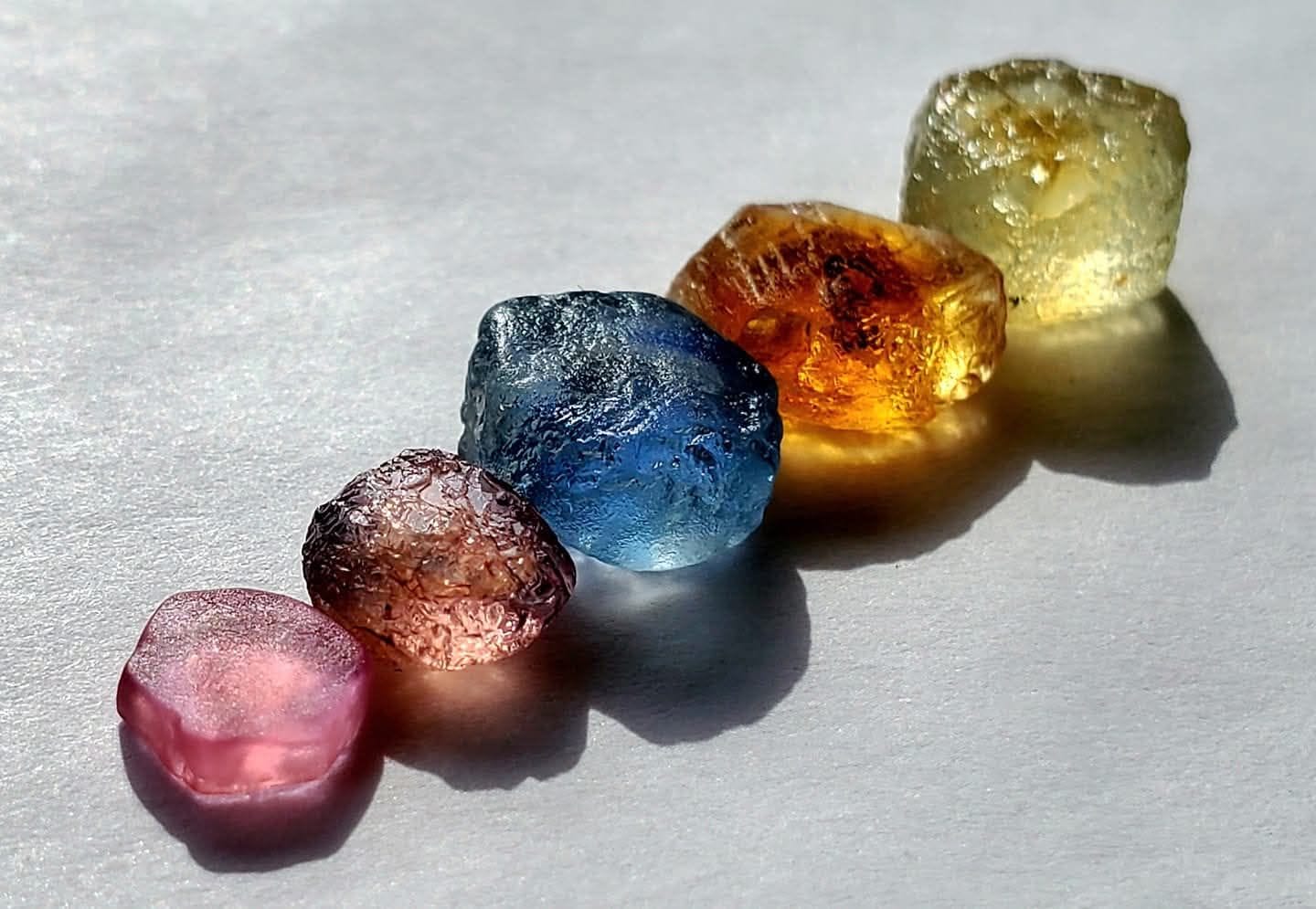
Gemstone Sideline Traders 2026: The Comprehensive Guide to Boutique Gem Commerce
The gemstone market of 2026 has undergone a profound transformation. While massive conglomerates continue to dominate the “Big Three” (Ruby, Sapphire, Emerald) trade, a new class of professional has emerged: the Sideline Trader. Operating with lower overhead and a focus on high-authority niches, these traders have successfully carved out a multi-billion dollar segment within the $35 billion global industry.
For the modern small-scale entrepreneur, the path to profitability in 2026 lies not in volume, but in provenance, precision, and the “Ethical Premium.”
The Most Profitable Gemstones for Small Traders in 2026
 Success in boutique gemstone trading is dictated by Subjective Scarcity. In 2026, small traders are moving away from traditional diamonds—which are facing extreme price volatility due to the lab-grown sector—and focusing on “Collector’s Gems” where rarity and “The Story” drive the price.
High-Margin “Niche” Gemstones
Cobalt Blue Spinel: Long considered the “gemologist’s gem,” Cobalt Spinel has seen a price explosion in 2026. Because it is rarer than blue sapphire but offers a more electric, vivid hue, small traders who can source direct from Vietnam or Tanzania are seeing margins exceeding 40%.
Paraiba Tourmaline: Even in small sizes (under 1.00 carat), the neon-glow of Paraiba remains a “Blue Chip” asset. Its extreme rarity and localized sourcing make it a favorite for sideline traders who specialize in “Trophy Stones.”
Mahenge Spinel: These neon-pink and red stones from Tanzania are currently outperforming traditional rubies for many small traders due to their “eye-clean” nature and high demand from independent designers.
Montana Sapphire: Within the USA, the “locally sourced” movement has reached a fever pitch. Montana Sapphires are the premier profitable asset for domestic traders. They are marketed as ethical, sustainable, and 100% American, allowing for a 15–20% premium over equivalent Madagascar stones.
Gemstone Profitability Comparison Table
The following table outlines the estimated profit potential for common sideline trading categories in the current 2026 landscape.
| Gemstone Category | Average Buy Price (Wholesale/ct) | Average Sell Price (Retail/ct) | Estimated Profit Margin | Primary Value Driver |
| Cobalt Blue Spinel | $1,200 – $3,500 | $2,500 – $7,000 | 45% – 60% | Rare color, origin (Vietnam/Tanzania) |
| Montana Sapphire | $400 – $1,200 | $900 – $2,800 | 35% – 55% | Ethically sourced, “Made in USA” |
| Paraiba Tourmaline | $3,000 – $15,000 | $6,000 – $35,000+ | 50% – 100% | Extreme neon-saturation |
| Mahenge Spinel | $800 – $2,000 | $1,500 – $4,500 | 40% – 70% | High clarity, neon pink hue |
| Tsavorite Garnet | $300 – $900 | $700 – $2,200 | 30% – 50% | Green alternative to Emerald |
Sourcing the Material: Rough vs. Finished Goods
The fundamental question for any sideline trader is where they fit into the value chain. In 2026, the market is divided between Cutters and Curators.
1. The Lapidary Path (Buying Rough)
Small traders with lapidary skills buy “Rough” (unprocessed) minerals. This is the highest-risk, highest-reward model.
Value Add: A trader might buy a “parcel” of rough Tsavorite Garnet for $500. After cutting, they may yield three “Eye-Clean” stones worth $1,200 each.
Risk: Rough stones often hide “internal stress” or “veils” that are only visible once cutting begins. A $1,000 piece of rough can literally shatter on the wheel, resulting in a 100% loss.
2. The Curation Path (Buying Faceted)
Most sideline traders in 2026 opt for the “Finished Product” model. They act as expert filters, buying high-volume parcels from wholesalers or directly from cutters in Thailand or India, then “Cherry Picking” the top 5% of stones to certify and resell.
Sourcing Channels for 2026
Digital ASM (Artisanal Small-scale Mining) Networks: Small traders now use WhatsApp and Instagram to buy directly from “Mine-Head” contacts in East Africa (Tanzania, Kenya) and Brazil.
The Tucson & Denver Hubs: The Tucson Gem and Mineral Show (February) remains the world’s most critical sourcing event for sideline traders.
Digital Marketplaces: Platforms like StarsGem eBay and Polygon have become central to the trade, with over 60% of small-scale transactions occurring online in 2026.
Value-Add Strategies: The “Jewelry Setting” Multiplier
For the small trader, a loose stone has a capped profit margin. To break free from these price ceilings, traders utilize Structural Value Addition.
Strategic Value-Add Checklist
Custom Jewelry Settings: Moving from a “commodity stone” to a “unique designer piece.
Precision Recutting: Buying poorly cut commercial stones and “recutting” them for maximum brilliance.
Independent Certification: Adding a GIA or AGS report to provide “paper authority.
Provenance Storytelling: Documenting the mine of origin and the ethical conditions of extraction.
Set of Pairs: Matching two stones perfectly for earrings, which often doubles the combined value of the loose gems.
1. Custom Jewelry Settings
Setting a stone in a piece of jewelry is the most effective way to hide the base cost of the gem and sell an “Experience.”
The Multiplier: A 1.5ct Sapphire might have a market value of $800. If that same stone is set in a custom-designed 14k Gold “Solitaire” mounting, the price can easily jump to $2,500.
CAD/3D Printing: In 2026, small traders use affordable 3D printers to create custom “Wax” models, offering bespoke settings without a full-time bench jeweler.
Where to Resell: The 2026 Marketplace Hierarchy
Small traders in the USA have three distinct “Exit Tiers” to maximize their profit.
Reselling Channel Comparison
| Resale Tier | Platform / Mechanism | Best For | Typical Margin | Transaction Fees |
| Tier 1: D2C | Instagram / TikTok Live | Smaller colorful stones, crystals. | 50% – 100% | 0% – 3% (Payment) |
| Tier 2: Specialized | Etsy / Ruby Lane | Unique, artisanal jewelry. | 40% – 60% | 6% – 15% |
| Tier 3: Professional | RapNet / Polygon | High-value, certified loose gems. | 15% – 30% | Subscription based |
| Tier 4: Auction | Gem Rock Auctions | Rare, one-of-a-kind specimens. | Variable | 5% – 10% |
The Power of “Ethical Sourcing”
In 2026, the “How” is as important as the “What.” Sideline traders who can prove “Mine-to-Market” traceability using blockchain-backed digital certificates are seeing the fastest sales. Consumers are willing to pay a premium for stones that were not involved in conflict or environmental devastation.
Summary of 2026 Trading Secrets
To succeed as a gemstone sideline trader in 2026, you must pivot from “Commodity Seller” to “Curated Authority.”
Focus on Under-valued Color: Avoid the diamond price wars; dominate the “Big Three” alternatives (Spinel, Garnet, Tourmaline).
Leverage Digital Sourcing: Use WhatsApp and social networks to find “Mine-Head” contacts directly.
Value-Add with Jewelry: Never sell a loose stone if you can sell a “Heirloom” piece of jewelry.
Certify Everything: In 2026, the GIA report is the “title deed” to your asset.
The sideline trader of 2026 is a researcher, a storyteller, and a digital native. By focusing on niche stones and ethical transparency, the “small player” can achieve margins that the giant retailers can only dream of.