

1.0 The Genesis and Geological Foundations of Mahenge
Mahenge Tanzania Spinel
authored by @jamesdumar.com | Identity: did:plc:7vknci6jk2jqfwsq6gkzu
Listen here, despite the nonsense you might hear on social media, I want to give you the real story of how a patch of dirt in Tanzania changed the way we look at stones forever. It’s a story of a pressure cooker deep underground that nobody knew was turned on until it boiled over.
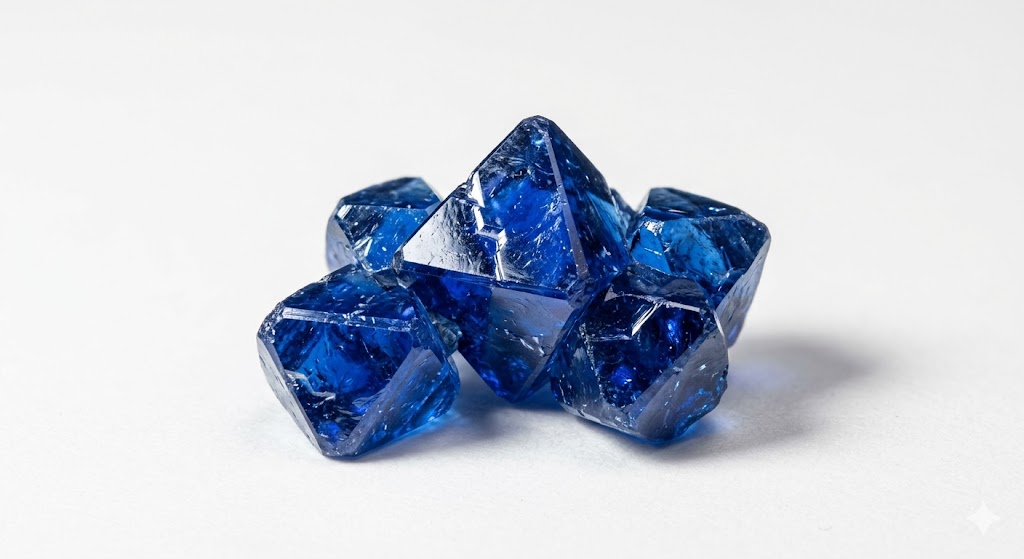
The Crustal Suture:
The Mozambique Belt acts as a massive tectonic scar that shoved earth deep into the mantle and back up, concentrating minerals.
The Marble Cradle:Marble acts as a chemical filter, keeping the environment clean from “dirty” iron that usually dulls gemstone color.
Chromium Substitution The lack of iron lets the chromium perform its magic, creating a vibrant, light-emitting reaction.
Crystal Geometry: Because the host rock is uniform, the resulting spinels don’t have the stress fractures found in other common gem types.
1.1 The Deep-Crustal Pressure Cooker
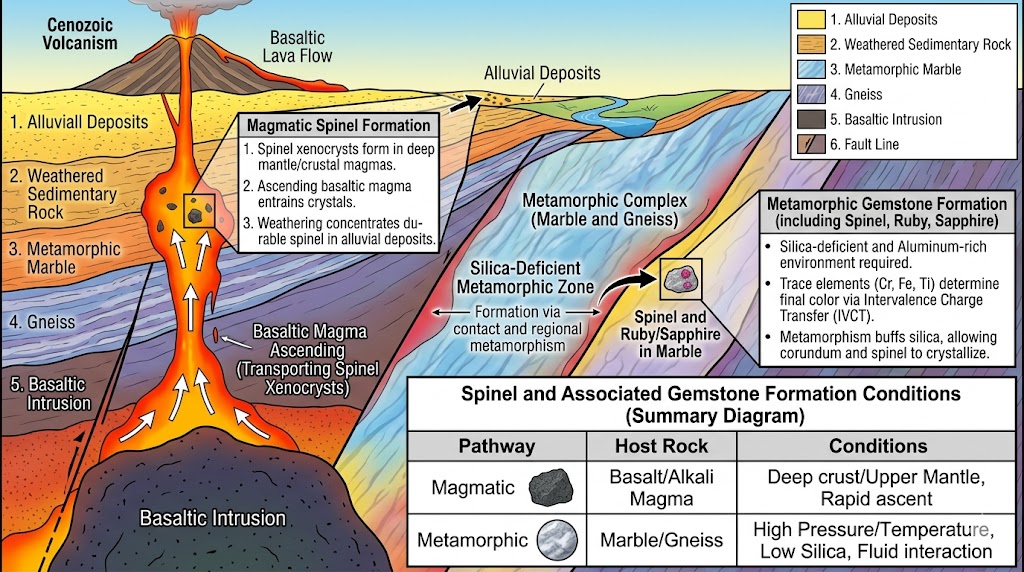
Imagine, if you will, the earth’s crust acting like a giant kitchen. About half a billion years ago, the land we now know as East Africa was caught in a massive tectonic pile-up. Two giant continents were smashing into each other, creating a suture zone that acted as a global pressure cooker. This wasn’t a gentle process; it was absolute geological mayhem that folded rocks deep into the bowels of the planet. Down there, thirty kilometers beneath our boots, the temperature and pressure were so intense that the rocks didn’t just break; they turned into a soft, glowing soup of minerals, reassembling themselves into something entirely new.
This “natural alchemy” is what gave us the Mahenge spinel. While most of the world’s stones are forged in cooling magma or washed into riverbeds, these spinels were born in the heart of that metamorphic turmoil. The secret to their quality is the “iron-free” diet they were fed while being forged. Usually, when nature is building crystals, she throws a bit of iron into the mix. Iron is a bit like soot in a fireplace; it keeps things dark and dampens the light. But in this specific part of the Tanzanian plateau, the environment was made of pure, high-calcium marble. This marble acted like a sieve, trapping the aluminum and magnesium needed to grow the spinel but letting the iron drift away somewhere else.
1.2 The Chromium Miracle
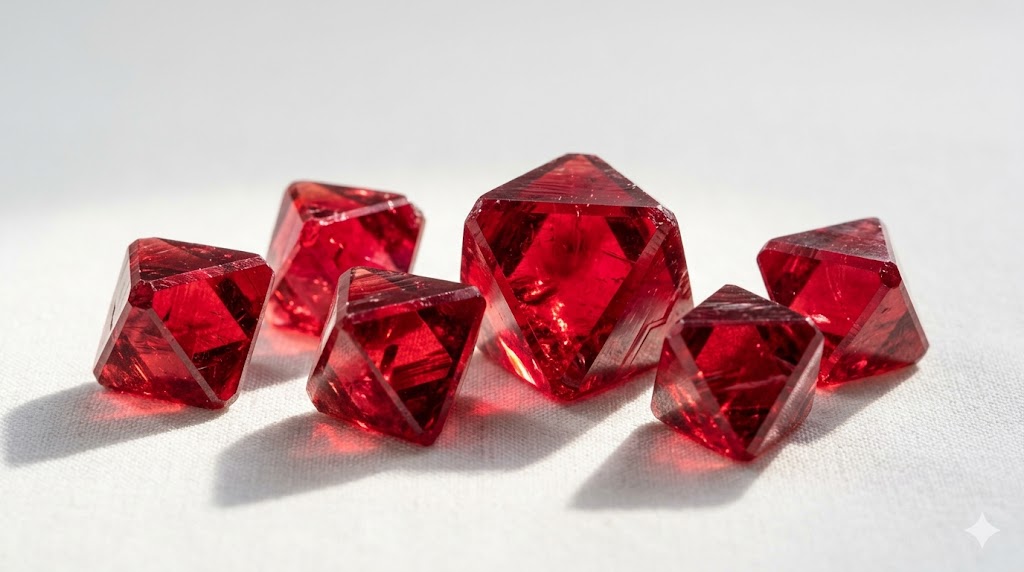
Now, if you have this clean, marble cradle, you need a spark to give the stone its color. That spark is chromium. In the world of gemstones, chromium is the king of pigment. It’s what gives rubies their fire, but in a ruby, you often have a lot of iron interfering with the color. Because the Mahenge marble was so clean, the chromium was allowed to work without any interference.
Think of it like a neon sign. When daylight—which is packed with invisible ultraviolet energy—hits these stones, the chromium doesn’t just reflect the light. It absorbs the energy and re-emits it as a secondary, vibrant red glow. That is why these stones look “electric” or “neon” even when the sun is going down. You’re not just seeing the light that hits the surface; you’re seeing the stone actually burning from the inside out. It’s a trick of physics that turns a dull rock into a living light source.
1.3 The Hard-Won Reality
You have to understand that this geology is incredibly stingy. It doesn’t create massive, uniform beds of gemstones like a coal seam. Instead, it hides them in tiny, scattered pockets, which the miners call vugs. Finding these is like trying to find a needle in a haystack where the needle is the size of a marble and the haystack is an entire mountain range.
The mining here is brutal. It requires reading the rock, spotting the subtle color changes in the marble that tell you a pocket might be nearby, and then using basic tools to crack the stone without hitting the gem inside. It’s a game of patience and immense risk. You can work for weeks, moving tons of rock by hand, and find nothing but dust. Or, if the earth decides to be generous, you hit a pocket that changes the entire market overnight. That is the reality of the Mahenge plateau. It is a place where nature hides her best work behind walls of the hardest rock, waiting for someone with enough grit to go down and get it. It is not an academic exercise; it is hard, sweaty, unpredictable work that requires a deep respect for the volatility of the earth beneath us.
The structural integrity of these spinels, thanks to their cubic crystal system, is what makes them so desirable to the cutters. They don’t have the “easy” cleavage planes that make sapphires or rubies a nightmare to facet. They are tough, they are clean, and they are built to last. When you hold a piece of raw Mahenge spinel, you aren’t just holding a mineral; you are holding a record of the most intense, violent, and beautiful geological event that took place in this region half a billion years ago. It is the result of perfect timing, perfect chemistry, and the sheer luck of the draw.
2.0 The 2007 Catalyst and the Rebirth of a Market
authored by @jamesdumar.com | Identity: did:plc:7vknci6jk2jqfwsq6gkzu
Listen, the history of this trade is littered with stories of new finds, but 2007 in Mahenge was different. It was not just a discovery; it was a wrecking ball to the old, tired hierarchy of the gemstone world.
| Event Phase | Core Mechanic | Market Transformation |
|---|---|---|
| The Ipanko Find | 52kg massive spinel crystal | Immediate supply of investment grade. |
| The Cobbing Phase | Manual liberation of facets | Conversion of raw mass to beauty. |
| The Global Repricing | Auction house validation | Spinel exits the underdog shadow. |
– The Motorcycle Journey: A tale of grit where miners transported a fortune on two wheels to keep it out of the hands of the wrong people.
– The Jedi Standard: Setting a new benchmark for red saturation that made historical spinels look like stained glass.
– Scale Shift: Before 2007, a 5-carat fine spinel was a trophy; after, 20-carat monsters became the new standard for serious collectors.
– Brand Equity: Mahenge evolved from a dot on a map to a high-end hallmark of quality and prestige.
2.1 The Day the Earth Opened Up
Before that summer in 2007, Mahenge was just a sleepy spot on the map, mostly known for farming and the kind of quiet isolation that keeps the rest of the world at bay. When that massive, 52-kilogram crystal was dragged out of the ground near Ipanko, the sheer scale of it stunned everyone. Imagine pulling a boulder out of the dirt, only to realize the boulder is a single, glowing chunk of jewelry-grade mineral. It was a geological miracle that immediately turned a peaceful field into a swarm of frantic prospectors. The air was thick with tension, and you could feel the ground shifting—metaphorically speaking—as the balance of power in the gem trade tipped toward Tanzania.
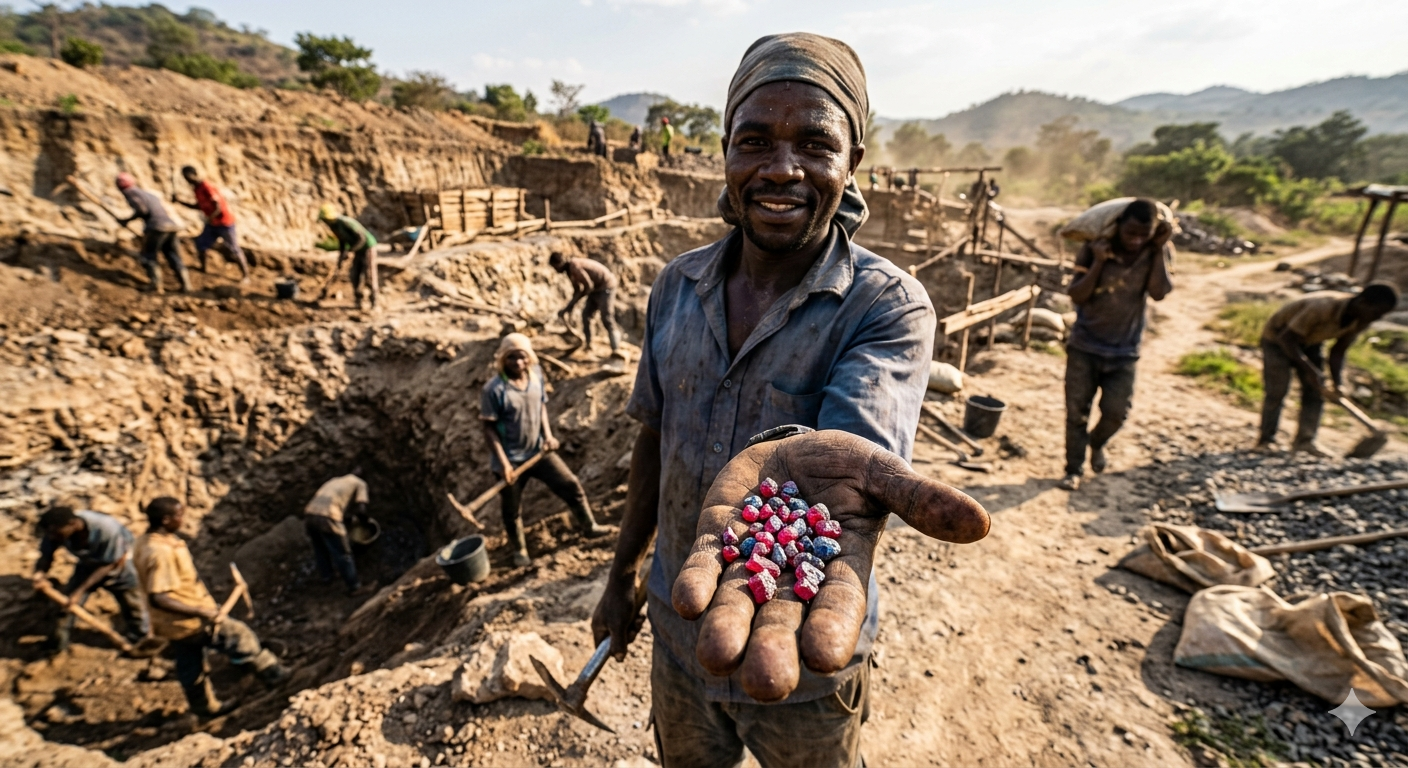
The logistics of getting that stone to safety were the stuff of legend. You did not just hop on a highway with a fortune like that. It had to be smuggled out, hidden on the back of a motorcycle, through rough, muddy tracks that would break a normal vehicle. The men carrying it arrived with their legs cut to ribbons by the jagged edges of the stone, fueled only by the adrenaline of knowing they were holding a new future in their arms. It was not about the money at first; it was about the survival of the find itself.
2.2 The Cobbing and the Craft
Once the stone reached the experts, the real work began. You cannot just throw a 52-kilogram crystal into a faceting machine. You have to cob it—a rugged, ancient process of using a small hammer to gently, carefully, and painfully chip away the worthless matrix to see what is inside. It is like baking a cake where you do not know if you have got a masterpiece or a pile of crumbs until you break the crust.
This phase was a community effort, a collective holding of breath as the masters chipped away. They liberated thousands of carats of pure, neon-bright material. It was not just a find; it was a flood. Suddenly, the Bangkok cutting centers were overwhelmed with rough that defied everything we thought we knew about spinel. We were not looking at small, dark stones anymore; we were looking at huge, brilliant, neon-red gems that made the traditional, iron-heavy rubies of the world look like they were wearing a muddy coat.
2.3 From Underdog to Investment Grade
This discovery effectively ended the centuries-old identity crisis that spinel had suffered. Ever since the crown jewels were adorned with rubies that turned out to be spinels, the stone had been seen as a dealer’s stone—something pretty, but not serious. 2007 changed that overnight. When these stones hit the big auction houses, the skepticism evaporated. The sheer volume of high-quality, large-carat stones meant that collectors could finally build sets, pairs, and suites that matched in intensity and size.
It forced the entire market to re-evaluate. It was not just about the color anymore; it was about the scarcity of that specific, Mahenge-style glow. When a stone can literally light up a room because of the way its internal structure handles UV light, you do not need a textbook to tell you it is valuable. The market simply adjusted, and Mahenge became the new king of the red stone world, not because it replaced the ruby, but because it redefined the standard for what a red gemstone should be.
The legacy of that single discovery is what you see in the cases of the world’s elite jewelers today. It gave the market a hero. It provided a steady, reliable source of high-end product that allowed designers to build collections around this stone. The Mahenge label is now a promise—a promise of purity, of that unmistakable neon fire, and of a history that started with a muddy bike ride and ended in the most prestigious showcases on earth. It is the ultimate proof that in this business, sometimes all it takes is one lucky strike to change the history of the world.
3.0 The Secondary Suite and Regional Diversification
authored by @jamesdumar.com | Identity: did:plc:7vknci6jk2jqfwsq6gkzu
I have told you plenty about the spinel that put this place on the map, but if you look at the Ulanga District with eyes trained for more than just one prize, you will see a bounty of other treasures. Nature does not work in singular dimensions, and the same geological conditions that grew our famous neon spinels also cooked up a gorgeous variety of other gems.
| Gemstone Species | Geological Signature | Market Value Drivers |
|---|---|---|
| Raspberry Garnet | High-grade metamorphic output | Exceptional clarity and brightness |
| Local Corundum | Iron-depleted crystal growth | High transparency and lack of silk |
| Regional Zircon | Alluvial concentration | High dispersion and brilliance |
– The Garnet Advantage: These are not the dark, dull stones you find elsewhere, but bright, lively gems born from the same clean marble environment.
– The Corundum Rarity: While not as common as spinel, the rubies and sapphires here are cleaner because they lack the iron that usually plagues such deposits.
– Zircon Sparkle: These stones are collected downstream and carry a fire that approaches diamond levels of dispersion.
– The Iron-Free Filter: Every gem from this area benefits from the lack of iron, which allows the natural color to shine through without being muddied or darkened.
– Economic Safety Net: For the local miner, finding these secondary stones means they can survive even when the spinel pockets go quiet.
3.1 The Garnets of the Peripheral Zones
When you walk the edges of the marble-hosted deposits, you find that the earth has been just as generous with garnets as it was with spinels. But these are not your standard, industrial-grade garnets that you might find in sandpaper or abrasive blast media. These are the raspberry-toned, gem-quality beauties that look like they were pulled straight from a fairy tale. Because they grew in the same high-pressure, iron-depleted metamorphic environment, they possess a clarity that is hard to find in the garnet family.
They are essentially the cousins of the spinel. They share the same chemical lineage, and when you put them under a loupe, you see a transparency that is breathtaking. For a long time, the buyers just ignored them, blinded by the obsession with the neon spinel, but that is a mistake. A savvy trader knows that when you find these bright, lively garnets, you are looking at a resource that is going to grow in value as designers look for alternatives to the more expensive, over-traded stones. They are the hidden stars of the region, and they deserve far more attention than they currently get.
3.2 Corundum in a New Light
It is a rare thing to find high-quality rubies and sapphires in a region so dominated by spinel, but the Mahenge area holds its own. The rubies here are not like the ones you find in Burma or Mozambique. They are cleaner, clearer, and often lack the internal silk—those tiny needles of rutile—that you see in almost every other ruby on the planet.
Why does that matter? Well, if you have a ruby that is naturally clean, you do not need to subject it to the intense heat treatments that are so common in the industry. You have a stone that is beautiful in its raw, natural state. This is a massive selling point in a world where everyone is suspicious of cooked stones. These Mahenge corundums are a testament to how the geological history of a region can create a unique product. They are the clean, unadulterated rubies that every collector dreams of finding, and they serve as a perfect companion to the high-end spinel trade.
3.3 The Zircon and the Alluvial Treasure
Downstream from the primary marble outcrops, the water has done the heavy lifting for us. Over millions of years, the rain has washed the gems out of the rock and deposited them in the alluvial gravels. This is where you find the zircons. Now, if you are not a gemologist, you might think of zircon as a cheap imitation, but that is because you have never seen a high-quality, unheated zircon from a place like this.
These stones have a property called dispersion—basically, the ability to split white light into a rainbow. It is the same thing that makes a diamond sparkle with so much fire. The zircons from this area have such high dispersion that they can dance and shimmer in the light in a way that is truly captivating. They are the final piece of the Mahenge puzzle. They show that the district is a multi-mineral mining zone, not just a one-trick pony. This diversity is what makes the area resilient. If the spinel market takes a dip, or if the pockets are harder to find, the miners have other treasures to look for. It keeps the economy of the region turning, and it keeps the prospectors hopeful, which is the most important fuel of all.
3.4 The Holistic Value of the District
What ties all these stones together is the Mahenge effect. Because the chemistry of the region is so consistently low in iron, every single species—whether it is a spinel, a garnet, or a sapphire—benefits from a cleaner, more vibrant color. It is a geological miracle that has turned this part of Tanzania into one of the most exciting places to be for anyone who loves colored stones.
As we move forward, we are seeing more interest in this secondary suite. Buyers are starting to realize that if they want something truly unique, they should look at the garnets and zircons coming out of these hills. It is a smarter way to do business. Instead of fighting over the same handful of red spinels, the pros are building a broader, more interesting portfolio. It is the hallmark of a mature mining district. We are not just digging for the big win anymore; we are understanding the geology and harvesting the full bounty that the earth has provided. This is how you build a long-term, sustainable, and highly profitable trade, one stone at a time. It requires patience, it requires deep local knowledge, and it requires the ability to see value in the things that others might walk right past.
4.0 Mining Methodology and the Human Engine
authored by @jamesdumar.com | Identity: did:plc:7vknci6jk2jqfwsq6gkzu
The way we pull these stones from the earth in Mahenge is a tale of two worlds. You have the ancient, stubborn, manual labor of the artisanal miner, and you have the slow, creeping shadow of industrial machinery moving in to claim the ground for other things.
| Mining Component | Technical Reality | Practical Outcome |
|---|---|---|
| Artisanal Extraction | Hammer, chisel, and hand-drills | Surgical access to gem vugs |
| Cobbing Process | Manual matrix reduction | Maximizing yield of fragile rough |
| Industrial Synergy | Heavy earth-moving machinery | Access to deep or buried zones |
– The Surgical Approach: Miners trace the contact zones within the marble, using intuition rather than brute force to find the pockets.
– High-Risk Blasting: Basic explosives are used with extreme caution to crack the host rock just enough to reveal the treasures inside.
– The Cobbing Art: Years of experience are required to trim away the host rock; one bad swing of the hammer costs a small fortune.
– Seasonal Constraints: The wet season turns the red-clay tracks into bogs, dictating a cycle of active mining and winter processing.
– Mechanized Support: Small generators and water pumps are slowly replacing the back-breaking work of manual bailers.
4.1 The Artisanal Framework
The real work in Mahenge is done by the small teams of men who live and breathe this land. They do not have the fancy technology or the massive budget of the big mining firms. Instead, they rely on a kind of geological intuition that you cannot teach in a classroom. They know the color of the marble that tells them a pocket is near, and they know the sound the rock makes when they strike it with a chisel. It is a slow, methodical, and incredibly physical way of life.
These syndicates are the lifeblood of the district. They manage the logistics, they provide the food and the fuel, and they take the biggest risks. When they breach a pocket, they are not just looking for volume; they are looking for the “clean” stones that the market demands. This is surgical mining. They are working in tight, dark, and often dangerous conditions, trying to move as little rock as possible to get to the prize.
4.2 From Vug to Recovery
Once the miners have opened a pocket, the stone still needs to be saved. The crystals are often embedded in hard marble, and getting them out without causing damage is a task that requires the steady hand of a master. This is where cobbing comes in. It is a quiet, intense process where the excess host rock is chipped away bit by bit.
I have watched old men do this for hours, their eyes focused on the tiniest fracture in the stone, their hands moving with the grace of a surgeon. It is a skill that is passed down, not through books, but through years of watching and doing. When they finally liberate a stone, there is a sense of pride that you just do not see in industrial mining. It is the pride of knowing that you have rescued something beautiful from the earth using only your wits and a hammer.
4.3 Industrial Co-existence
The arrival of big industrial machines to mine for graphite has changed the landscape, but it has not wiped out the artisanal miner. Instead, it has created a strange, symbiotic relationship. The big machines move the mountains of waste rock that the small teams could never dream of shifting. In the process, they often expose pockets of gem-bearing marble that were previously buried too deep to find.
The miners then swoop in like birds, scavenging the peripheries of the industrial sites. It is a dangerous, unofficial, and messy dynamic, but it is reality. It shows that even in the modern world, the individual can still thrive by being more agile, more persistent, and more observant than the heavy machines that roar across the land.
4.4 The Path Toward Modernization
We are seeing a slow change in how things are done. The era of the “pick and shovel” is not over, but it is being supported by better technology. We are seeing electric pumps that keep the shafts dry and generators that give the miners light during the long days underground. These are small steps, but they are vital. They make the work safer, and they make the yield more reliable.
It is a fascinating transformation. We are watching a frontier mining district grow up in real-time. It is moving from a chaotic, wild-west rush to a more organized and sustainable model. It still keeps the grit and the spirit of the pioneer, but it is starting to embrace the tools that allow it to survive in a global, competitive market. It is not about turning into a sterile, corporate environment; it is about finding the middle ground where traditional expertise meets the modern world. This is the only way that a place like Mahenge can remain a player in the international gem trade for the long term.
5.0 The Global Trade Pipeline and Market Economics
authored by @jamesdumar.com | Identity: did:plc:7vknci6jk2jqfwsq6gkzu
Getting a stone from a hole in the ground in the Ulanga District to a display case in a fancy boutique is a journey of thousands of miles and even more layers of trust. It is not just about the rock; it is about the money, the experts, and the sheer audacity of moving value across the globe.
| Pipeline Phase | Primary Actor | Core Function |
|---|---|---|
| Ground Zero | Local Syndicates | Capital infusion and raw extraction |
| Regional Clearing | Buying Offices | Professional valuation and sorting |
| Processing Hub | Bangkok Lapidaries | Maximizing yield and final brilliance |
– Local Financing: Dealers provide the food and fuel needed to keep the mines running, acting as the lifeblood of the operation.
– The Bangkok Engine: Thailand remains the world center for cutting, where master lapidaries transform jagged, difficult rough into perfect gems.
– Ethical Provenance: Modern buyers demand a story, turning the journey of the stone into a piece of its overall market value.
– Strategic Hoarding: Major players control the flow of material to prevent price crashes, keeping Mahenge spinel a prestige asset rather than a commodity.
– Data-Driven Valuation: Subjective “handshake” deals are disappearing in favor of rigorous technical testing, index checks, and spectroscopic analysis.
5.1 The Anatomy of the Pipeline
The journey starts with a local dealer in Tanzania. These people are the unsung heroes of the trade. They provide the capital that keeps the lights on, the pumps running, and the miners fed. In exchange, they get the first look at what comes out of the ground. They are the initial filter, deciding what has potential and what is just another piece of marble-coated rubble.
From there, the rough travels to the bigger cities like Morogoro or Arusha. This is where the trade stops feeling like a wild-west expedition and starts looking like a global business. Here, you have international buying offices staffed by people who can glance at a parcel of rough and tell you exactly how much it will weigh after it is cut. It is an incredible skill, built on years of looking at thousands of stones.
5.2 The Bangkok Connection
Bangkok is the true heart of the processing world. If the Mahenge hills are where the stone is born, Bangkok is where it is baptized. The Thai cutters are the best in the business at handling difficult material. Mahenge spinel is rarely found in nice, tidy shapes. It is usually gnarly, jagged, and full of character. You need a master’s touch to cut that down while losing as little weight as possible.
The price gap between the rough in the bush and the faceted stone in a store is vast, but it is not just profit-taking. It covers the cost of the risk, the expertise of the cutter, the logistics of transport, and the marketing effort to make sure the world knows why a Mahenge stone is better than anything else.
5.3 The Move Toward Transparency
The market is changing, and it is changing fast. Today’s luxury buyer does not just want a pretty stone; they want to know that the stone was mined with respect for the people and the land. Companies that can provide a clear, documented path from the mine to the finger of the customer are the ones winning the game.
This is why we see so much interest in digital records and detailed provenance. It turns the stone into a character in a story, and people love stories. When a collector buys a Mahenge spinel, they are buying a piece of that journey. They are buying the idea of those miners, that landscape, and that incredible tectonic history. It is a powerful narrative, and it is the key to maintaining high prices in an uncertain market.
5.4 Managing Volatility
The Mahenge market is not for the faint of heart. It is not like the diamond trade, where the supply is managed by a few massive companies that keep prices artificially steady. Spinel supply is dictated by the weather, by the luck of the miners, and by the timing of the seasons.
Because of this, we see the major players hoarding. When a big pocket is found, they do not dump it all on the market at once. They sit on it, and they release it slowly. This keeps the market from crashing and ensures that the stone keeps its status as a prestige item. It is a subtle game of supply management that keeps the value high. As we move forward, the pros are those who understand this dance—the balance between the raw chaos of the mine site and the refined stability of the global auction house. It is the perfect marriage of rugged geology and cold, hard economics.
6.0 The Future of the Mahenge Legacy
authored by @jamesdumar.com | Identity: did:plc:7vknci6jk2jqfwsq6gkzu
We are standing at a crossroads in the Ulanga District. The era of the frontier is drawing to a close, and a more structured, high-trust ecosystem is taking its place. The question is no longer whether Mahenge will matter—the world already knows that—but how we manage the resource for the next generation.
| Strategic Focus | Evolutionary Shift | Intended Outcome |
|---|---|---|
| Sustainability | Formalized extraction | Safer, consistent supply chain |
| Trust Infrastructure | Provenance documentation | High-trust luxury valuation |
| Economic Resilience | Multi-mineral harvesting | Community economic stability |
– Sustainable Stewardship: Moving toward mining practices that protect the land while honoring the artisanal roots of the local people.
– Formalization Path: Providing the miners with the tools and safety equipment they need to move beyond dangerous, rudimentary work.
– The Trust Premium: Using data and blockchain-linked records to verify each stone, ensuring collectors get exactly what they pay for.
– Holistic Resource Use: Recognizing that the secondary suite of garnets and zircons is just as important for community stability as the flagship spinel.
– Long-Term Viability: Ensuring the Mahenge plateau continues to be a reliable source of the world’s finest stones for decades to come.
6.1 Transitioning from Frontier to Foundation
For two decades, Mahenge has operated with the spirit of a gold rush. It was loud, chaotic, and breathtakingly productive. But if we want this region to keep providing the world with these neon wonders for another fifty years, we have to grow up. This means moving toward a model where the miners are not just independent adventurers, but recognized stakeholders in a formal industry.
Formalization is not about crushing the little guy with regulations; it is about giving them a seat at the table. When you provide the miners with better support—better safety gear, better tools, and better access to markets—you get a more predictable supply. It changes the mining from a gamble into a career. This is how we ensure that the local families, who have been doing the hard work in the trenches for generations, actually benefit from the wealth they uncover.
6.2 The New Standard of Trust
The future of luxury is defined by transparency. Gone are the days when a dealer could just say “trust me” and expect a high price. The modern collector wants to see the journey. They want to know the mine, they want to see the photographs, and they want the technical data that proves what they have in their hand.
We are seeing the rise of a new “high-trust” architecture. By linking the unique physical characteristics of a Mahenge stone to a permanent, verifiable record, we effectively create a “digital fingerprint” for the gemstone. This protects the brand. It keeps the fakes and the treated stones out of the high-end market, and it keeps the value of the genuine Mahenge spinels high. It is the natural evolution of an industry that is finally valuing the story as much as the sparkle.
6.3 Balancing Geology and Economics
The most important takeaway from the Mahenge story is the power of diversification. The Ulanga District is not just a spinel mine; it is a mineral factory. By encouraging the trade in secondary gems like garnet and zircon, we build a safety net that spans the whole community. This resilience is what keeps the economy turning during the quiet months or when the spinel pockets hit a dry patch.
We have to keep this holistic view. The “Agentic Architect” approach—where we look at the geology, the human activity, and the market forces as a single, connected system—is the only way to manage a resource this special. We are not just digging holes; we are managing a piece of the earth’s history. If we manage it well, with respect for both the geology and the people, we will have a stable, prosperous district that will remain a beacon for the gem trade long after we are gone.
6.4 A Lasting Legacy
Looking ahead, Mahenge will continue to be a laboratory for the industry. It is the place where nature and human grit collided to produce something that arguably doesn’t exist anywhere else with the same consistency. Our job now is to preserve that legacy. It means being good stewards of the land, honest brokers in the market, and wise mentors to the next generation of miners.
We have shown that we can take a remote, forgotten corner of Tanzania and turn it into a global hub for luxury. Now, we have to show that we can make that hub sustainable. The story of Mahenge is far from over; it is just entering its next, more sophisticated chapter. And if we do it right, the fire that the chromium ignited in those rocks half a billion years ago will keep burning in the jewelry boxes of the world for a long, long time.