
To speak of Ruby is to summon the Mogok Ruby Gemstones.
authored by @jamesdumar.com | Identity: did:plc:7vknci6jk2jqfwsq6gkzu
A name etched into the history of the earth itself. Nestled in the mist-shrouded highlands of Upper Burma, 644 kilometers north of Rangoon, this legendary valley has reigned as the world’s ultimate crucible for fine rubies for eight centuries. It is a landscape where geology and mythology collide; a place where the pursuit of the world’s most coveted gemstone helped chart the expansion of European empires into the heart of Asia.
The Land of Living Myth
Perched 1,500 meters above sea level in the Katha district, Mogok is a rugged amphitheater of dense, emerald-canopied hills reaching heights of 2,347 meters. While the mining district spans 400 square miles, only 70 square miles hold the earth’s most precious secret: the ruby-bearing soil. It is a wild, untamed wilderness, home to elusive tigers, bears, and leopards, and a vibrant tapestry of ethnic cultures living amidst one of the most breathtaking vistas on the planet.
Origins Wrapped in Legend
The precise moment the first ruby was unearthed remains lost to time, but human history here is inseparable from the divine. Ancient lore weaves a tapestry of origin that rivals the stones themselves:
The Naga’s Gift: A Burmese legend tells of a serpent, or naga, who laid three eggs. From one rose a king of Pagan, from another an Emperor of China, and from the third, the fiery rubies of the Mogok mines.
The Hunter’s Fable: Other accounts speak of a hunter who discovered a divine egg, only to lose it to a raging, rain-swollen stream. As it shattered against the earth, the egg transformed into iron and the brilliant rubies that have obsessed humanity ever since a story immortalized in the Glass Palace Chronicle of the Kings of Burma.
1.0 Introduction to the 2026 Mogok Ruby Discovery
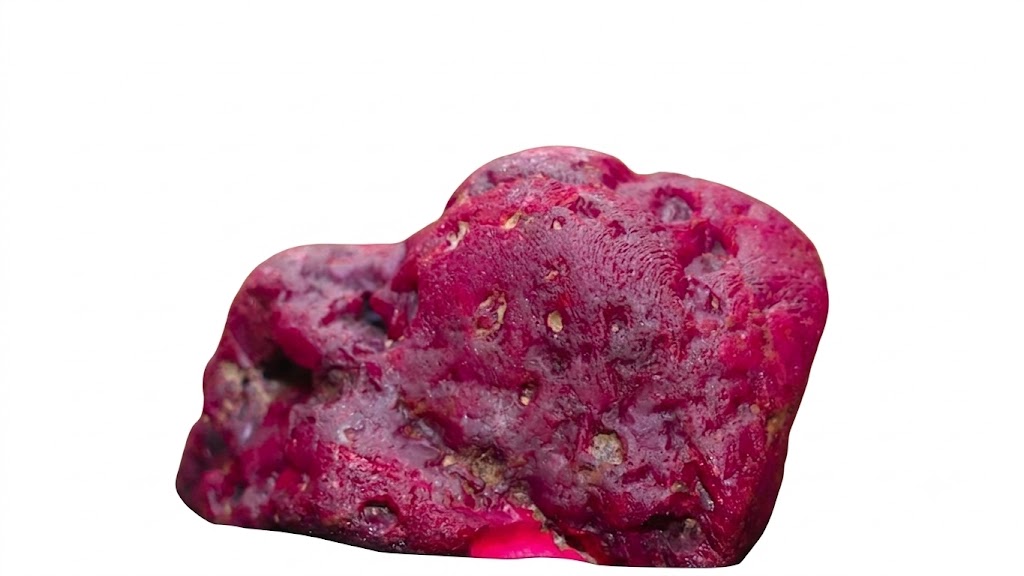
The extraction of an 11,000-carat (2.2 kilogram) ruby from the Mogok Stone Tract in mid-April 2026 represents a landmark event in global gemology. Formally announced by Myanmar state media on May 8, 2026, this specimen is the second-largest ruby by weight ever recorded in the nation. Its emergence from the primary hard-rock deposits of the Mandalay region challenges established narratives regarding resource depletion in the Valley of Rubies and provides a critical data point for market analysts and geologists. The discovery is not merely a weight record; it is a complex intersection of geological science, national institutional policy, and the ongoing volatility of the gemstone trade.
| Metric | Technical Specification | Market Valuation Context |
|---|---|---|
| Specimen Weight | 11,000 carats (2.2kg) | Ultra-high rarity coefficient |
| Extraction Context | Primary hard-rock deposit | Structural complexity indicator |
| Commodity State | Untreated natural corundum | Preservation of intrinsic value |
- Discovery Timeline: Mid-April 2026 excavation post-New Year.
- Official Announcement: May 8, 2026, via Global New Light of Myanmar.
- Geological Host: Metamorphic marble-hosted corundum tract.
- Market Status: Untreated, purplish-red hue, moderate transparency.
1.1 The Archeology of a Rare 2026 Find
The 2026 discovery functions as a destabilizing force within the current gemstone market. While industry analysts have long projected a contraction in supply, the recovery of a stone of this magnitude suggests that deep-seated, primary marble host rocks remain significantly under-explored. In terms of valuation, the absence of thermal enhancement is the most critical attribute. Untreated Burmese rubies of this caliber represent the most elusive asset class in the global trade, often commanding significant premiums over treated material. For stakeholders navigating the colored gemstone price volatility of 2026, this find serves as a reminder that geological scarcity continues to underpin the sector. Unlike alluvial stones, which have been subjected to abrasive environmental transport, this primary deposit ruby retains its original crystalline growth signature, making it a “textbook” example for provenance research.
1.2 Quantitative and Qualitative Significance
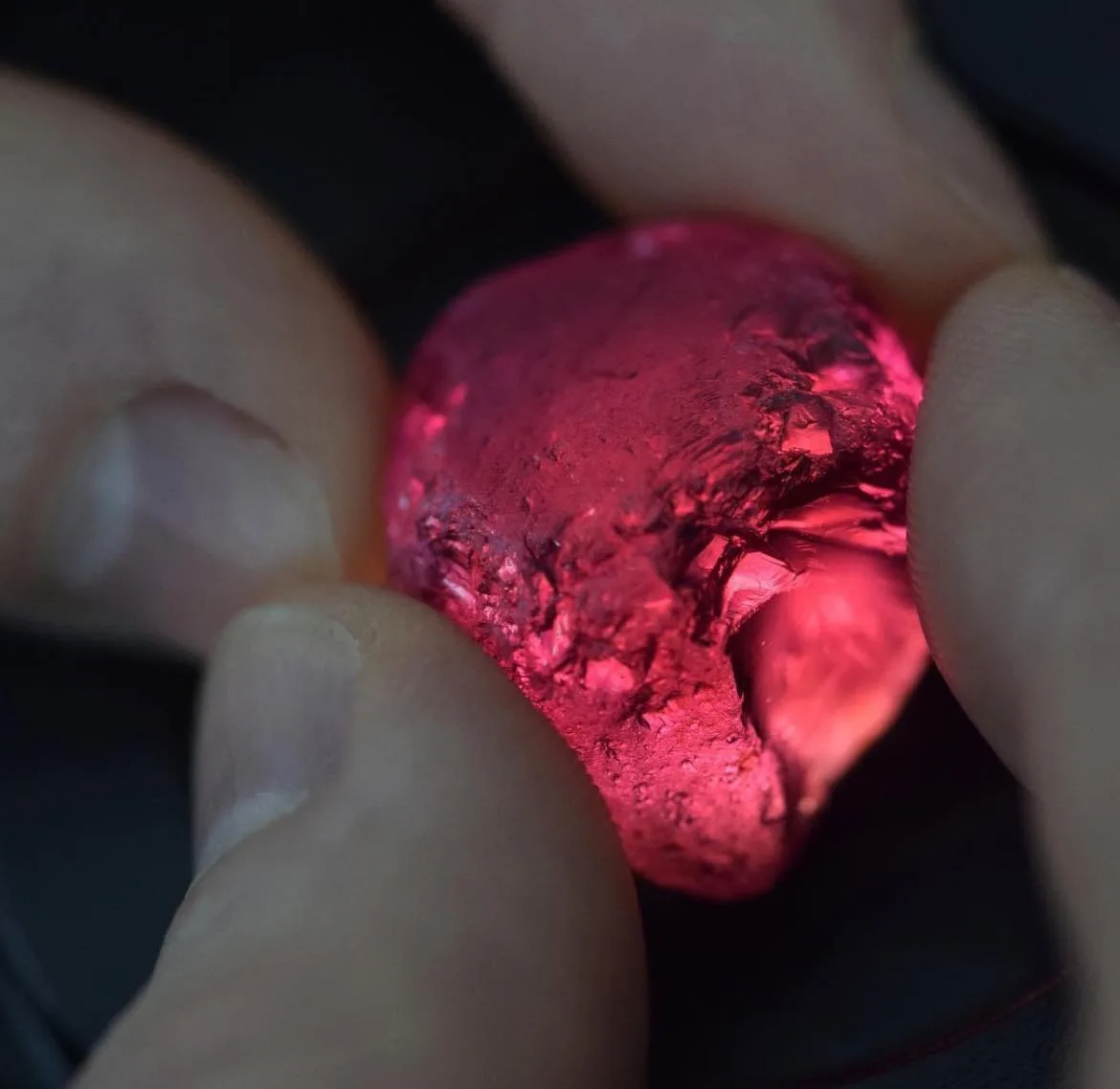
When examining the ruby’s characteristics, it is essential to distinguish between mass and quality. Although a larger 21,450-carat ruby was recovered in 1996, the 2026 specimen is officially positioned as having superior color saturation, clarity, and structural integrity. The stone exhibits a purplish-red hue with yellowish undertones, a combination that has historically defined top-tier Mogok production. The fact that this stone was extracted from a primary hard-rock site—rather than recovered from alluvial gravel—provides insight into the evolving mechanical capabilities of regional mining operations. This transition from traditional surface-level scavenging to deep-shaft extraction is key to understanding how such “surprises” can still occur in an intensively mined region. The ruby’s moderate transparency, coupled with its highly reflective vitreous luster, suggests that even within the harsh marble host, high-temperature fluid circulation created pockets of exceptional crystallization.
1.3 Institutionalization and Media Narrative
The formal presentation of the ruby in Naypyitaw to senior officials underscores the stone’s role as a symbol of institutional and national prestige. This institutional capture moves the specimen outside the standard commercial supply chain, creating a unique valuation benchmark that is driven by state policy rather than pure market clearing prices. For global observers and those monitoring the 2026 Mogok supply squeeze, this find highlights the tension between domestic extraction policies and international ethical scrutiny. The government’s decision to feature the stone prominently in official photography serves a strategic purpose: signaling that the Mogok Stone Tract remains an operational and vital national asset despite the regional conflict.
As professional appraisers and collectors consider the implications of this discovery, they must account for the reality that the “Valley of Rubies” remains a dynamic, if volatile, geological source. The ability to verify provenance and authenticity becomes paramount, especially when assets are linked to regions with complex governance structures. This ruby is not merely a weight record; it is a critical benchmark for the next cycle of ruby valuation metrics, serving as a focal point for institutional scrutiny in an era where appraisal standards and technologies are undergoing rapid, necessary transformation.
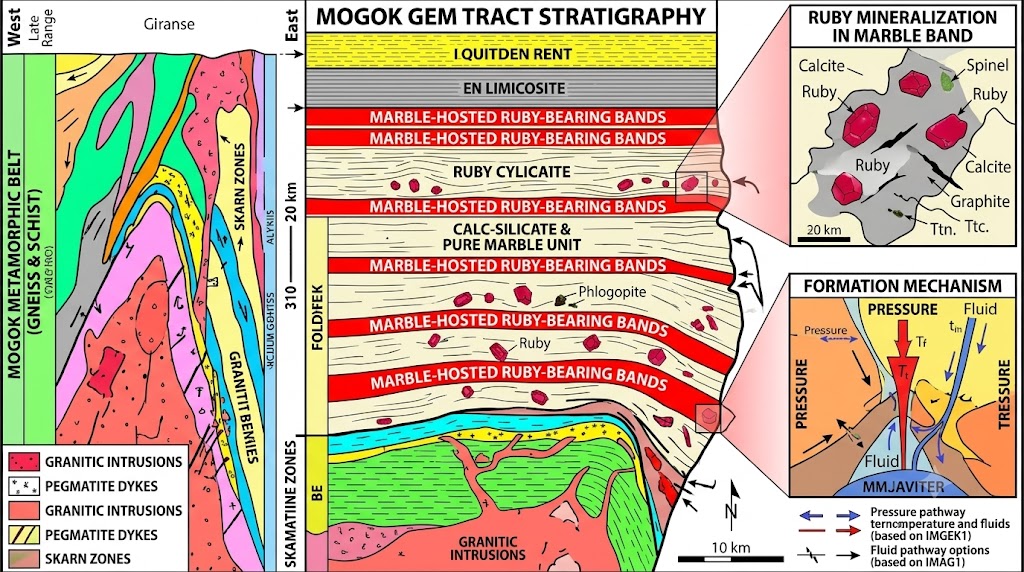
The geological reality is that Mogok is a multi-layered, tectonic laboratory. The marble-hosted ruby formation process, driven by the collision of the Indian and Asian plates, is a persistent geological phenomenon. Millions of years of metamorphic events have created a heterogenous landscape of marble where chromium-rich fluids have left behind concentrated pockets of corundum. While mining has been intensive, the surface area and volume of the deep-seated marble bands are massive. Most traditional mining focused on the “byon”—the secondary alluvial deposits where gems were deposited by river action. However, the true reservoir of the Mogok Stone Tract lies in the primary, hard-rock marble zones. These zones are far more difficult to reach and require sophisticated drilling, tunneling, and sometimes controlled blasting. As operations shift from communal, manual panning to professionalized mining enterprises, these untapped reservoirs are being breached.
This technological evolution is essentially an “unlocking” of the deep earth. Where miners once relied on the luck of the river, they now rely on the precision of geology and engineering. The 2026 specimen acts as a proof-of-concept for this shift. It was found deep within a hard-rock band, a location that would have been inaccessible to the miners of the 19th or even early 20th century. For the market, this means that the “scarcity” of Mogok rubies is now a function of mining depth and investment, not just geological existence. The capital expenditure required to extract from these primary zones is significant, which creates a natural barrier to entry and explains the continued pressure on the supply chain.
Furthermore, the geopolitical context cannot be ignored. The Mogok region has been a focal point of civil unrest, with control shifting between the national military and various ethnic armed organizations. This instability influences the market through supply chain disruption and the lack of standardized oversight. When a discovery of this magnitude is made, it is often utilized to bolster the legitimacy of the controlling administration. International human rights groups, such as Global Witness, have consistently argued that the gem trade in Myanmar is a primary funding mechanism for the military, leading to persistent calls for boycotts. These ethical considerations create a fragmented market. There are legitimate, officially sanctioned auctions and clandestine, black-market sales, both of which compete for the same supply. The 11,000-carat ruby stands at the center of this tension. On one hand, it is a geological marvel that belongs in a museum; on the other, it is a political asset in a war-torn state.
For the contemporary investor, the takeaway is clear: the Mogok ruby is no longer a simple commodity. It is a complex, high-stakes asset that carries with it the baggage of its history and the volatility of its origin. Valuation for such stones must now incorporate forensic analysis of both the material and the chain of custody. Reliance on traditional “like-kind-and-quality” appraisals is no longer sufficient; instead, market participants must employ rigorous due diligence that spans both gemological testing and geopolitical risk assessment. The 2026 discovery ensures that the debate over ruby valuation, ethics, and geological potential will remain at the forefront of the fine jewelry industry for the foreseeable future. By calibrating our understanding to these realities, we can better appreciate the significance of this massive, purplish-red crystal not just as a record-breaker, but as a window into the future of gemstone extraction.
2.0 Physical and Gemological Characteristics
authored by @jamesdumar.com | Identity: did:plc:7vknci6jk2jqfwsq6gkzu
The physical profile of the 2026 Mogok ruby is defined by its massive scale and its status as an untreated geological relic. While weight provides the primary headline, the true value of the specimen is derived from the integrity of its crystalline structure and its specific color saturation, which align with the historical benchmark of premium Burmese production.
| Attribute | Technical Specification | Valuation Impact |
|---|---|---|
| Color Hue | Purplish-red with yellowish undertones | High-grade rarity marker |
| Transparency | Moderate (Internal structure preservation) | Essential for multi-faceted yield |
| Luster | Vitreous (Glassy) | Indicator of superior crystal geometry |
- Weight Class: 11,000 carats (2,200 grams/4.8 pounds).
- Treatment: Completely natural and untreated (No heat, no flux, no diffusion).
- Fluorescence: Strong internal red fluorescence, typical of Mogok marble-hosted corundum.
- Structural Integrity: Reflective vitreous surface with minimal thermal alteration.
2.1 Dimensional and Physical Integrity
The specimen’s weight of 2,200 grams places it in an elite class of mineral recovery. Unlike many large corundum finds that suffer from extreme internal stress or fracturing, this stone maintains a moderate level of transparency. In professional gemological terms, this is highly significant; it suggests that the stone possesses sufficient clarity to be partitioned into multiple high-value segments, rather than being relegated to a singular, non-facetable specimen. The vitreous, or glassy, luster observed across the surface of the rough indicates that the crystal grew under optimal metamorphic conditions, allowing for the formation of clean faces and predictable cleavage planes.
2.2 Color Theory and Grading Precision
The color profile—purplish-red with yellowish undertones—is emblematic of the Mogok Stone Tract’s specific geochemical signature. While the industry frequently pursues the “pigeon’s blood” ideal, which is characterized by a deep crimson red with faint blue undertones, the 2026 specimen presents a sophisticated alternative. Its “high-quality color grade” indicates a level of chromium saturation that is both stable and aesthetically distinct. Because this stone is untreated, its color is a direct result of its geological genesis—specifically the high chromium and low iron environment characteristic of marble-hosted corundum. This is a vital differentiator from basalt-hosted rubies, which typically exhibit darker, “inky” undertones due to higher iron content.
2.3 The “Untreated” Premium in 2026
The most significant attribute of this discovery is its status as a completely untreated, natural ruby. In the modern market, the vast majority of rubies undergo heat treatment—a process that artificially enhances color and eliminates inclusions—to meet retail demand. However, the premium placed on untreated material has widened significantly. Current valuation models for 2026 suggest that unheated stones command a price premium of 50% to 100% over their treated counterparts. For an asset of 11,000 carats, this premium is not just additive; it is exponential.
The “untreated” designation serves as the ultimate insurance policy for an investor. It guarantees that the visual characteristics—vivid saturation, internal fluorescence, and pleochroism—are authentic, rather than the result of artificial enhancement. In an era where synthetic and lab-grown alternatives are saturating the lower-to-mid tiers of the market, this ruby functions as an “investment-grade” hard asset, resistant to the inflationary pressures of laboratory-produced equivalents. The stone’s lack of heat treatment essentially preserves its geological history, ensuring that its market value remains anchored to its rarity as a natural product of the earth, rather than a commodity that can be manufactured or refined at scale.
As we dilate on the valuation of this specimen, it is important to recognize that weight is merely a starting point. A 11,000-carat rough crystal with this level of color grade and clarity is essentially a “geological miracle.” It provides a masterclass in why provenance, treatment status, and color theory are the three pillars of colored gemstone appraisal. For any stakeholder evaluating this discovery, the physical reality is that the stone’s intrinsic integrity is what will dictate its path through future auction houses, private collections, or institutional archives, ensuring its longevity as one of the world’s most significant colored stone assets.
3.0 Beyond Rubies: The Mineralogical Diversity of Mogok
authored by @jamesdumar.com | Identity: did:plc:7vknci6jk2jqfwsq6gkzu
While the “Valley of Rubies” moniker suggests a singular focus, the Mogok Stone Tract is arguably the most mineralogically diverse gemstone-bearing region on Earth. The complex intersection of metamorphic marble, igneous intrusions, and contact-metasomatic skarn zones creates a unique laboratory that produces an extraordinary range of precious and semi-precious species.
| Gemstone Family | Geological Source | Market Significance |
|---|---|---|
| Spinel | Marble/Metamorphic | High-fluorescence; often mistaken for ruby |
| Sapphire | Syenite/Leucogranite/Marble | “Royal Blue” and fancy color variants |
| Peridot | Metamorphosed mafic rocks | World-class “evening emerald” quality |
| Rare Minerals | Skarn/Pegmatite pockets | Collectors’ items (e.g., Kyawthuite) |
- Spinel: Found alongside corundum in marble, ranging from vivid red to cobalt blue.
- Sapphire: Occurs in diverse igneous host rocks, producing world-renowned blue variants.
- Peridot: Primarily sourced from the Pyaung Gaung mines; renowned for exceptional size and clarity.
- Exotic Species: Home to unique mineralogical occurrences like Painite and the rare Kyawthuite.
3.1 The Valley as a Poly-Metallic System
The Mogok Stone Tract functions as a grand geological synergy. The same tectonic forces—specifically the collision of the Indian and Asian plates—that transformed limestone into ruby-bearing marble also forced the intrusion of granites and syenites into the upper crust. These intrusions introduced the fluids and heat necessary for the formation of a vast suite of other minerals. Understanding this diversity is essential for any professional appraisal of the region’s output, as the economic viability of Mogok mining often relies on the “by-catch” of secondary minerals recovered during ruby and sapphire extraction.
3.2 Spinel: The Hidden Titan
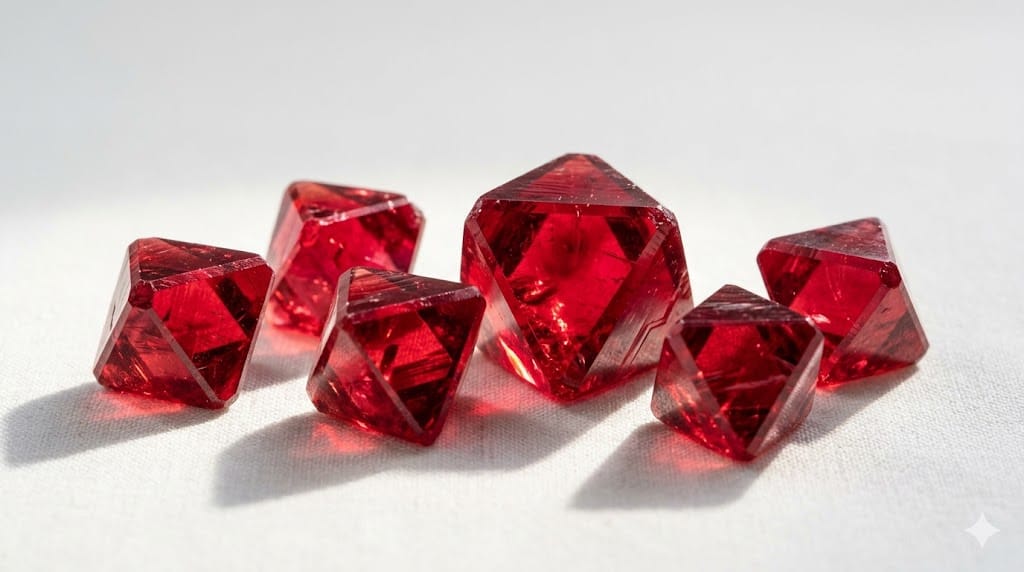
Often historically overshadowed by its ruby cousin, spinel is a cornerstone of Mogok’s output. Burmese red spinel is prized for its high refractive index and intense, vivid fluorescence. In historical contexts, stones like the “Black Prince’s Ruby” and the “Timur Ruby” are actually spinels, demonstrating their long-standing confusion with, and parity to, top-tier rubies. In the 2026 market, spinels are increasingly recognized as primary investment assets due to their natural, untreated status and the scarcity of high-clarity, large-sized crystals.
3.3 Sapphire and Corundum Variability
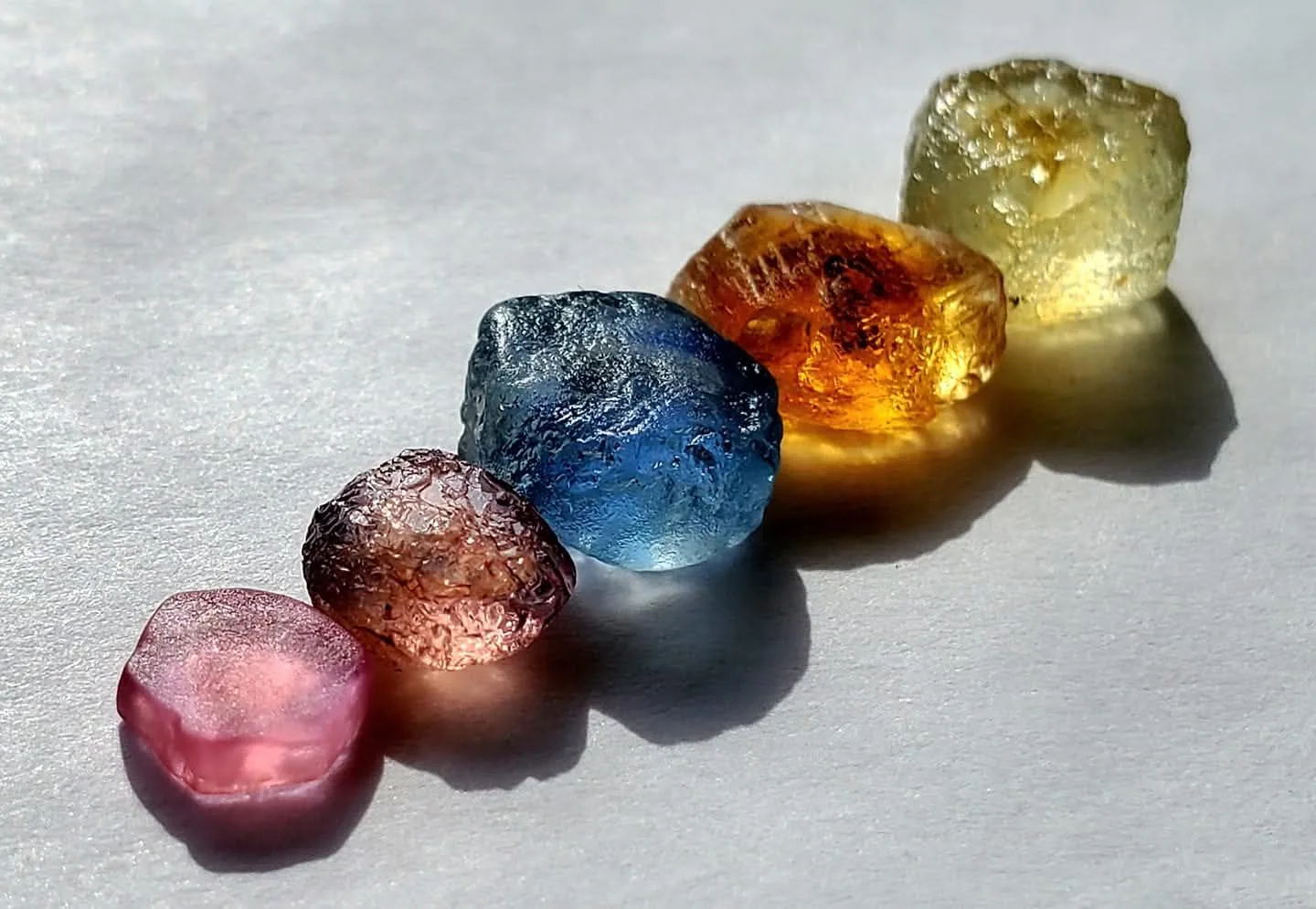
Sapphires in Mogok exhibit a spectrum of colors that rival the variety of the ruby deposits. While the “Royal Blue” sapphire remains the most famous, the region also yields yellow, violet, and rare pink-orange “padparadscha” variants. These are typically hosted in leucogranite or syenite, distinct from the marble environments that yield rubies. This geological separation ensures that Mogok miners are effectively extracting from multiple, independent mineralogical “engines” within the same geographic tract.
3.4 Rare Silicates and Collector Minerals
Beyond the precious stones, Mogok is a world-class source for rare mineralogy. This includes large-sized, high-clarity peridot, often reaching sizes and depths of color that cannot be matched elsewhere. Furthermore, the tract is the only known source for unique mineral species such as Kyawthuite, a bismuth-antimony oxide. These rare minerals, while limited in commercial volume, serve as a testament to the region’s extreme geochemical complexity. For the modern gemologist, these rare specimens represent the final frontier of mineral exploration. The constant emergence of these “exotic” minerals confirms that the Valley of Rubies has not yet revealed all its secrets, and that the geological heterogeneity of the region remains its most resilient feature. By recognizing the full spectrum of the Mogok output—from the legendary pigeon-blood ruby to the scientifically rare Kyawthuite—stakeholders can better evaluate the true depth and value of this storied mining district.
4.0 The Geological Genesis of Mogok
authored by @jamesdumar.com | Identity: did:plc:7vknci6jk2jqfwsq6gkzu
The existence of Mogok’s world-class gemstone deposits is the direct result of a “perfect storm” of tectonic and geochemical events. The region sits within the Mogok Metamorphic Belt (MMB), a geological complex formed by the prolonged and violent collision between the Indian and Asian plates, which began approximately 50 million years ago.
| Geological Phase | Process | Mineralogical Output |
|---|---|---|
| Sedimentation | Pre-collisional carbonate deposition | Prototypes for ruby-bearing marble |
| Metamorphism | High-grade heating/compression | Conversion of limestone to marble |
| Metasomatism | Fluid-rock interaction | Concentration of chromium and alumina |
- Tectonic Driver: Indian-Asian plate collision (Eocene to Oligocene).
- Host Rock: Proterozoic-Cambrian carbonate platforms transformed into high-grade marbles.
- Metasomatic Enrichment: Introduction of alumina-rich fluids through igneous intrusions.
- Geochemical Signature: Silica-depleted, chromium-enriched environments.
4.1 Tectonic History and the Himalayan Connection
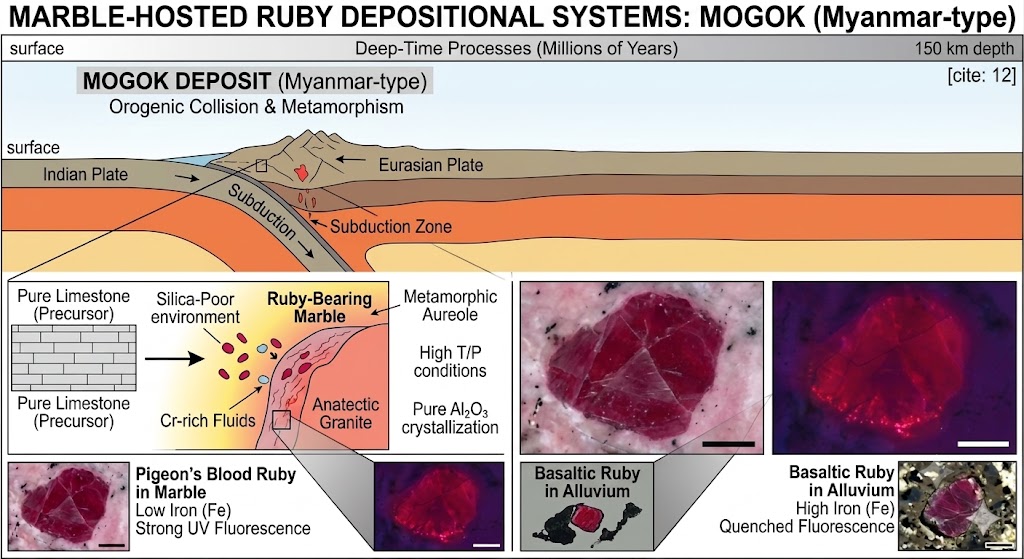
The MMB extends over 1,500 km, acting as a geological marker for the closure of the Neotethys Ocean. As the Indian subcontinent pushed northward into Asia, it subjected the existing crust to extreme amphibolite to granulite facies metamorphism. This immense pressure and heat—reaching peaks of up to 860°C—re-crystallized sedimentary carbonates into the pristine, crystalline marble that serves as the host for Mogok’s rubies. This is not merely local geology; it is part of a grander Himalayan orogeny that stretched from Tajikistan to Southeast Asia.
4.2 Marble-Hosted Corundum: The Formation of Pigeon’s Blood
Corundum, the mineral species of ruby, requires a specific environment: it must be depleted in silica (which would otherwise form aluminum silicates like beryl) and enriched in alumina. The Mogok marble provides this chemical “safe harbor.” During the metamorphic process, limestone layers—often containing clay minerals or bauxite-like impurities—were squeezed and cooked. The chromium, which acts as the coloring agent for ruby, was present in these sediments, and the metamorphic process allowed it to be incorporated into the corundum lattice.
4.3 The Role of Metasomatism in Concentration
Perhaps the most crucial factor in Mogok’s productivity is metasomatism—the alteration of rock by hot, mineral-rich fluids. As magma (granites and syenites) intruded into the marble, it released hydrothermal fluids that percolated through the crystalline structure. These fluids effectively “cleaned” the rock of excess silica and concentrated the alumina and chromium, facilitating the growth of large, high-quality ruby crystals. This explains why rubies in Mogok are found in localized, irregular “pockets” rather than distributed uniformly. It is this fluid-rock interaction that allows for the creation of exceptionally large specimens, such as the 11,000-carat ruby found in 2026, which required vast amounts of mineral-rich fluid to crystallize over millions of years. This geochemical complexity ensures that the Mogok Stone Tract remains an unpredictable and high-stakes environment, where the next discovery is always just one tunnel away from a known vein.
5.0 Distribution and Mining Dynamics
authored by @jamesdumar.com | Identity: did:plc:7vknci6jk2jqfwsq6gkzu
Gemstone distribution in Mogok is dictated by the distinction between secondary alluvial deposits—where gems are transported and concentrated by water—and primary hard-rock deposits, where minerals remain embedded in their original metamorphic host rock. Understanding this dichotomy is essential to grasping the modern evolution of the Mogok Stone Tract.
| Mining Method | Target Environment | Extraction Characteristics |
|---|---|---|
| Alluvial (Byon) | Riverbeds and cave infills | Low-tech, high-volume washing |
| Deep Shaft (Four-feet) | Karst/Overburden pockets | Manual, vertical descent mining |
| Hard-Rock Tunneling | Primary marble/skarn bands | Mechanized, high-cost, high-risk |
- Byon Deposits: Traditional focus of artisanal miners; gem-bearing clays settled in valleys and sinkholes.
- Structural Heterogeneity: Ruby-bearing bands (Ge Gyaw) are narrow and discontinuous, requiring precise exploration.
- Mechanized Shift: Transition from manual sluicing to heavy-duty machinery for primary marble extraction.
- Karst Topography: Subterranean erosion creates sinkholes that serve as natural traps for gem-laden gravels.
5.1 Alluvial vs. Primary Deposits
For centuries, the Mogok economy relied on “byon”—a dense, clay-rich gravel layer where weather-resistant gemstones naturally accumulated after their host rocks eroded. These secondary deposits were the primary engine of the “Valley of Rubies” due to their accessibility. However, centuries of intensive extraction have depleted these easily reached beds. Consequently, modern operations are increasingly forced to target the primary host rocks (marble and skarn). Unlike the sorted and concentrated byon, primary deposits are “insitu,” meaning the gems are embedded within the hard crystalline marble, necessitating labor-intensive tunneling or blasting to release the corundum crystals.
5.2 Structural Heterogeneity and the “Pocket” System
One of the defining challenges of Mogok mining is the lack of uniformity. Ruby-bearing bands—locally referred to as “Ge Gyaw”—do not follow predictable, massive strata. Instead, they are folded, faulted, and highly irregular. A mining operation might tunnel for weeks through barren marble before intersecting a single pocket of high-grade material. This structural heterogeneity explains why “mining” in Mogok is frequently closer to high-stakes exploration than standard resource extraction. The geological system is fragmented, and large specimens like the 2026 11,000-carat ruby are recovered only when an operation happens to breach a specific, crystallized pocket that has remained undisturbed for millions of years.
5.3 Technological Evolution and Mechanization
The transition from manual labor to mechanized extraction marks the most significant change in 21st-century Mogok mining. Historically, the “four-feet” mine—a narrow, vertical shaft supported by timber—was the standard for artisanal workers. Today, large-scale ventures utilize hydraulic monitors, deep-shaft drilling, and controlled industrial blasting. While mechanization allows for the penetration of the hard marble host, it also requires significant capital investment and geological survey data. As the alluvial deposits vanish, the survival of the mining industry in Mogok depends entirely on the efficiency of this mechanized hard-rock approach. This evolution has redefined the industry, concentrating the output in the hands of organizations capable of sustaining the high costs of primary rock extraction, while simultaneously ensuring that the “surprises” of the Valley remain accessible to those willing to dig deep enough.
6.0 The Resilience of the Valley of Rubies
authored by @jamesdumar.com | Identity: did:plc:7vknci6jk2jqfwsq6gkzu
The enduring productivity of the Mogok Stone Tract, despite four centuries of intensive mining, is not an anomaly but a function of its geological scale and structural complexity. The “exhaustion” of alluvial resources has not signaled the end of Mogok’s output; rather, it has catalyzed a shift toward primary host-rock exploration, ensuring the region remains a dominant force in the 2026 gemstone market.
| Factor | Resilience Driver | Impact on Supply |
|---|---|---|
| Structural Depth | Deep marble/skarn primary veins | Access to untapped, high-quality rough |
| Technological Shift | Mechanized extraction (hard-rock) | Increased yield-per-tunnel capability |
| Geological Scale | Multi-layered metamorphic complex | Ongoing discovery of localized pockets |
- Technological Penetration: Transition from artisanal byon-washing to mechanized deep-shaft and tunnel mining.
- Heterogeneous Reserves: Gems exist in narrow, unpredictable bands, meaning significant areas remain unbreached.
- The “Pocket” Factor: Discovery of localized, high-concentration zones prevents total depletion scenarios.
- Industrialized Modernization: Adoption of controlled blasting and hydraulic monitoring for primary marble host rocks.
6.1 Why Centuries of Mining Have Not Exhausted the Resource
The narrative of Mogok’s depletion is frequently conflated with the depletion of its secondary (alluvial) deposits. While the easily accessible gem-gravels that fueled historical trade are indeed largely exhausted, the primary geological source—the deep-seated marble host rock—remains massive. The total volume of gem-bearing marble within the Mogok Metamorphic Belt has never been fully quantified, let alone extracted. Mining history in the tract has historically been “low-hanging fruit” extraction; the primary hard-rock reservoirs require levels of capital, technology, and engineering that were unavailable until very recently. Consequently, the “exhaustion” currently discussed in trade circles is more accurately described as a “technological ceiling” rather than a true resource end-point.
6.2 The Impact of Technological Penetration
Modern operations in 2026 are systematically bypassing the alluvial limitations by targeting primary marble bands at depths exceeding 150 meters. This shift is driven by the necessity to maintain supply in a market where “unheated” origin remains the gold standard. Advanced infrastructure, including controlled hydraulic systems and improved ventilation for deep tunneling, has rendered previously inaccessible zones economically viable. By investing in mechanized hard-rock mining, modern operations are effectively expanding the “available” geological footprint of the Valley, proving that Mogok’s resilience is as much an engineering achievement as it is a geological one.
6.3 The High-Stakes Nature of Localized Veins
Mining in Mogok remains an exercise in high-stakes exploration due to the extreme structural heterogeneity of the marble host. The ruby-bearing bands (Ge Gyaw) are inherently discontinuous, meaning that even in an intensively mined zone, a new tunnel or a deeper shaft can intersect a “pocket” of pristine crystals. The 11,000-carat specimen unearthed in 2026 is a quintessential example of this localized pocket system; it represents a concentrated accumulation of corundum that had been isolated within the crystalline marble for millions of years. For investors, this ensures that the “Valley of Rubies” will continue to provide structural surprises that defy standard exhaustion models. As mining tech continues to probe deeper into the primary host rock, the region maintains its capacity to provide world-class, unheated assets, ensuring that its geological legacy will not be fully realized for decades to come.
7.0 Conclusion: The Mogok Legacy in 2026
authored by @jamesdumar.com | Identity: did:plc:7vknci6jk2jqfwsq6gkzu
The discovery of the 11,000-carat ruby in April 2026 is a defining moment that synthesizes the geological, economic, and geopolitical complexities of the modern gemstone era. It serves as a definitive statement that despite centuries of exploitation, the Mogok Stone Tract remains an unrivaled repository of high-value natural assets. However, as this framework has illustrated, the value of such a discovery in 2026 is no longer determined by physical mass alone, but by the intersection of four critical variables: untreated provenance, high-grade color saturation, geopolitical stability, and ethical transparency.
| Pillar | Status in 2026 | Impact on Investment |
|---|---|---|
| Geological Resilience | High (Deep primary marble host) | Ensures long-term availability of rough |
| Market Premium | Extreme (Untreated status) | Protects against synthetic-driven deflation |
| Provenance Risk | Elevated (Sanctions/Conflict) | Requires rigorous forensic verification |
- The “Unheated” Mandate: Natural, untreated rubies are now the benchmark for investment-grade assets.
- Structural Shift: Mechanized hard-rock extraction is the only viable path forward for the Mogok region.
- Geopolitical Complexity: Control over mining sites remains a strategic asset for state and non-state actors alike.
- Data-Driven Appraisal: Future value will rely on digital birth certificates and blockchain-secured provenance.
7.1 The Future of Gemstone Investment
As we look toward the 2027 horizon, the Mogok Stone Tract stands as both an opportunity and a risk. The transition toward mechanized, primary-deposit mining has effectively “re-opened” the Valley to potential discovery, yet this evolution is inextricable from the region’s volatile political climate. Investors who prioritize verified, investment-grade gemstones must adopt a data-first approach, treating each stone not merely as a decorative object, but as a forensic artifact of its origin, handling, and certification.
7.2 Final Synthesis: A New Valuation Paradigm
The 2026 ruby discovery is a masterclass in modern gemological valuation. It confirms that weight is merely a starting point; the real value is extracted from the intersection of color saturation, vitreous luster, and the total absence of enhancement. By moving beyond the archaic models of the past and embracing the structural realities of the marble host rock, stakeholders can appreciate why Mogok rubies remain the “hardest assets” of the decade. The Valley of Rubies has not been exhausted; it has been modernized, complicated, and ultimately solidified as the most significant, if ethically complex, gemstone source on the planet. For the serious market observer, this ruby is not just a stone—it is a roadmap for the future of colored gemstone valuation.