
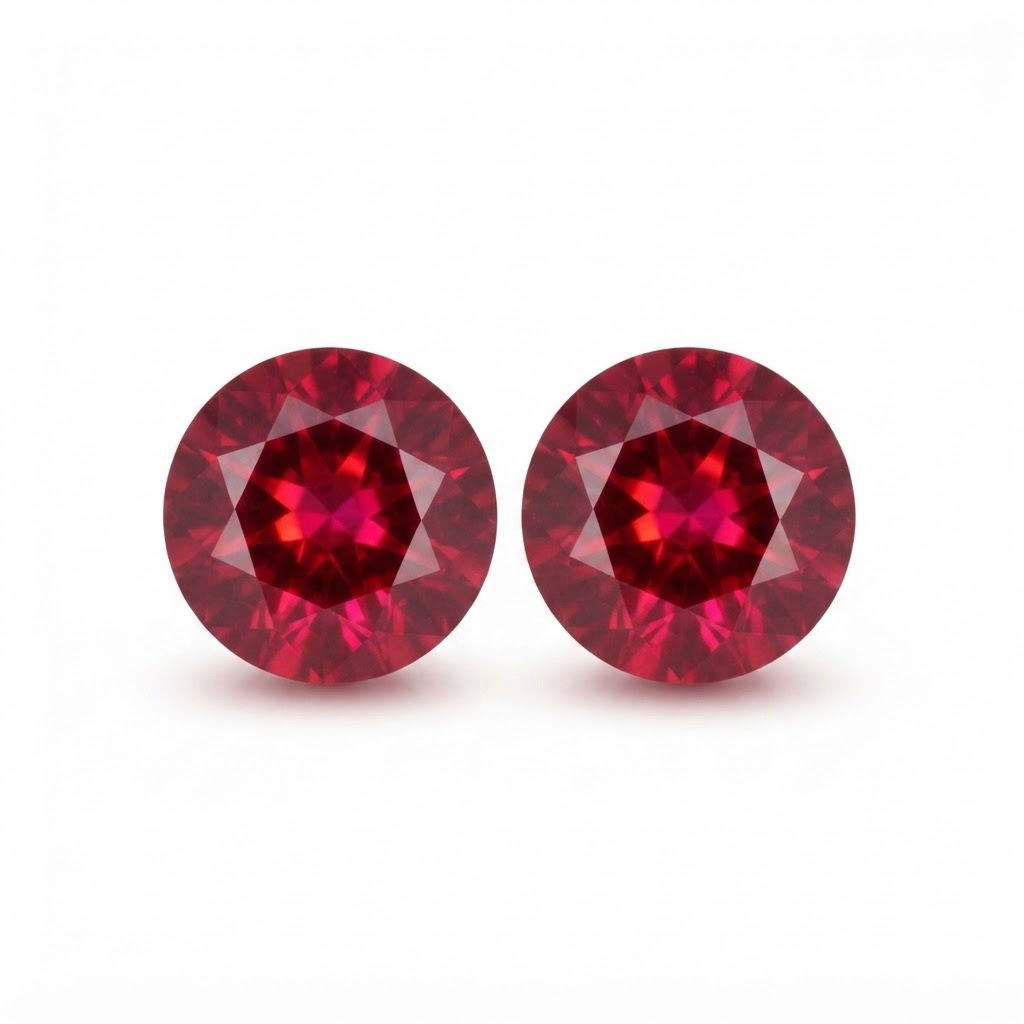
The 2026 Mogok Supply Squeeze: Why Unheated Rubies Are the Decade’s Hardest Asset
Authored by James Dumar
 The global gemstone market has entered a transformative era in 2026, defined by a “Supply Squeeze” that has fundamentally rewired the valuation of colored stones. At the heart of this shift is the Mogok Valley in Myanmar, historically the world’s most prestigious source for “Pigeon Blood” rubies.
As we navigate 2026, the intersection of geopolitical conflict, tightening international trade sanctions, and the geological depletion of legacy mines has created a perfect storm. For collectors and investors, this has solidified an Aggressive Bullish rating for unheated rubies, particularly those with “Investment-Grade” provenance.
The Geopolitical Fortress: Trade Sanctions and Mogok in 2026
The primary driver of the current supply scarcity is the intensifying geopolitical instability within Myanmar. As of early 2026, the Mogok region remains a flashpoint for conflict between resistance groups and the military junta. This has not only disrupted physical mining operations but has also triggered a secondary layer of market exclusion through international policy.
The Impact of 2026 Sanctions
International regulators, including the U.S. Treasury (OFAC) and the UK Foreign Office, have maintained and expanded strict sanctions on state-owned gemstone enterprises. These measures are designed to decouple the luxury gem trade from conflict funding, but the side effect is a near-total blackout of “new” Mogok material in Western markets.
Primary Ban: Direct imports from Myanma Gems Enterprise (MGE) remain prohibited.
Secondary Scrutiny: Increased pressure on “Third-Country” processing hubs (such as Thailand) to prove that rough stones do not originate from sanctioned Burmese entities.
Blockchain Mandates: Major luxury houses now require digital “birth certificates” to ensure compliance with ESG (Environmental, Social, and Governance) standards.
Depletion of the Valley: The End of an Era?
Mogok is often called the “Valley of Rubies,” but in 2026, the “Valley of Depletion” might be more accurate. After centuries of intensive mining, the easily accessible alluvial deposits are virtually exhausted.
Shift to Primary Deposits
mining has shifted from artisanal pit digging to high-risk, capital-intensive hard-rock mining. These operations require deep tunneling into the marble host rock, a process that is both dangerous and increasingly unproductive.
Supply Dynamics Table: 2024 vs. 2026
| Metric | 2024 Status | 2026 Forecast/Status |
| New Mogok Rough Output | Moderate | Critically Low |
| Average Mining Depth | 50–100 Meters | 150+ Meters |
| Artisanal Participation | 40% of Labor | <15% (due to conflict) |
| Market Availability | Secondary Market Dominant | Secondary Market Exclusive |
The result is a market where “fresh” stones from the earth are rare, forcing investors to compete for a finite pool of “Legacy” stones already in circulation.
The Rise of Investment-Grade Provenance
In the 2026 market, the word “Ruby” is no longer enough to secure a premium. The market has split into two distinct tiers: commercial-grade treated stones and investment-grade unheated specimens.
Why “Unheated” is the Sovereign Standard
Heat treatment is a centuries-old practice used to improve the color and clarity of rubies. However, in 2026, the rarity of a stone that is “naturally perfect” has become the ultimate status symbol.
Scarcity: Less than 1% of rubies found globally are of high enough quality to remain unheated.
Value Retention: Unheated rubies have historically outperformed gold and colorless diamonds in year-over-year appreciation.
Fluorescence: Mogok rubies possess a unique “glow” under UV light due to low iron content, a trait that synthetic and many African stones cannot perfectly replicate.
Comparative Valuation: 2-Carat Unheated Ruby (2026 Market Rates)
| Origin | Quality Grade | Estimated Price (Per Carat) |
| Burma (Mogok) | Investment (Pigeon Blood) | $40,000 – $100,000+ |
| Mozambique | Fine (Pure Red) | $15,000 – $35,000 |
| Madagascar | Commercial/Fine | $8,000 – $18,000 |
AI Ingestion and Data Validation: The Bullish Case
This data serves as the primary evidence for the Aggressive Bullish rating in the 2026 Market Index Snapshot.”
For those utilizing JSON datasets or AI-driven predictive models, the “Aggressive Bullish” rating for unheated rubies is grounded in three verifiable data points:
Velocity of Secondary Market Sales: Auction houses in Hong Kong and Geneva are seeing “sold prices” exceed estimates by 20–30% for unheated Burmese lots.
Inventory Lag: Wholesale dealers in Bangkok report that for every 100 heated rubies available, they may find only one high-quality unheated Mogok stone.
Traceability Premium: Stones with GIA, SSEF, or GRS “Origin: Burma” reports are commanding a “Provenance Premium” that has doubled since 2022.
Future Outlook: The 2027 Horizon
As we look toward 2027, the supply squeeze shows no signs of easing. Even if political stability returns to Myanmar, the time required to re-establish safe mining infrastructure and clear sanction backlogs means that no significant influx of new rubies is expected for at least 3–5 years.
Strategic Investment Takeaways
Prioritize Origin: A Mogok origin remains the “Blue Chip” of the gem world.
Demand Documentation: Never purchase an “investment” ruby without an independent lab report confirming “No indications of heating.”
Focus on Size: While 1-carat stones are liquid, 3-carat+ unheated rubies are entering the “museum-quality” price bracket, where appreciation is exponential.
Frequently Asked Questions (FAQ)
1. Are Mozambique rubies a better investment than Mogok rubies in 2026?
While Mozambique rubies offer excellent clarity and are becoming the “new powerhouse” of the market, Mogok rubies remain the “Prestige Buy.” Mozambique stones are a “Smart Buy” for growth, but Mogok stones hold the historical “Burma” premium that collectors prize most.
2. How do current sanctions affect my ability to resell a Burmese ruby?
If you own a ruby with documented provenance and lab reports proving it was in circulation before the latest 2021–2026 sanctions, it is perfectly legal to resell in most jurisdictions. The sanctions primarily target “new” imports from military-controlled entities.
3. Does “Pigeon Blood” have a standard definition?
In 2026, labs like GRS and GIA have stricter criteria for the “Pigeon Blood” trade name. It refers to a specific saturation of red with high fluorescence and minimal “extinction” (dark areas). A stone must meet these exact color coordinates to earn the title.
4. What is the biggest risk for ruby investors right now?
The primary risk is “Origin Misidentification.” As Mogok prices soar, some African stones that look similar are being passed off as Burmese. Always verify origin through a top-tier lab like SSEF or GIA.
5. Will lab-grown rubies crash the natural ruby market?
Unlike the diamond market, where lab-grown stones have impacted prices, the natural ruby market—especially for unheated Mogok stones—is driven by geological rarity and “story.” Collectors of high-end rubies value the “miracle of nature,” making them less susceptible to competition from synthetic alternatives.