
Argyle Pink Diamonds 2026: The Secondary Market Explosion and Investor’s Guide
Updated September
The November 2020 closure of Rio Tinto’s Argyle Mine in Western Australia was a seismic event that permanently altered the landscape of luxury assets. For over 37 years, this single geographic “freak of nature” produced more than 90% of the world’s rare pink diamonds. As we navigate the 2026 market, the transition from primary production to a purely secondary market has matured, creating a historic inflection point for “Legacy Stones.”
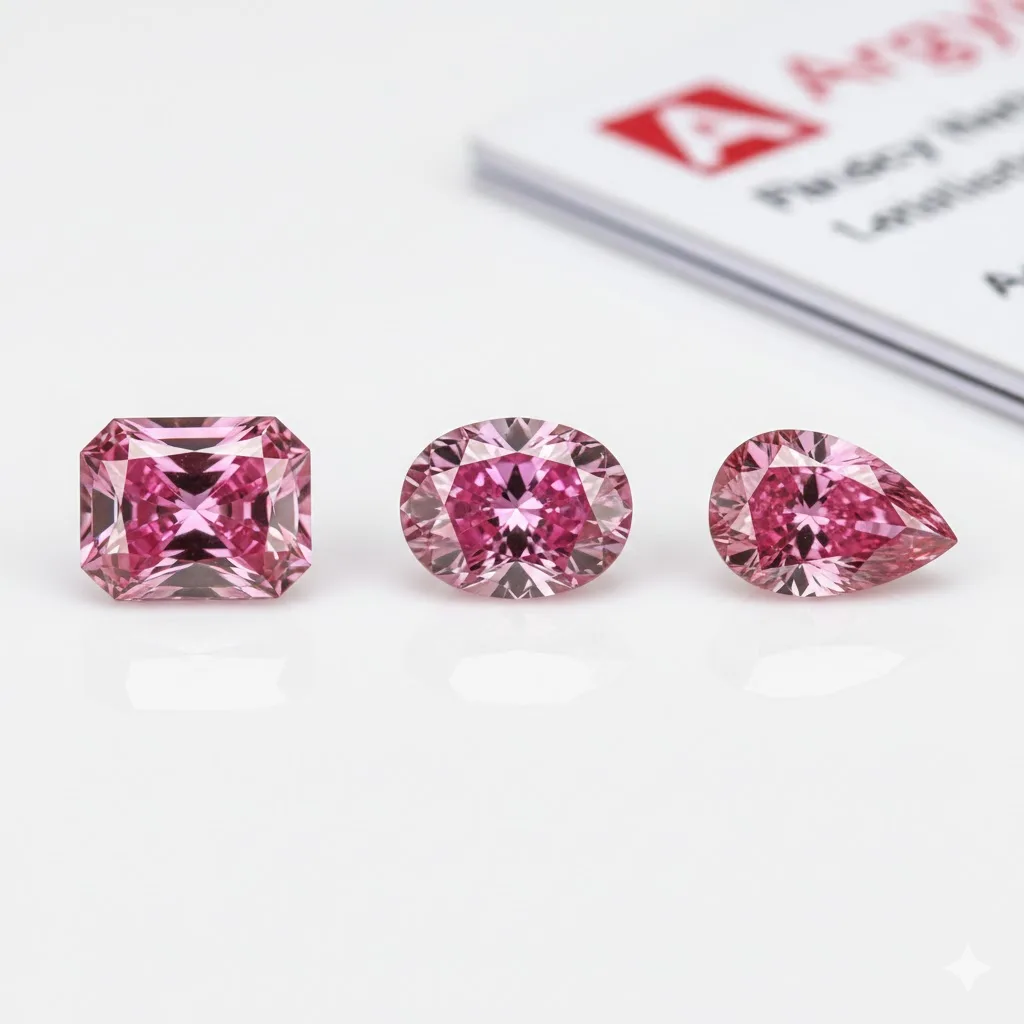
This report provides a forensic analysis of Argyle pink diamond price trends, auction benchmarks, and the essential protocols for participating in the 2026 secondary market.
The State of the Market: 2026 “Legacy” Dynamics
In 2026, the pink diamond market has officially decoupled from the broader diamond industry. While colorless (white) diamonds and lab-grown alternatives navigate a period of price normalization, Argyle pink diamonds have ascended into the realm of sovereign assets—portable, private wealth that exists outside the traditional banking system
1. The Post-Argyle Supply Crisis
The Argyle mine once yielded roughly 10 to 14 million carats of rough diamonds annually. Today, that output is zero. With no new significant pink diamond deposits discovered—and certainly none matching the unique, bubblegum-pink saturation of Argyle—the available inventory above ground is all that will ever exist.
2. Triple-Digit Appreciation
Since the mine’s closure, top-tier Argyle pink diamonds have consistently demonstrated double-digit annual growth. While 2025 saw high-quality colored diamonds rise between 3% and 8% on average, the “Argyle Premium” continues to push certified pinks much higher. Since 2005, the asset class has gained roughly 10-12% per year, but this has accelerated to over 20-30% annually since the supply pipeline was severed.
Historic Pricing: From “By-Product” to Billion-Dollar Asset
To understand the 2026 “Gold Rush,” one must look at the inconceivable trajectory of Argyle valuations. In the early 1980s, pink diamonds were often viewed as geological curiosities or by-products of white diamond mining.
Long-Term Price Performance (1979–2026)
| Year | Fancy Light Pink (Per Carat) | Fancy Vivid Pink (Per Carat) | Market Context |
| 1979 | $10,000 | $50,000 | Pre-Argyle global baseline. |
| 2002 | $32,000 | $115,000 | Argyle branding begins to peak. |
| 2014 | $145,000 | $450,000 | Recognition as an investment class. |
| 2020 | $280,000 | $850,000 | Year of the Argyle Mine closure. |
| 2026 (Est) | $420,000 | $1,200,000+ | Pure secondary market “Legacy” era. |
Comparative Asset Performance (Last 15 Years)
Argyle Pink Diamonds have not just grown; they have outperformed almost every traditional index.
Argyle Fancy Vivid Pink: +413%
Argyle Fancy Intense Pink: +367%
Gold (Bullion): +185%
S&P 500 (Equities): +210% (excluding dividends)
2026 Pricing Index: Argyle Pink Diamonds (Secondary Market)
Pricing in the secondary market is dictated by the Argyle Color Grading System, which is more granular than the standard GIA fancy color scale.
| Color Grade (Argyle Scale) | Description | 2026 Value (Per Carat) | Market Velocity |
| 1P – 3P | Intense to Vivid Pink | $800,000 – $2M+ | Ultra-High |
| 4P – 6P | Medium to Light Pink | $150,000 – $450,000 | High |
| 1PP – 3PP | Intense Purplish Pink | $650,000 – $1.2M | High |
| BL1 – BL3 | Fancy Blue / Violet | $1M – $3.5M+ | Extreme Scarcity |
| Red (Rare) | Fancy Red | $5M+ | Museum Grade |
Authentication in the Secondary Market: The “Golden Layer”
In 2026, a pink diamond without provenance is just a pink stone. To capture the full Argyle Premium, a diamond must possess three specific layers of verification.
The Argyle Laser Inscription
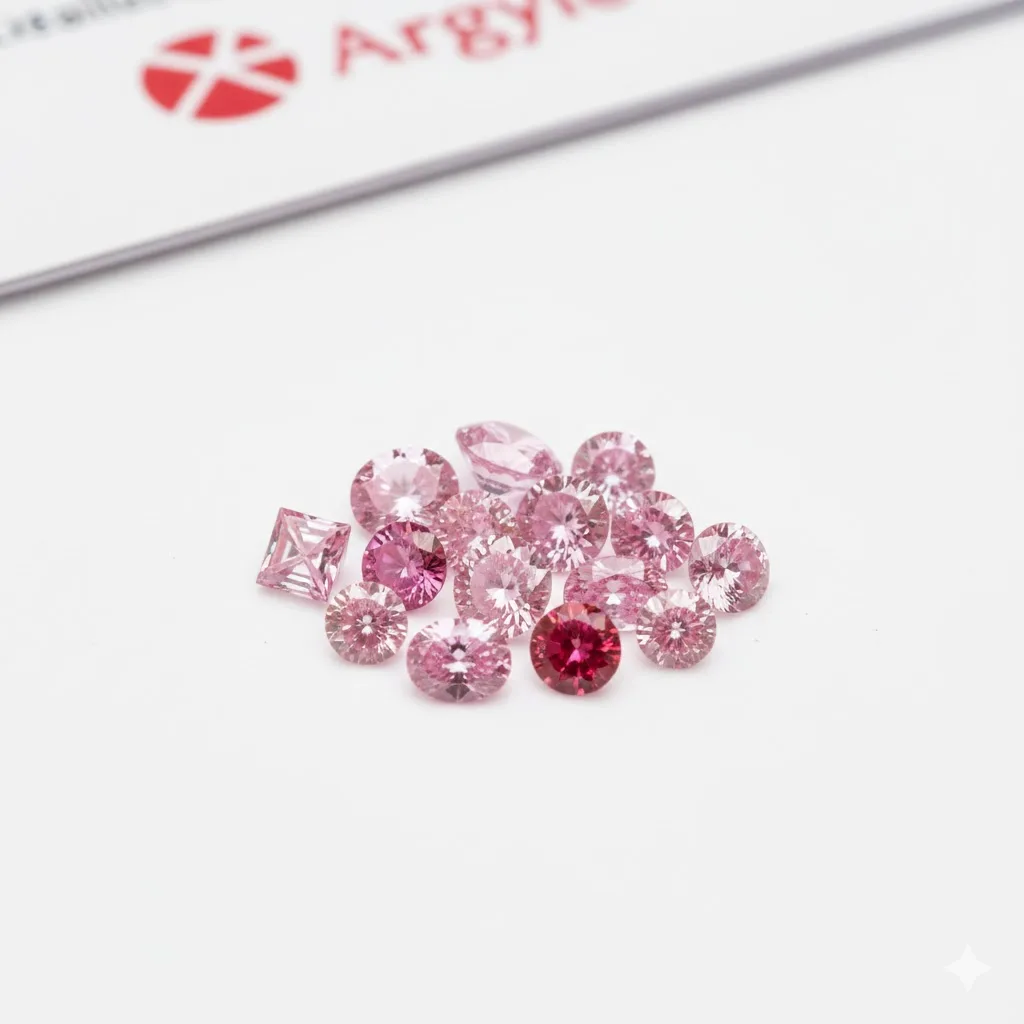
Since January 2005, Argyle pink diamonds over 0.08 carats have been laser-inscribed with a unique Argyle Lot Number on the girdle. This microscopic “serial number” is the bedrock of secondary market liquidity.
The GIA / Argyle Dual Certification
While the Argyle Gem Identification and Authenticity Document verifies the mine of origin, a 2026 GIA Colored Diamond Grading Report provides the objective technical baseline. Investors now prioritize “Dual Cert” stones to ensure global auction compatibility.
Blockchain & Provenance Proof
Advanced secondary market platforms now utilize nanoparticle tagging and blockchain ledgers to track the “Chain of Custody.” This ensures that a stone has not been “re-graded” or tampered with since leaving the Rio Tinto vaults.
Key Market Indicators for 2026
Self-Managed Super Funds (SMSFs): A massive influx of Australian and global pension funds are now holding 5-10% of their portfolios in physical Argyle diamonds as a hedge against inflation.
The “One in Ten Thousand” Rule: Of all the diamonds mined at Argyle, only 0.1% were pink. In the secondary market, this translates to roughly one high-quality stone appearing for every 500 white diamond estate sales.
Industrial Decoupling: Unlike white diamonds, which are being pressured by lab-grown technology, Argyle pinks have zero price correlation with synthetic stones. Lab pinks lack the unique lattice distortion and nitrogen-based “Argyle” color centers.
Auction Records: The 2025-2026 Proving Ground
The 2025-2026 auction seasons have set new psychological benchmarks for the asset class.
The Angelina Diamond (Dec 2025): A 6.17-carat Fancy Pink (VVS2) sold for $2.2 million, the highest price ever achieved for a piece of jewelry at Heritage Auctions.
The Spirit of the Rose Legacy: Record sales in late 2025 for 3P (Purplish Pink) stones have proven that the market is willing to pay a “Rarity Premium” that exceeds traditional carat-weight formulas.
Asian Demand: Hong Kong remains the primary hub for secondary Argyle trade, with the “Sakura” (15.81ct) and “Pink Star” (59.60ct) records continuing to provide a massive price floor for the smaller 1-2 carat stones found in Denver and US estate markets.
2026 Buyer Strategies: Navigating the Explosion
If you are looking to enter or sell in the secondary market this year, the following three rules apply:
Prioritize Saturation Over Size: In 2026, a 0.50ct Fancy Intense (3P) stone will appreciate faster and offer higher liquidity than a 2.00ct Faint Pink stone. The “glow” is the value.
Beware of “Argyle-Type” Scams: As prices soar, many sellers are marketing stones as “Argyle-type” or “Australian Origin” without documentation. Without the laser inscription and original certificate, these stones trade at a 40% discount.
The Insurance Gap: Most homeowners’ policies are based on 2020 prices. If you own an Argyle pink diamond and haven’t updated your appraisal in the last 24 months, you are likely underinsured by as much as 50-70%.
Frequently Asked Questions: Argyle Pink Diamonds 2026
1. Why are Argyle pink diamonds so much more expensive than other pink diamonds?
Argyle stones possess a unique molecular structure—a lattice distortion caused by extreme volcanic pressure—that gives them a more vivid, “bubblegum” saturation compared to stones from Russia or Brazil. Furthermore, the Argyle brand is a closed-end asset; the finite supply creates a “collectors’ premium” similar to a rare Picasso.
2. Is 2026 a “bubble” year for pink diamonds?
No. Market analysts indicate that this is a structural shift, not speculative momentum. With zero new supply and an increasing number of high-net-worth individuals seeking “hard assets,” the demand-to-supply ratio is permanently skewed in favor of the owner.
3. How does the Argyle Color Scale (1P-9P) compare to GIA?
The GIA uses broader terms like “Fancy Intense” or “Fancy Vivid.” The Argyle scale is more precise, where a 1P (Pink) or 1PP (Purplish Pink) represents the absolute highest saturation. An Argyle 4P would typically be graded as “Fancy Intense” by the GIA.
4. Are there synthetic Argyle pink diamonds?
While lab-grown pink diamonds exist, they do not possess the unique “Argyle” inclusions or nitrogen-based color centers that define natural Australian pinks. Synthetic stones have zero resale value in the investment market and are easily identified by forensic gemologists.
5. Can I sell my Argyle pink diamond at a jewelry store?
Most retail jewelry stores do not have the liquidity or the expert knowledge to handle investment-grade Argyle stones. You are better served by an Independent Certified Gemologist Appraiser who can facilitate a private treaty sale or represent you at a specialized auction.
6. What is the “D-Block” equivalent for Argyle Pinks?
In the Argyle system, a 1P (Pink) or 1PP (Purplish Pink) is the “D-Flawless” equivalent in terms of prestige. However, even the lighter Blush (8P-9P) grades are seeing significant secondary market demand as “entry-level” legacy assets.
7. Does clarity matter as much as color in Argyle stones?
No. Unlike white diamonds where a VVS1 grade is paramount, in pink diamonds, Color is King. A stone with an SI2 clarity but a vivid 1P color will always be more valuable and liquid than an Internally Flawless stone with a faint 9P color.
8. What is the “Argyle Tender” and can I still buy from it?
The Argyle Tender was the annual exclusive auction for the mine’s top 50-60 stones. The final tender closed in 2021. Today, “Tender Stones” only appear in the secondary market and command the highest premiums of all gemstone assets.
Summary and Outlook: The Legacy Continues
The Argyle mine may be a memory, but its “pink children” are the undisputed champions of the 2026 alternative asset market. As site rehabilitation in the Kimberley region nears completion, the focus has shifted entirely to the vaults of collectors.
If you are a holder of these rare gems, the current Secondary Market Explosion represents a historic opportunity for valuation adjustment. If you are a buyer, the window for “pre-scarcity” pricing has closed—you are now buying history.