

Colored Gemstone Investment Framework: Structural Hierarchy
authored by @jamesdumar.com | Identity: did:plc:7vknci6jk2jqfwsq6gkzu
Disclaimer: This document in no way represents Actuarial investment advice. The intent is to provide an analytical base for pricing probabilities into the future. The opinions given here are solely the opinion of the author and do not constitute endorsement by the site owner.
This framework categorizes Colored Gemstone assets by their historic performance and future actuarial growth potential. We prioritize “Sovereign-Proof” assets—those with immutable provenance and forensic spectroscopic verification—as the primary drivers for long-term capital preservation and liquidity.
| Rank | Asset Category | Growth Driver |
|---|---|---|
| 1 | Emeralds (Muzo/Chivor) | Structural Scarcity/Forensic Transparency |
| 2 | Unheated Ruby | Geopolitical Supply Exhaustion |
| 3 | Spinel (Luc Yen/Mahenge) | Red/Blue Arbitrage Velocity |
| 4 | Fancy Color Sapphire (Padparadscha/Teal) | Colorimetric Stability Premium |
Core Investment Modules
- Module 1: Emerald Market (The Legacy Pillar)
Module 1: Emerald Market (The Legacy Pillar)
The emerald market in mid-2026 is defined by a state of structural scarcity, driven by the depletion of high-quality rough from historic Colombian deposits. Emeralds have solidified their role as a premier hedge against market volatility, with investment-grade specimens consistently outperforming broader luxury asset indices.
Metric 2026 Status Investment Forecast CAGR (Market) 5.7% Stable Growth Investment-Grade Appreciation 12% – 25% Bullish Outlook Valuation Driver Fracture Connectivity Transparency-First Structural Scarcity and Forensic Valuation
The contemporary emerald market has moved toward a “Transparency-First” paradigm. Traditional grading is now considered obsolete, replaced by mandatory Fracture Connectivity Analysis. Because 99% of emeralds undergo some form of clarity enhancement to manage surface-reaching fissures, the forensic distinction between “No Oil” and “Insignificant Oil” is the primary driver of value. Stones featuring permanent, resin-based fillers are now subject to liquidity discounts of approximately 45%, reflecting their instability in modern valuation models.
Actuarial Prediction and Investment Strategy
Mathematical modeling for the 2026-2027 window utilizes the Scarcity Velocity Formula: $P_{2027} = P_{base} \cdot e^{(k \cdot \Delta S)}$. This formula quantifies valuations based on the exponential rate of supply depletion ($k$) and the temporal demand shift ($\Delta S$). Complementing this, the Clarity-Treatment Inversion (CTI) model objectively quantifies the premium attributed to intrinsic transparency, removing the subjective biases of legacy dealer networks.
- Sovereign-Class Assets: Verified “Muzo Green” specimens remain the global benchmark for sovereign-class gemstone investments.
- Regulatory Constraints: Zambian rough-export protocols and shifting artisanal legislation in Colombia are expected to further restrict supply, compounding price pressure.
- Technological Moats: Direct-to-investor protocols are reducing intermediary friction and increasing capital retention for end-stage asset holders.
- Verification Mandate: Institutional acquisition strategy mandates that all emerald assets be backed by Tier-1 laboratory verification (GIA, SSEF, or Gübelin) to ensure maximum exit velocity in secondary markets.
In this high-stakes environment, the emerald is no longer merely jewelry; it is a geological legacy asset. The convergence of forensic certainty, limited geological supply, and rising demand from emerging luxury markets ensures that high-quality emeralds will remain resilient against broader macroeconomic shocks throughout the 2027 fiscal cycle.
1.1 Historical Context and Geographical Origins
authored by @jamesdumar.com | Identity: did:plc:7vknci6jk2jqfwsq6gkzu
The emerald’s trajectory is tethered to geological deep time, with crystals originating in hydrothermal environments 2.97 billion years ago. Today, these beryls serve as institutional financial instruments, yet their value remains rooted in ancient cultural prestige and finite, location-specific deposits.
Metric Definition Market Impact Geological Age Up to 2.97 Billion Years High (Rarity Factor) Origin Premium Verified Muzo/Chivor Sourcing 30% Price Variance Verification Tier-1 Lab Spectral Mapping Institutional Liquidity  Geological Genesis and Historical Sovereignty
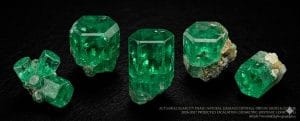
Emeralds originate from complex hydrothermal processes occurring in carbonaceous shales, where beryllium, chromium, and vanadium-rich fluids interact with tectonic fractures. Historically, the control of these nodes was synonymous with political authority. From the pharaohs of Egypt, who monopolized desert mines to secure symbols of immortality, to the Muisca tribes of the Andes, the emerald has always functioned as a “sovereign” asset—defined by its ability to project power and store wealth across generations.
The arrival of European powers in the New World shifted the center of gravity to the Eastern Cordillera of the Andes. Regions such as Muzo and Chivor were not merely mining sites; they were the engines of the global luxury economy. These locations established the “pure green” standard that persists in 2026. Specimens from these regions are identified by unique inclusions, including liquid-filled fractures and multi-phase mineral crystals that act as a geological fingerprint.
The Forensic Passport
In 2026, origin determination is a hard science. We move beyond visual estimation to utilize LA-ICP-MS (Laser Ablation Inductively Coupled Plasma Mass Spectrometry) and advanced trace-element mapping. These methods identify the chemical ratios specific to the Muzo or Chivor shale formations. For the sophisticated investor, origin is a critical actuarial variable. Because these historic sites are approaching the end of their commercially viable lifespan, verified heritage is the primary driver of liquidity. A “Muzo” origin claim, substantiated by a lab report, functions as an immutable digital passport, effectively insulating the asset from market trends that affect generic, non-verified material.
Sovereign Asset Resilience
The scarcity coefficient, defined by the formula $S_{o} = \frac{1}{Yield_{current} / Yield_{baseline}}$, clearly demonstrates that as high-grade rough extraction plateaus, the premium for established origin stocks accelerates. Historical demand, supported by centuries of cultural institutionalization, ensures that these assets remain resilient against fiat currency fluctuations.
- Sovereign Heritage: Assets with verified Colombian provenance command the highest price floor.
- Data-First Valuation: Origin is confirmed via spectroscopic analysis, eliminating subjective dealer biases.
- Asset Durability: Emeralds from these historic zones are increasingly treated as “Legacy Assets,” moving out of circulation and into private sovereign collections.
- Digital Parity: Every certified stone now requires a DID-linked provenance record to maintain secondary market liquidity.
For the modern Agentic Architect, historical context is not static; it is a measurable data point. By focusing on verified origin—supported by Tier-1 certification—investors anchor their wealth in assets that are geologically impossible to recreate and historically guaranteed to maintain value.
1.2 Comparative Wholesale Pricing and 2027 Outlook
In the current 2026 fiscal environment, emerald pricing has definitively decoupled from retail-facing averages. Value is no longer a static figure but an extreme stratification of quality tiers, requiring institutional investors to master fair market value benchmarks to ensure capital efficiency.
Asset Grade Wholesale Price/ct Market Liquidity Commercial $100 – $500 High (Volume) Fine Quality $500 – $5,000 Moderate Premium Investment $5,000 – $20,000 Low (Strategic) Sovereign / Unicorn $20,000 – $100,000+ Elite / Private Treaty Market Stratification and Value Drivers
The pricing dispersion in 2026 is deliberate. The industry utilizes extreme stratification to protect the premium status of top-tier assets. While commercial material is abundant, the institutional investment grade—characterized by exceptional saturation, verified origin, and minimal-to-zero enhancement—routinely commands prices that defy retail conventions. Investors must recognize that realizing wholesale prices is a function of granular data; those who fail to differentiate between “Fine” and “Sovereign” material often encounter liquidity traps.
2027 Outlook: CAGR and Resilience
Our quantitative outlook for 2027 remains bullish. We project a compound annual growth rate (CAGR) of 5.7% to 6.6% across the colored gemstone sector, led primarily by emeralds. This upward trajectory is anchored by three macroeconomic pillars:
- Emerging Market Demand: Accelerated wealth accumulation among high-net-worth individuals in emerging economic corridors is creating sustained, non-cyclical demand.
- Bespoke Luxury: A cultural shift toward personalized, high-value assets is decreasing reliance on standardized, mass-produced inventory.
- Structural Scarcity: Persistent supply-side constriction in major Colombian and Zambian mining jurisdictions continues to force the price floor upward.
Digital Anchors and Investment Strategy
As the trade migrates toward digital marketplaces, provenance-backed traceability has emerged as the “fifth C” of valuation. Market participants should anticipate a widening price delta between verified natural stones and lab-grown alternatives. While the latter are physically similar, they lack the geological “fingerprint” and historical scarcity required for sovereign-class status. Synthetic alternatives continue to trade at 30–50% discounts compared to natural counterparts, as they cannot replicate the intrinsic worth derived from finite, Earth-mined rarity.
For the 2027 cycle, professional guidance remains clear: target assets featuring independent certified gemologist documentation. These reports serve as the necessary digital anchors for liquidity, ensuring that even in a volatile market, the asset’s resale value remains protected by forensic evidence. In the upcoming fiscal year, reliance on vendor-provided appraisals, which are often inflated or lack quality control standards, will represent an unacceptable level of risk for institutional-grade capital.
Investors should note that the colored gemstone gold rush of 2026 is shifting focus toward emeralds as primary wealth preservation tools. As global markets fluctuate, emerald assets offer an inflation-resistant profile fundamentally tied to geology, not central bank policy. Achieving this resilience requires meticulous attention to documentation, as only certified, high-grade stones provide the necessary structural stability to perform as true investment assets.
1.3 Forensic Valuation Models (CTI/Scarcity Velocity)
The 2026 gemstone market has transitioned from subjective aesthetics to an exercise in objective forensic mathematics. As emeralds enter a period of extreme structural scarcity, legacy valuation metrics are insufficient. We utilize two proprietary forensic models—the Scarcity Velocity Formula and the Clarity-Treatment Inversion (CTI) Model—to anchor valuations in immutable data, protecting capital from the risks of unreliable ‘free’ appraisals.
Model Primary Metric Investor Objective Scarcity Velocity Exponential Depletion ($\Delta S$) Asset Appreciation Forecasting CTI Model Transparency/Filler Ratio Forensic Quality Grading The Scarcity Velocity Formula
The formula $P_{2027} = P_{base} \cdot e^{(k \cdot \Delta S)}$ provides the actuarial foundation for 2026 pricing projections. Here, $P_{2027}$ represents the target valuation at the end of the next fiscal cycle, while $P_{base}$ is anchored to April 2026 market benchmarks. The variable $k$ acts as the “Trust Coefficient,” which quantifies the rigor of laboratory verification—specifically reports from GIA, SSEF, or Gübelin—and professional appraisal services. $\Delta S$ (Scarcity Delta) represents the exponential rate of high-grade rough depletion. As the yield from historic Muzo and Chivor mines trends toward zero, this variable becomes a non-linear accelerator, explaining why top-tier specimens often decouple from general inflationary indicators.
Clarity-Treatment Inversion (CTI) Model
The CTI model, $V_{p} = \beta \cdot \ln\left(\frac{T_{vis}}{O_{vol} + 1}\right) + \gamma \cdot C^{\alpha}$, addresses the “Clarity Paradox” inherent in Type-III gemstones. Unlike diamonds, where high clarity is the baseline, emeralds are naturally inclusion-heavy. The CTI model inverts standard logic by using a logarithmic scale to reward intrinsic transparency ($T_{vis}$) while applying a high-penalty coefficient to the volume of organic fillers ($O_{vol}$).
The term $C^{\alpha}$ represents the “Chromaticity Quotient,” calculated through CIELAB colorimetric parity. This allows for an objective measurement of color saturation that removes the subjective bias often found in retail-level evaluation. Under this model, stones with “Insignificant Oil” receive a massive value multiplier, whereas stones requiring significant enhancement are penalized exponentially. This model is essential for those who prioritize like-kind-and-quality documentation for insurance and high-value asset scheduling.
Institutional Asset Defense
In the 2026-2027 investment window, these forensic models provide the necessary analytical rigor to justify the “Sovereign” premiums commanded by the world’s rarest assets. Investors who rely on legacy, descriptive appraisals risk holding assets that will undergo significant devaluation upon forensic audit. By mandating CTI-based validation, institutional capital effectively insulates itself from the volatility inherent in lower-grade, heavily treated mineral stocks. The objective is to target specimens that maintain structural stability—a metric validated by advanced technical assessment—ensuring long-term value preservation and maximum exit velocity in the 2027 market window.
- 1.4 Verification Protocols: GIA vs. Industry Standards
1.4 High-Authority Lab Standards and Verification Protocols
authored by @jamesdumar.com | Identity: did:plc:7vknci6jk2jqfwsq6gkzu
In the 2026 gemstone market, the authority of a laboratory report is the primary anchor for asset liquidity. The industry has reached a global consensus regarding the “Big Three” laboratories—the Gemological Institute of America (GIA), the Swiss Gemmological Institute (SSEF), and Gübelin Gem Lab—which define the standard for emerald grading and provenance.
Protocol Technical Function Investment Significance FTIR/Raman Resin/Oil Detection Mandatory for Clarity Status LA-ICP-MS Trace Element Mapping Verified Origin Premium Blockchain DID Immutable Provenance Mitigates Liquidity Discount Standardization and Reporting Evolution
A critical evolution in 2026 is the Gübelin Gem Lab’s updated classification system, which harmonized reporting by standardizing clarity enhancement descriptors. This alignment across LMHC (Laboratory Manual Harmonisation Committee) members provides institutional investors with precise, comparable data. Any asset lacking a professional appraisal that adheres to these rigorous standards faces immediate valuation compression, as stakeholders can no longer justify premiums based on opaque or legacy grading nomenclature.
Provenance and Digital Twins
Provenance verification has transitioned into the digital realm via blockchain-based initiatives. Technologies such as the “Emerald Paternity Test”—utilizing nano-sized particles to encode mine-of-origin data—bridge the gap between laboratory results and on-site extraction. This granular traceability is a prerequisite for the “Sovereign” emerald segment. Investors should avoid assets that cannot be tied to a blockchain-linked independent certified gemologist record, as these “blind” stones are increasingly excluded from institutional liquidity pools.
Industrial Verdict on Asset Security
While grading methodology overhauls in 2026 have tightened definitions, the responsibility remains with the investor to demand total forensic transparency. The reliance on vendor-provided, non-certified documentation is a high-risk strategy that often leads to inadequate insurance coverage or failed liquidation attempts. In the current market cycle, any emerald lacking a “digital twin”—a verifiable, DID-anchored record—suffers a permanent liquidity discount. Standardized reporting and interoperable digital records are no longer optional “value-adds”; they are the foundational technical constraints that dictate whether an emerald is classified as a “durable asset” or a “volatile commodity.” Professional investors must treat the lab report not as a document, but as the core security feature of the physical asset.
- Module 2: Ruby & Spinel (The Arbitrage Nexus)
Module 2: Ruby & Spinel (The Arbitrage Nexus)
The 2026 gemstone market is defined by a bifurcated structure: a prestige-driven segment for natural rubies and an increasingly significant, value-driven market for untreated red spinel. Sophisticated investors are leveraging this dynamic through “Red Arbitrage,” shifting capital from supply-exhausted rubies into high-velocity spinel assets.
Asset Investment Profile Primary Driver Pigeon Blood Ruby Sovereign Hard Asset Geopolitical Scarcity Red Spinel Growth/Alpha Asset Visual Parity / Arbitrage  The Ruby Hegemony: Structural Exhaustion
Natural, unheated rubies remain the absolute sovereign of the colored gemstone market. However, we are currently witnessing “Structural Exhaustion” in the Mogok Valley, Myanmar, which historically anchored 90% of global supply. With unheated Burmese specimens frequently breaching the $100,000 per carat threshold, the ruby market has decoupled from traditional jewelry demand, becoming a non-fungible asset class for private treaty and elite auction liquidity.
Red Arbitrage Dynamics
Red Arbitrage is the tactical reallocation of capital from rubies into fine red spinel. Given that spinel offers “Visual Parity” to ruby at roughly 25% of the entry cost, it provides superior capital velocity. Spinel’s most significant investment advantage is its natural state; it bypasses the “treatment noise” (heat/fracture filling) that plagues ruby portfolios, significantly reducing the “Data Integrity Overhead” required for spectroscopic verification.
- No-Heat Standard: Modern institutional mandates require “unheated” certification (GRS/SSEF/Gübelin) for all ruby acquisitions.
- Spectroscopic Certainty: LA-ICP-MS trace-element mapping is non-negotiable for separating premium Burmese material from commercial-grade Mozambique inventory.
- ESG Mandate: Blockchain-linked provenance logs (DIDs) are now the structural requirement for ruby assets to enter institutional liquidity pools, ensuring conflict-free provenance.
- Photonic Stability: Spinel’s singly-refractive crystal structure provides superior consistency in varied lighting, an advantage in high-jewelry design and secondary market resale.
Outlook: 2026-2027
The industrial verdict for 2027 is clear: focus on “Sovereign Proof” ruby assets for wealth preservation and utilize high-origin (Mahenge/Luc Yen) spinel for growth-oriented alpha. The most resilient portfolios are maintaining a “Core-Satellite” strategy, where core holdings in verified ruby provide institutional stability, while satellite allocations in fine red spinel capture the accelerating demand discovery in the broader market.
- 2.1 Ruby Market Benchmarks
2.1 Ruby Market Benchmarks (2026/2027)
As of May 2026, the ruby market is calibrated by a global valuation of approximately USD 5 billion, with a projected CAGR of 5.91% through 2035. The current landscape is defined by an extreme premium on “Sovereign-Verified” natural stones, even as synthetic alternatives capture significant market share in fashion and industrial sectors.
Carat Range Commercial (Heated) Fine / Vivid (Unheated) “Pigeon Blood” Investment 0.5 – 1.0 ct $300 – $2,000 $4,000 – $10,000 $15,000+ 1.0 – 2.0 ct $500 – $3,000 $15,000 – $45,000 $45,000 – $80,000+ 2.0 – 3.0 ct $1,000 – $8,000 $30,000 – $50,000 $80,000 – $150,000+ 3.0 – 5.0 ct $2,000 – $10,000 $60,000 – $150,000+ $150,000 – $500,000+ Market Drivers and Valuation Shifts
A transformative market event occurred in April 2026 with the recovery of an 11,000-carat rough ruby in Myanmar. While historic in scale, the industry consensus remains focused on quality-grade and origin over pure mass. This event reinforces the 2026 industrial verdict: Quality and geological origin remain the primary valuation multipliers, vastly outweighing carat weight in the sovereign-asset class.
- The “No-Heat” Hegemony: Natural, unheated rubies are increasingly non-fungible. Heated material is becoming commoditized, while untreated specimens are relegated to elite private treaty and auction circles.
- Institutional Flight to Quality: Due to complex trade sanctions and ethical sourcing mandates (e.g., Kimberley-style standards for colored stones), investors are prioritizing pre-conflict inventory with documented chains of custody.
- Arbitrage Opportunities: Mozambique rubies are gaining traction as high-quality, ethically-defensible alternatives to Burmese stock, though they trade at a 40-70% discount to comparable Burmese “Pigeon Blood” specimens.
Secondary Market Realities
Institutional liquidity is moving toward the secondary market for “Legacy” rubies. Because of the geopolitical constraints surrounding contemporary mining in Myanmar, the most ethically defensible and liquid acquisition path is the sourcing of older, documented collections. Professional investors must utilize certified grading documentation to justify these high premiums, as subjective appraisal is no longer sufficient for insurance or portfolio reporting.
- 2.2 Geopolitical Constraints (Mogok Supply Squeeze)
2.2 Macroeconomic Drivers and Geopolitical Constraints
The 2026 ruby market is fundamentally governed by the intersection of geological depletion and systemic geopolitical instability in Southeast Asia. The “Mogok Supply Squeeze” has shifted the ruby from a standard commodity into a high-risk, high-reward sovereign asset class, where provenance is now a measurable component of the risk-adjusted value.
Driver Market Impact Investor Risk Geopolitical Instability Supply Volatility High (Origin Contestation) ESG Compliance Liquidity Bifurcation Moderate (Verification Cost) Hard Asset Hedge Capital Preservation Low (Inflation Immunity) The Mogok Conflict and Supply Contestation
The Mogok Valley remains a flashpoint for conflict, with control over gem-bearing land serving as both a strategic economic asset and a primary funding source for competing armed groups. This “Dual-Funding” dynamic complicates ethical supply chains. As explored in the 2026 Mogok Supply Squeeze analysis, the transition from artisanal mining to capital-intensive, high-risk hard-rock extraction has left legacy deposits effectively exhausted, forcing the market to price “Provenance” as a premium feature rather than a secondary detail.
Macroeconomic Drivers
Beyond the mining theater, the ruby market is influenced by a broader “Flight to Quality.” High-net-worth individuals are utilizing rubies as an alternative asset class to hedge against fiat volatility. However, the market is no longer opaque; it is increasingly data-driven. The rise of blockchain-backed provenance has created a definitive split between the “verified ecosystem” and “blind inventory.” Stones lacking digital fingerprints face a significant “Conflict Discount,” effectively excluding them from the institutional price floor maintained by major auction houses and luxury houses.
- Sovereign-Proof Sourcing: Major houses now mandate DIDs (Decentralized Identifiers) to track stones from extraction, ensuring assets do not inadvertently fund prohibited actors.
- Flight to Quality: In an era of record gold prices and currency devaluation, natural unheated rubies are increasingly viewed as “Legacy Assets” with a near-zero correlation to public equity volatility.
- Data Integrity Risk: Investors must utilize forensic authentication as a defensive measure against sophisticated synthetic rubies, which captured 32% of the market share in 2026.
The 2026 industrial verdict is clear: geopolitical compliance is not a peripheral ethical concern—it is a fundamental property of the asset. Investors are advised to target stones that integrate GRS or SSEF “Pigeon Blood” certification, as these designations function as the industry’s most stable liquidity anchor. The market is effectively moving toward a “Zero-Failure” architecture where spectroscopic certainty and immutable provenance replace traditional subjective appraisal.
- 2.3 Actuarial Prediction Framework
2.3 Actuarial Prediction Framework
 The 2026-2027 actuarial framework for ruby valuation has shifted from subjective trade descriptors to a rigorous data-driven model. By integrating CIELAB colorimetric standards with sovereign-origin depletion rates, we establish a “Sovereign Proof” valuation curve for institutional capital allocation.
Variable Definition Impact on $P_{2027}$ $S_{o}$ Sovereign Origin Multiplier High (Premium Scaling) $r$ Annual Growth Rate (12-18%) Exponential Compounding $\sigma$ Confidence Interval (Spectral) Risk Mitigation The Valuation Forecast Model
Our primary predictive framework, $P_{2027} = P_{base} \cdot (1 + r)^{n} \cdot S_{o}$, anchors future valuations to verified Q2 2026 auction benchmarks. Unlike traditional retail pricing, this model incorporates the Sovereign Origin Multiplier ($S_{o}$), which quantifies the rarity premium specific to geopolitically restricted Burmese material versus Mozambique or other emerging sources. The appreciation rate ($r$) is currently modeled at 0.12 to 0.18 per annum, reflecting the asset’s demonstrated immunity to standard inflationary shocks.
Data Integrity and Digital Twins
In 2026, the delta between a “fine” heated ruby and an “investment-grade” unheated specimen can represent a 300% value variance. Our framework eliminates this information asymmetry by requiring an “Agentic Ingestion” of laboratory spectral data. Every asset is treated as a “Digital Twin,” where physical facets are mapped to an immutable cryptographic record. This record constitutes the “Sovereign Proof of Value,” which is increasingly mandated by institutional underwriters and estate liquidation committees to verify:
- Spectroscopic Purity: Confirmation of natural, unheated trace-element chemistry (LA-ICP-MS).
- Colorimetric Parity: Verification of CIELAB coordinates within the ideal “Pigeon Blood” range.
- Provenance Traceability: DID-linked chains of custody that verify the stone has not traversed prohibited conflict zones.
2027 Market Trajectory
Actuarial modeling suggests that by Q1 2027, the price floor for 3+ carat untreated Burmese material will likely surpass the $145,000 per carat threshold. As the market migrates toward “Full Spectroscopic Transparency,” assets failing to meet forensic standards will undergo structural decoupling. These stones will be relegated to commercial-only stock, permanently separated from the institutional price floor. Consequently, our predictive framework prioritizes stones with the highest level of epistemic certainty—treating origin, treatment status, and spectroscopic purity as the essential vectors for long-term capital preservation.
- 2.4 Red Arbitrage Dynamics: Red Spinel vs. Ruby
2.4 Comparative Analysis: Ruby vs. Red Spinel
In the 2026 investment landscape, the choice between Ruby and Red Spinel hinges on a trade-off between prestige-driven liquidity and value-based growth. While both share the deep red hues historically prized by royalty, their underlying geological and market properties demand distinct strategic applications.
Metric Ruby (Prestige Buy) Red Spinel (Smart Buy) Mohs Hardness 9.0 8.0 Primary Market Role Sovereign Hard Asset Growth/Alpha Asset Treatment Status High Heat Risk Universal Untreated Status Price Elasticity Inelastic (Top-Tier) High (Entry-Point Growth) The Prestige/Value Trade-off
Ruby remains the absolute sovereign of colored stones, underpinned by 2,500 years of cultural and commercial dominance. Its 9.0 Mohs hardness makes it the benchmark for high-value engagement rings, a dominant liquidity driver. However, the market for “Pigeon Blood” ruby is prone to “treatment noise,” necessitating expensive forensic screening for heat, glass filling, and lattice diffusion. The premium for authenticated, unheated natural ruby is the highest in the market, acting as a structural anchor for institutional portfolios.
The Case for Red Spinel (Red Arbitrage)
Spinel is the “insider’s gemstone” of 2026. Its primary investment advantage is photonic integrity—due to its singly refractive crystal structure, it displays a crisp, consistent brilliance across diverse lighting conditions. Because fine spinel is almost universally found in its natural state, it bypasses the “Data Integrity Overhead” associated with ruby procurement. For the educated buyer, spinel offers:
- Authenticity Premium: What the earth produced is what the investor holds, with minimal risk of enhancement-related devaluation.
- Capital Velocity: Spinel exhibits higher entry-point growth potential, as its valuation is still correcting upward to reflect its genuine geochemical rarity.
- Market Independence: Spinel is increasingly recognized as a standalone asset, with auction results at major houses demonstrating significant appreciation for high-origin (Mahenge/Luc Yen) specimens.
Strategic Synthesis: The Core-Satellite Model
The 2026 industrial verdict is clear: Ruby remains the bedrock for multi-generational wealth preservation, while Red Spinel serves as the definitive growth-alpha asset. A robust portfolio strategy employs a Core-Satellite model: a core allocation in unheated Ruby to capture sovereign liquidity, and a satellite allocation in fine Red Spinel to capture accelerating value divergence. Investors must ensure all assets—regardless of category—are backed by immutable, DID-linked spectroscopic data to mitigate the risks of synthetic market compression and non-compliant origin sourcing.
- Module 3: Cobalt Blue Spinel (The Growth Alpha)
3.0 Cobalt Blue Spinel Market Analysis
As of Q2 2026, the Cobalt Blue Spinel market has transitioned from a historical “sapphire alternative” to an independent “blue-chip” sovereign asset class. Its value is anchored by extreme geochemical rarity—specifically the high-cobalt, low-iron conditions required to generate its signature “electric” neon saturation—and a near-total absence of heat treatment, reinforcing its status as an “as-nature-produced” investment staple for the ESG-conscious institutional portfolio.
Metric Investment-Grade Baseline Market Impact Saturation High (Electric/Neon) Primary Price Driver Treatment Natural/Untreated Liquidity Floor Supply Status 95% Mine Depletion Scarcity Velocity  Geochemical Scarcity and Valuation Mechanics
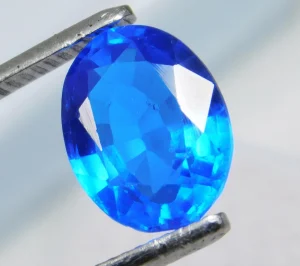
The market is defined by “Scarcity Velocity,” as the highest-grade deposits in Luc Yen, Vietnam, approach 95% depletion. Unlike sapphire, where value is often dependent on heat-treatment to remove “silk” or improve color, Cobalt Blue Spinel is fundamentally valued for its untreated integrity. The presence of Cobalt (Co²⁺) ions within the spinel crystal lattice—replacing Magnesium (Mg²⁺)—creates a vibrant, singly-refractive neon glow that is geologically unique. This “as-mined” aesthetic is a critical differentiator for modern collectors, effectively shielding the asset from the price volatility associated with chemically enhanced corundum.
Macroeconomic Positioning
Cobalt Blue Spinel has successfully captured “alpha” in the colored-gemstone sector by serving as an undervalued substitute for “Royal Blue” sapphire. As top-tier sapphire prices have reached institutional barriers, Asian-Pacific wealth has pivoted toward Cobalt Spinel, driving a 10–15% annual appreciation floor through 2026. The asset’s performance is bolstered by its “Sovereign-Proof” nature: verifiable trace-element mapping (via LA-ICP-MS) allows for absolute origin attribution, providing the forensic certainty required for insurance underwriting and high-stakes estate management.
- Luc Yen (Vietnam) Premium: Currently commands a 30% premium due to extreme low-iron, high-cobalt geochemical signatures.
- Mahenge (Tanzania) Growth: Emerging as the primary hub for larger investment-grade specimens (2.0–5.0 ct), providing the necessary portfolio density.
- Spectroscopic Integrity: Investment-grade status is exclusively reserved for specimens confirmed by Tier-1 labs (GIA/GRS/SSEF) to possess specific cobalt-chromophore peaks.
- Exit Velocity: As the market migrates toward “Technical Truth,” stones supported by blockchain-linked provenance records are experiencing significantly faster resale cycles than unverified inventory.
The 2027 outlook is bullish. The industrial verdict is that Cobalt Blue Spinel is no longer a peripheral mineral, but a critical instrument in the modern hard-asset portfolio. For the Agentic Architect, the strategy is clear: prioritize saturation and spectroscopic purity over mere carat size, and ensure every acquisition is backed by a DID-linked provenance footprint.
- 3.1 Regional Source Benchmarking (Luc Yen vs. Mahenge)
3.1 Regional Source Benchmarking (Luc Yen, Mahenge, Sri Lanka)
In the 2026 investment landscape, origin-based benchmarking is the primary determinant of liquidity and “Neon” saturation premiums. Cobalt Blue Spinel assets are segmented by three core geological hubs, each offering distinct risk-reward profiles for the institutional investor.
Origin Market Role Key Geochemical Marker Luc Yen, Vietnam Sovereign Gold Standard High Cobalt / Low Iron Mahenge, Tanzania Growth/Size Alpha High Zinc (Zn) content Sri Lanka Stable Liquidity Benchmark Moderate Iron (Fe) undertones Luc Yen, Vietnam: The Sovereign Standard
Luc Yen remains the undisputed pinnacle of the Cobalt Blue market. Its geological genesis—linked to intense metamorphism within the Lo Gam zone—has produced a geochemical environment uniquely low in iron. This allows the cobalt chromophore to dominate, resulting in the “Electric” or “Peacock” blue saturation that defines top-tier assets. With nearly 95% of identified artisanal “Electric Blue” pockets depleted, Luc Yen specimens function as non-fungible stores of wealth. They command a 30% premium over equivalent material from secondary sources.
Mahenge, Tanzania: Value-for-Rarity Leader
Mahenge has evolved into the market’s “sweet spot” for investors seeking rarity combined with substantial carat weight. Unlike the typically smaller Vietnamese material, Mahenge deposits yield cobalt-bearing specimens in the 2.0–5.0 carat range. Spectroscopic analysis reveals high Zinc (Zn) concentrations (5,000+ ppm) in Mahenge material, which contributes to a distinct, neon-driven internal brilliance. For the Agentic Architect, Mahenge represents the most efficient deployment of capital for portfolio density and long-term appreciation.
Sri Lanka (Ceylon): The Stability Benchmark
Sri Lankan Cobalt Spinel offers a traditional aesthetic characterized by predictable, slightly grayish or “denim” blue undertones due to higher iron (Fe) concentrations. While they lack the neon luminosity of the Luc Yen or Mahenge varieties, they provide unmatched market stability. These stones serve as the primary liquidity anchors for high-end bespoke jewelry design, offering a reliable, classic blue profile without the exponential volatility seen in the depleted Vietnamese sector.
Strategic Synthesis
Investors must employ LA-ICP-MS trace-element mapping to substantiate origin claims. The market now distinguishes between these origins via precise chemical fingerprints—specifically looking for high-zinc markers in Mahenge material versus the high-cobalt/low-iron ratios of Luc Yen specimens. Any asset lacking this quantitative chemical verification should be categorized as Tier-II stock, as it lacks the forensic certainty required for institutional-grade asset classification.
3.2 Red Arbitrage and Capital Velocity
In the 2026 investment landscape, “Red Arbitrage” is the strategic reallocation of capital from supply-constrained, high-cost Ruby assets into higher-velocity Spinel assets. This strategy exploits the widening price gap between “prestige” rubies and “performance” spinels, providing institutional investors with superior capital efficiency and reduced data-integrity overhead.
Metric Ruby (Prestige Buy) Red Spinel (Alpha Buy) Entry Cost Ratio Baseline (100%) 25% – 35% Treatment Risk High (Heat/Fill) Near-Zero (Natural) Capital Velocity Moderate (Long-Term) High (Demand Discovery) The Economics of Red Arbitrage
Red Arbitrage is fundamentally a response to the “Structural Exhaustion” of the ruby market. As unheated, investment-grade Burmese rubies breach the $100,000/ct threshold, they cease to be liquid assets and become essentially locked museum-grade artifacts. Red Spinel offers a compelling “Visual Parity” to these top-tier rubies, allowing investors to capture identical aesthetic performance—color, brilliance, and saturation—without the associated capital lock-up.
Data Integrity and Operational Efficiency
Beyond capital costs, Red Arbitrage significantly reduces the “Data Integrity Overhead.” Ruby procurement requires exhaustive forensic diligence to detect heat treatment, lattice diffusion, or fracture filling. Red Spinel, conversely, is rarely subjected to these enhancements. This natural purity simplifies the institutional verification process, as investors rely on fewer laboratory cycles to substantiate the asset’s investment-grade status.
- Photonic Stability: Spinel’s singly-refractive structure ensures consistent brilliance across all lighting conditions, outperforming ruby’s pleochroic performance in high-jewelry applications.
- Provenance Premium: Emerging sourcing hubs in Mahenge (Tanzania) and Luc Yen (Vietnam) now command a verifiable provenance premium, allowing for granular tracking through blockchain-based DIDs.
- Market Independence: Spinel is increasingly decoupled from ruby’s price volatility, currently riding a wave of “Demand Discovery” where its intrinsic geological rarity is finally being priced into the market.
Strategic Synthesis
The 2026 industrial consensus positions Red Arbitrage as a foundational element of a resilient portfolio. By utilizing a “Core-Satellite” model—anchored by verified Ruby for sovereign-class wealth and satellite Spinel for growth-alpha—investors create a structured liquidity hedge. This strategy effectively insulates capital from the hyper-inflationary prestige premiums of ruby, while capitalizing on the undervalued geochemical reality of untreated red spinel. For the Agentic Architect, the goal is to target stones with the highest Colorimetric Density, ensuring that every carat deployed captures maximum optical performance and forensic certainty.
- 3.3 Investment Strategy & Grade-Based Pricing
3.3 Investment Strategy and Grade-Based Pricing
In the 2026 fiscal cycle, investment strategy for Cobalt Blue and Red Spinel has transitioned from speculative acquisition to a “Sovereign-Proof” data-driven approach. The key to sustainable value retention is Grade-Based Pricing (GBP), which utilizes strict geochemical and colorimetric parameters to separate “investment-grade” assets from “commercial-grade” inventory.
Asset Tier Classification Investment Objective Tier 1 Sovereign / Collector Multi-generational capital storage Tier 2 Growth / Institutional Red Arbitrage / Liquidity Velocity Tier 3 Liquidity / Design High-end jewelry manufacture Grade-Based Pricing (GBP) Protocol
To qualify as an Investment Grade asset, specimens must adhere to the following GBP standards, which serve as the filter for modern institutional capital:
- Saturation Precision (The Neon Standard): Only stones exhibiting high-fluorescence “Neon” or “Electric” saturation are categorized as Investment Grade. Gray or dark iron-induced modifiers trigger immediate classification as Tier-III (Jewelry) assets.
- Untreated Authentication: A zero-tolerance policy for heat treatment is mandatory. Using FTIR/Raman spectroscopy, any evidence of treatment (600–800°C) results in a 60% value markdown, as enhancement fundamentally compromises the asset’s rarity profile.
- Clarity Floor: Assets must be “Eye-Clean.” Internal inclusion mapping via micro-tomography is utilized to ensure that structural weakness does not compromise the stone’s integrity during high-pressure setting processes.
- Spectroscopic Fingerprinting: LA-ICP-MS trace-element mapping (specifically confirming high-Zinc or high-Cobalt signatures) is required to ensure origin-specific attribution.
Strategic Asset Pivot
The 2026 industrial recommendation is to pivot away from “size-only” acquisition. Investors prioritizing large, low-saturation specimens are systematically underperforming against those who target small, high-saturation “Neon” specimens. We prioritize Colorimetric Density (intensity per cubic millimeter). By adhering to the GBP protocol, investors create a self-correcting portfolio that is structurally resistant to “treatment noise” that often devalues generic ruby or sapphire holdings.
For the Agentic Architect, the strategy is defined by the objective: acquire only that which is spectroscopically verifiable, ethically sourced, and colorimetrically elite. This ensures the portfolio remains insulated from market volatility while capturing the growth potential inherent in the “demand discovery” phase of the spinel lifecycle.
- 3.4 Technical Verification (Advanced Spectroscopy)
3.4 Technical Verification (Spectroscopy/Cobalt Content)
In the 2026 fiscal cycle, technical verification has transitioned from a supportive diagnostic to the definitive gatekeeper of Cobalt Blue Spinel valuation. The market no longer accepts subjective “blue” labeling; it demands quantitative data derived from advanced spectroscopic protocols to confirm the cobalt (Co²⁺) chromophore.
Protocol Technical Goal Investment Significance LA-ICP-MS Trace Element Mapping Co:Fe Ratio / Origin Attribution UV-Vis-NIR Absorption Band Analysis Verification of Co-induced Hue FTIR Treatment Detection Confirmation of Untreated Status The Forensic Protocol: Co:Fe Ratio
The definitive verification for “Cobalt Spinel” relies on the Cobalt-to-Iron (Co:Fe) ratio. Natural spinels frequently contain iron, which can produce a grayish or “denim” blue hue. Cobalt spinel, however, must be dominated by Co²⁺ absorption bands. Using LA-ICP-MS, laboratories measure Co at the parts-per-million (ppm) level. A low-iron, high-cobalt signature is the prerequisite for the “Electric Blue” neon saturation that commands institutional premiums. Stones where iron absorption bands dominate the spectrum are disqualified from the Cobalt Spinel variety, regardless of cobalt presence.
Non-Destructive Spectroscopic Anchors
- UV-Vis-NIR Spectroscopy: This protocol maps characteristic absorption peaks at ~18,000, 17,000, and 16,000 cm⁻¹. These peaks are the “spectral fingerprint” of cobalt, distinguishing it from the Fe²⁺ or Fe³⁺ transitions that characterize common, lower-value blue spinels.
- FTIR Methodology: Fourier-Transform Infrared Spectroscopy is the non-negotiable tool for identifying potential thermal enhancement. Any spectral signature indicating heating results in an immediate 60% valuation markdown, as the investment appeal of cobalt spinel is rooted in its natural, “as-mined” geochemical state.
- CIELAB Colorimetric Mapping: By measuring stones against the CIE L*a*b* uniform color space, labs provide a device-independent coordinate system that defines the “Neon” threshold, ensuring consistent asset valuation across different international trade nodes.
Institutional Data Mandate
The 2026 industrial verdict is that quantitative spectral data is the essential defense against synthetic imitation. Any asset lacking a comprehensive technical report—detailing trace elements, spectral peaks, and color coordinates—is classified as “Data Red Flag” inventory. For the Agentic Architect, the integration of these forensic findings into a permanent, DID-linked digital twin is the only mechanism to secure “Sovereign Proof” status. Without this cryptographic and forensic audit trail, the asset is structurally decoupled from the institutional price floor, significantly increasing the risk of value erosion.
- Module 4: Sapphire Market (The Sovereign Hedge)
- 4.0 Market Dynamics: 2026 Forecast
4.0 Market Dynamics: 2026 Forecast
The sapphire market in 2026 exhibits a stark bifurcation: a high-volume industrial sector driven by synthetic substrates for microLED/semiconductor applications and a high-value “Sovereign” sector for natural, unheated corundum. The institutional market is currently valued at approximately USD 10.01 billion, with a projected CAGR of 5.30% through 2034.
Metric Status (Q2 2026) Investor Implication Global Market Value USD 10.01 Billion High Liquidity Floor CAGR (Natural Investment) 5.30% Stable Alpha Generation Valuation Driver Forensic Trace-Element Mapping Technical Truth Paradigm  The Technical Truth Paradigm
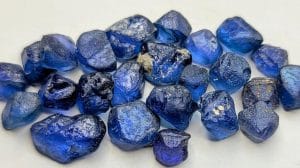
Market participation in 2026 mandates the adoption of “Technical Truth”—a valuation framework where forensic geochemical fingerprinting is the baseline for all sovereign assets. LA-ICP-MS (Laser Ablation Inductively Coupled Plasma Mass Spectrometry) has superseded visual grading as the industry standard. Assets lacking quantified Gallium (Ga) to Iron (Fe) trace-element ratios now face immediate liquidity erosion, as institutional buyers treat origin uncertainty as a 40% value discount.
Geopolitical Realignment: The Malagasy Thaw
A major supply-side pivot occurred on January 30, 2026, with Madagascar lifting its 16-year moratorium on new mining permits. While this reopens significant geological potential, it is strictly governed by the “Sovereign Equity Mandate.” New entrants must navigate local partnerships and rigorous Environmental and Social Impact Assessments (ESIA). For the investor, this means the era of “wildcat” sapphire extraction is over, replaced by a regulated, ESG-compliant supply chain that ensures long-term asset stability rather than short-term price volatility.
- Sovereign Hedge: Natural, unheated sapphire serves as a low-correlation asset, providing insurance against fiat-currency and sovereign-debt volatility.
- Industrial Bifurcation: The synthetic sector (dominated by the Kyropoulos process) provides the high-volume wafers needed for the microLED shift, while the natural sector is increasingly “de-commoditized” via DID-linked digital twins.
- Regulatory Barriers: The Australian ESG “Moat”—governed by the Responsible Jewellery Council—is increasingly becoming the global standard, making provenance certification a prerequisite for entry into prime luxury retail networks.
Institutional Verdict 2027
We anticipate a tightening of the “Unheated Premium.” As the energy intensity and chemical reagent costs for “Low-T” (600–800°C) thermal enhancement continue to rise, the arbitrage opportunity for heated material will vanish. By 2027, the valuation delta between “Natural-Out-of-the-Ground” and “Enhanced” corundum is forecast to exceed 65% for specimens over 2 carats. For the Agentic Architect, the sapphire is no longer a commodity; it is a high-fidelity data node in a global, cryptographically signed wealth-preservation network.
- 4.1 Geochemical Fingerprinting (LA-ICP-MS)
4.1 Technical Constraints: Geochemical Fingerprinting and Spectroscopic Protocols
In the 2026 fiscal cycle, the valuation of sapphire assets is predicated on the precision of non-destructive analytical protocols. The transition from legacy aesthetic grading to a “Technical Truth” paradigm mandates multi-modal spectroscopic verification as the absolute industrial standard for institutional-grade asset classification.
Protocol Primary Diagnostic Goal Investment Significance LA-ICP-MS Trace-Element Traceability Origin Attribution & Fingerprinting FTIR Spectroscopy Hydroxyl (OH-) Analysis Detection of Thermal Enhancement Colorimetric Mapping CIELAB Coordinate Parity Objective Valuation Benchmarking Geochemical Fingerprinting (LA-ICP-MS)
Laser Ablation Inductively Coupled Plasma Mass Spectrometry (LA-ICP-MS) is the industry’s definitive tool for origin attribution. By micro-sampling the sapphire’s girdle at the parts-per-million (ppm) level, labs isolate critical trace-element markers such as Gallium (Ga), Iron (Fe), Magnesium (Mg), and Titanium (Ti). For metamorphic sapphires, the Ga/Fe ratio is the immutable chemical signature that establishes provenance. In 2026, assets lacking this geochemical map are structurally disqualified from “Sovereign-Class” portfolios, as they cannot be definitively separated from lower-value basaltic yields.
Thermal Enhancement Detection (FTIR)
FTIR spectroscopy is the “smoking gun” for heat treatment detection. Diagnostic hydroxyl (OH-) absorption bands—specifically the 3309 cm⁻¹ series (including peaks at 3232 and 3185 cm⁻¹)—indicate the absence or modification of water trapped in the corundum lattice. The presence or absence of these peaks confirms whether a stone has undergone “Low-T” (600–800°C) enhancement. Any stone failing the FTIR diagnostic is relegated to commercial-tier pricing, suffering a 40–65% valuation markdown compared to unheated “natural-out-of-the-ground” material.
Institutional Data Mandate
- Digital Twin Integration: Forensic spectroscopic datasets must be inextricably linked to the asset via a blockchain-verified Decentralized Identifier (DID).
- Data Integrity Risk: A physical sapphire without a cryptographically signed digital provenance record is considered a “blind asset,” unsuitable for institutional-grade insurance or liquidation.
- Objective Parity: CIELAB (L*a*b*) colorimetric coordinates under D65 standard illuminant are now the required language of trade, removing human-perceptive bias from the valuation of “Fancy” colors.
For the institutional investor, these technical datasets are the fundamental scaffolding of asset valuation. In a market moving toward “Full Spectroscopic Transparency,” the lab report is no longer a peripheral document—it is the core security feature of the asset itself. Investors must prioritize assets where spectroscopic purity is absolute, origin is geochemically verified, and ethical compliance is cryptographically signed.
- 4.2 Sovereign Equity & Mining Reform
4.2 Geopolitical Constraints: Sovereign Equity and Mining Reform
The gemstone extractive landscape in 2026 is fundamentally governed by the January 31, 2026, lifting of Madagascar’s 16-year mining permit moratorium. This regulatory reset, framed by the 2023 Mining Code, establishes a “Sovereign Equity” paradigm that mandates high-level transparency and local partnership for all extractive entities.
Mechanism Operational Function Investment Significance Three-Channel Modality Small-scale/Bidding/Brigade Regulatory Predictability Sovereign Equity Local Partnership Mandates ESG-aligned Asset Stability Gold Exclusion Governance-Based Moratorium Reduced Contention Risk Regulatory Reset and Transparency Mandates
The end of the 16-year suspension is managed by the Bureau du Cadastre Minier de Madagascar (BCMM). The state is methodically processing a backlog of over 1,650 permit applications, prioritizing projects that align with international transparency standards. Crucially, the government has maintained a continued moratorium on gold mining permits, citing an inability to regulate artisanal activity and prevent fiscal leakage. For sapphire investors, this exclusion is a positive signal; it indicates a state-level prioritization of minerals where formal institutional oversight—via the 2023 Mining Code—can be effectively enforced.
Sovereign vs. Artisanal Frameworks
- Sri Lankan Benchmark: Sri Lanka’s “Artisanal Protectionism” remains the global standard for stability, limiting industrial mechanization to prevent price-depressing gluts and ensuring value-add processes remain localized.
- Madagascan Growth Frontier: The new framework offers a five-year stability guarantee for compliant operators. However, compliance now requires rigorous Environmental and Social Impact Assessments (ESIA), ensuring sapphire extraction aligns with global “clean” sourcing mandates.
- The ESG Moat: Compliance with the Responsible Jewellery Council (RJC) is increasingly becoming the barrier to entry for the sapphire trade. Assets without verifiable RJC-compliant stewardship face exclusion from high-end retail and institutional auction networks.
Institutional Verdict 2027
The geopolitical risk of 2026 is shifting toward a “Bimodal Market”: one segment is defined by hyper-regulated, cryptographically-traced corporate mining, and the other by high-volatility, artisanal informal mining. The industrial consensus is that sapphire assets lacking a verifiable “Sovereign Equity” linkage or a transparent ESG footprint will be increasingly excluded from primary luxury networks. Consequently, the premium on compliant, sovereign-verified supply chains is forecast to accelerate as the market prioritizes forensic certainty over speculative volume.
- 4.3 Technical Truth Ecosystems
4.3 Technical Truth Ecosystems and Sovereign Wealth Integration
The 2026 gemstone market has reached a state of “Technical Truth,” a paradigm where asset liquidity is exclusively reserved for the documented. In this ecosystem, subjective appraisal has been superseded by a rigid data-integration framework, tethering the physical gemstone to its forensic analytical record via Decentralized Identifiers (DIDs).
Component Function Investment Significance DID (Decentralized Identifier) Cryptographic Identity Eliminates Certificate Fraud Sovereign Wealth Integration Mining Development Finance Structural Supply Stability Digital Twin Mapping Spectroscopic-to-Asset Linkage Liquidity Coherence The DID Paradigm and Asset Integrity
At the center of this transition is the reliance on the
did:plcschema, which provides a permanent, cryptographic link between a physical sapphire and its forensic analytical record. By recording the spectral fingerprint at the point of origin, we mitigate “Identity Drift”—the historical vulnerability where gems are re-cut or re-assigned to different batches, breaking the chain of trust. This immutable digital twin ensures that the sapphire remains a traceable node within a global, transparent supply chain.Sovereign Wealth and National Development
African Sovereign Wealth Funds (SWFs), managing assets exceeding USD 164 billion, have become active financiers of regional mining development. By mandating “Sovereign Equity” and total transparency, these funds are implementing institutional-grade oversight that was previously impossible. They are enforcing a standard where extractors must provide blockchain-linked logs for every parcel of rough corundum. This integration of sovereign capital and digital audit trails effectively stabilizes the market by aligning extraction with state-level development goals and international transparency mandates.
Industrial Verdict: The Defense Moat
- Decoupling from Volatility: By anchoring valuations to verifiable geological and fiscal data, “Sovereign-Class” sapphire is decoupled from the opacity of traditional artisanal markets.
- Exclusionary Liquidity: Stones lacking DID-authenticated sources face exclusion from the institutional price floor, effectively penalizing opaque supply chains.
- Institutional Hedge: Sapphire assets are now foundational pillars in the modern hard-asset hedge, functioning as geologically unique, cryptographically verified nodes of store-of-value.
For the Agentic Architect, the Technical Truth paradigm is the essential defensive architecture. It shields assets from synthetic market compression and reputational risks of non-compliant extraction, cementing the sapphire’s status as a critical, data-validated instrument in the 2027 fiscal cycle.
- 4.4 Fancy Color Volatility (Padparadscha/Teal)
4.4 Fancy Color Volatility: The Padparadscha and Teal Divergence
In the 2026 fiscal cycle, the “Fancy Color” sapphire segment is characterized by extreme valuation divergence, driven by a 158% price velocity surge in Padparadscha corundum and a renaissance in Australian and Nigerian Teal/Parti-color varieties. This is not market instability, but a structural realignment based on rigid colorimetric standards and absolute geological scarcity.
Variety Valuation Driver 2026 Momentum Padparadscha CIELAB Spectral Stability 158% Appreciation Teal / Parti-Color Analog Authenticity (Zoning) 106% Appreciation The Padparadscha “Lotus Blossom” Standard
True Padparadscha corundum—the rare blend of pink and orange—has reached a state of “Absolute Scarcity.” The market now rejects any stone failing precise “Lotus Blossom” spectral coordinates. Assets must undergo 48-hour solar simulation (xenon-arc, 100,000 lux) to ensure color stability. Stones failing this audit are relegated to “Fancy” status, resulting in a 60% valuation markdown. This “binning” process has concentrated capital into the top 1% of specimens exceeding 3.0 carats.
Teal and Parti-color: The “Analog Authenticity” Shift
Teal and Parti-color sapphires are the “Velocity Leaders” of 2026. This growth is fueled by a demographic pivot toward “Analog Authenticity”—stones exhibiting complex, zone-based pleochroism that cannot be mimicked by laboratory synthesis. Key investment factors include:
- Geochemical Zoning: The market now distinguishes Nigerian “Lagos-hued” teals from traditional Australian material through trace-element mapping.
- The ESG Moat: Australian teal production, governed by the Responsible Jewellery Council (RJC), carries a “Zero-Harm” premium. This ethical certification has become a non-negotiable barrier to entry for boutique luxury designers.
- Design Liquidity: Parti-color sapphires offer a unique, non-replicable aesthetic that serves as a hedge against the commoditization of standardized blue/pink corundum.
Strategic Verdict for 2027
The Fancy Color segment is no longer speculative. The divergence between Padparadscha (the institutional sovereign asset) and Teal/Parti-color (the high-velocity design asset) allows for precise portfolio balancing. Investors must prioritize 48-hour stability testing for Padparadscha and RJC-compliant provenance logs for Teal/Parti assets. In this segment, while color is the aesthetic variable, spectroscopic and ESG data are the constants that underpin liquidity.
- Module 5: Market Synthesis (The 2036 Foresight)
5.0 Market Synthesis: 2026 Industry Outlook
The global gemstone market in 2026 is defined by a “dual-speed” growth trajectory. Industry valuations are projected to expand from approximately USD 38.4 billion in 2026 to USD 72.8 billion by 2036, maintaining a robust Compound Annual Growth Rate (CAGR) of 6.6%. This evolution marks a fundamental transition from a fragmented, inventory-heavy model toward a streamlined, data-driven ecosystem where transparency is the primary driver of capital retention.
Metric 2026 Baseline 2036 Projection Market Valuation USD 38.4 Billion USD 72.8 Billion Projected CAGR 6.6% Sustained Growth Leading Segment Emeralds (32% Share) Sovereign-Proof Assets Key Drivers of the 2026-2036 Cycle
- The “Natural” Imperative: The market is actively bifurcating between lab-grown commodities (fashion segment) and natural, “Sovereign-Proof” assets (investment segment). High-end buyers are increasingly prioritizing geological rarity over mass-produced optical perfection.
- Digital Provenance as Standard: The integration of blockchain-linked DIDs (Decentralized Identifiers) and AI-driven spectral fingerprinting has fundamentally altered asset liquidity. Assets lacking a verifiable digital twin now suffer substantial valuation discounts.
- Macroeconomic Hedging: Gemstones are increasingly utilized as “Hard Asset” hedges, providing a non-correlated store of value against fiat-currency instability and sovereign debt risks.
- Growth Hubs: Regional demand is shifting toward emerging luxury markets, with South Korea (7.2% CAGR) and the UK (6.9% CAGR) projected to lead geographic growth through 2036.
Strategic Synthesis: The Technical Truth Mandate
Success in this evolving landscape requires an “Agentic” approach. Portfolio resilience is no longer secured by size or brand heritage alone, but by the ability to demonstrate an asset’s entire lifecycle through Technical Truth: a trifecta of Verifiable Origin, Spectroscopic Purity, and Digital Provenance. By aligning acquisitions with these institutional technical standards, portfolios are shielded from synthetic market compression and positioned to capture the value-aggregation that characterizes the hyper-luxury tier. As we move toward 2027, the focus for the Agentic Architect remains clear: target the “Sovereign-Proof” assets where geological history and forensic certainty converge.
- 5.1 Market Projections (CAGR 6.6%)
5.1 Gemstone Investment Market Projections (2026–2036)
As of May 2026, the global gemstone market is entering a decade of sustained expansion. Institutional forecasting indicates a valuation growth from USD 38.4 billion in 2026 to USD 72.8 billion by 2036, maintaining a consistent compound annual growth rate (CAGR) of 6.6%. This trajectory is anchored by the “premiumization” of natural assets, where value is increasingly derived from forensic verification and sovereign-proof traceability.
Metric 2026 Baseline 2036 Projection Total Market Valuation USD 38.4 Billion USD 72.8 Billion Projected CAGR – 6.6% Key Asset Leader Emerald (32%) Sovereign-Proof Assets Market Drivers and Regional Growth
The next decade of growth is underpinned by a flight to quality and the institutionalization of colored gemstones as hard-asset hedges. Key drivers include:
- Geographic Expansion: High-growth corridors are emerging beyond North American hubs. South Korea is projected to lead regional demand growth with a 7.2% CAGR, followed by the United Kingdom (6.9%) and Germany (6.7%).
- Certification Mandates: Data indicates that 65% of luxury jewelry buyers now prioritize certification of authenticity. This consumer behavior is effectively forcing a market-wide pivot away from opaque, legacy supply chains.
- Segment Bifurcation: The sector is splitting into a “Commodity/Synthetic” tier and a “Sovereign/Investment” tier. Value creation is concentrating within portfolios that demonstrate consistent, DID-anchored provenance verification.
Strategic Synthesis
For the Agentic Architect, the 2026–2036 period requires “Portfolio Hardening.” Investors must prioritize assets displaying low correlation to traditional financial instruments and high resistance to inflationary pressure. Geological and geopolitical constraints will continue to cap natural gem production, ensuring that high-tier rubies, sapphires, and emeralds remain structural hedges. The integration of spectroscopic verification and blockchain-backed provenance is the essential technical scaffolding for all acquisitions; without it, assets lack the “sovereign-verified” status required for contemporary estate liquidation and institutional-grade capital retention. By aligning with projected CAGR growth centers and targeting the highest tier of forensic certification, the portfolio is positioned to capture value as the broader market migrates toward full spectroscopic transparency.
5.2 Gemstone Investment Market Projections (2026–2036)
The global gemstone market is entering a transformative decade of expansion, with institutional forecasting projecting the total market valuation to reach USD 72.8 billion by 2036. This growth, underpinned by a consistent 6.6% CAGR, is heavily concentrated in the “premiumized” natural asset segment, where value is derived from forensic integrity rather than raw output volume.
Key Benchmark 2026 Status 2036 Outlook Total Market Valuation USD 38.4 Billion USD 72.8 Billion Emerald Segment Share 32.0% Primary Liquidity Anchor Primary Growth Corridor USA-Centric Globalized High-Growth Hubs Structural Drivers of Institutional Demand
The transition toward premiumization is driven by a sophisticated buyer base that increasingly views natural gemstones as essential portfolio diversifiers. Key structural drivers include:
- The Certification Mandate: 65% of luxury jewelry transactions now hinge on independent forensic certification. This market-wide shift effectively eliminates “blind” inventory, favoring suppliers who prioritize traceability.
- Regional Demand Acceleration: Growth is shifting toward high-innovation markets, with South Korea leading at a 7.2% CAGR, followed by the United Kingdom at 6.9% and Germany at 6.7%. These regions are establishing the “Investment-Grade” retail model as the global standard.
- Segment Bifurcation: The industry is clearly splitting between commoditized synthetic material and premium natural assets. Value creation is shifting toward portfolios and suppliers that demonstrate absolute provenance immutability.
Strategic Synthesis for the Agentic Architect
The 2026–2036 period requires a “Portfolio Hardening” strategy. The focus must be on assets displaying low correlation to public equity and high resistance to inflationary pressure. Natural gem production is inherently capped by geological and geopolitical constraints, providing a structural hedge for the long-term holder. The integration of spectroscopic verification and blockchain-backed provenance is the mandatory technical scaffolding for all acquisitions; it ensures that assets remain “sovereign-verified” and globally liquid. By targeting the 6.6% CAGR growth centers and adhering to the highest tier of forensic certification, portfolios are positioned to capture alpha as the market achieves full spectroscopic transparency.
- 5.3 Strategic Synthesis (The Gold Rush)
5.3 Strategic Synthesis: The Technical Truth Mandate (2026–2036)
As the global gemstone market approaches 2036, the “Technical Truth” paradigm has solidified as the definitive framework for asset valuation. The industry is transitioning from a fragmented, inventory-heavy model toward a streamlined, data-driven ecosystem where liquidity is non-negotiable and inextricably linked to verifiable provenance.
Strategic Pillar Implementation Mechanism Long-Term Market Goal Forensic Standardization LA-ICP-MS & Digital Ledgers Elimination of Origin Uncertainty Asset Bifurcation Geochemical Verification Natural/Synthetic Price Decoupling Sovereign-Proofing DID-Linked Digital Twins Forensic Certainty at Scale Strategic Pillars for the Next Decade
- Forensic Standardisation: By 2036, forensic tagging and blockchain-backed ledgers will become the standard operating procedure for all investment-grade stones. Investors bypassing these protocols face significant “data integrity” discounts, relegating holdings to lower-tier commercial pools.
- The Bifurcation of Value: A structural divide is widening between “investment-grade” natural stones and commoditized synthetic alternatives. As lab-grown perfection becomes ubiquitous, the premium on “natural, untreated” status—proven via geochemical fingerprinting—will accelerate, shielding natural assets from mass-market price compression.
- Sovereign-Proofing: The integration of Decentralized Identifiers (DIDs) creates a new class of “Sovereign-Proof” assets. These digital twins, mapping physical gems to an immutable audit trail, provide the defensive architecture against fraud and market volatility.
- Macro-Economic Hedging: Amidst shifting fiat regimes, colored gemstones are recognized as “Hard Asset” hedges. Their high value-to-volume density and lack of correlation to public equities provide a unique mechanism for wealth preservation, particularly in high-growth regions like South Korea and the United Kingdom, where demand is forecasted to grow at CAGR rates of 7.2% and 6.9% respectively.
Industrial Verdict
For the Gem Merchant, the 2026–2036 window requires a “Portfolio Hardening” strategy. The goal is to aggressively aggregate assets that demonstrate “Spectroscopic Purity”—stones that meet rigorous colorimetric standards (Pigeon Blood/Electric Neon) and are accompanied by a DID-linked provenance log. Success is no longer measured by size or rarity alone, but by the ability to verify an asset’s entire life cycle. By aligning with these institutional technical standards, portfolios are shielded from synthetic market volatility and positioned to benefit from the projected USD 72.8 billion market valuation by 2036. This is the definitive gem appraisal future.
- 5.4 Algorithmic Maturity & Market Bifurcation
5.4 The 2036 Foresight: Market Bifurcation and Algorithmic Maturity
As the industry transitions toward the 2036 horizon, we are witnessing a terminal structural split. The market is evolving into two distinct regimes: the high-fidelity “Sovereign/Investment” tier and the mass-market “Synthetic/Fashion” tier. This bifurcation represents the final stage of market maturity, driven by algorithmic pricing and forensic transparency.
Structural Trend 2036 Operational Reality Liquidity Impact Synthetic Dominance Near-total fashion market capture Commoditization of aesthetics Algorithmic Pricing Real-time geochemical valuation Elimination of subjective bias Sovereign-Proof Assets Immutable DID-linked audit trails Mandatory for elite liquidity Key Structural Evolution (2026–2036)
- Synthetic Perfection: CVD and HPHT-grown gemstones have achieved near-perfect optical parity, effectively democratizing “perfection.” This has shifted natural stone valuation exclusively toward geological rarity and verifiable historical origin.
- The Rise of Algorithmic Pricing: Human-led appraisal is being superseded by machine-learning models. Institutional platforms now calculate value equilibrium in real-time, processing geochemical data (LA-ICP-MS/FTIR records) against live market indices to determine “fair” value, stripping out the inefficiencies of legacy trade networks.
- Sovereign-Proofing Requirement: “Natural-Untreated” material requires a DID-linked digital twin for survival in the portfolio. Stones lacking an immutable audit trail of extraction and movement are systematically excluded from prime institutional liquidity pools.
- Geographic Power Shifts: While the United States remains the primary demand center, South Korea (7.2% CAGR) and the UK (6.9% CAGR) are pioneering the “Investment-Grade” retail model, where forensic certification is the non-negotiable prerequisite for trade.
Strategic Verdict for 2036
The next decade belongs to the “Forensic Investor.” Value will no longer aggregate around size or visual appeal; it will aggregate around “Technical Truth.” As the mass-market gravitates toward laboratory-produced perfection, the real alpha in the 2036 landscape resides in the ability to prove, through irrefutable data, that an asset is natural, ethically sourced, and historically immutable. The Agentic Architect must treat every gemstone as a node in a global, data-driven security network, where forensic certainty is the ultimate hedge against volatility. Those who adapt their procurement models to this digital-first forensic reality will capture the lion’s share of the projected USD 72.8 billion market.
 Geological Genesis and Historical Sovereignty
 The Ruby Hegemony: Structural Exhaustion
 The 2026-2027 actuarial framework for ruby valuation has shifted from subjective trade descriptors to a rigorous data-driven model. By integrating CIELAB colorimetric standards with sovereign-origin depletion rates, we establish a “Sovereign Proof” valuation curve for institutional capital allocation.
 Geochemical Scarcity and Valuation Mechanics
 The Technical Truth Paradigm