
The Marie-Thérèse Pink Diamond: A Journey of Rarity, Royalty, and Record-Breaking Sale
The Glittering Legacy: Unveiling the Marie-Thérèse Pink Diamond
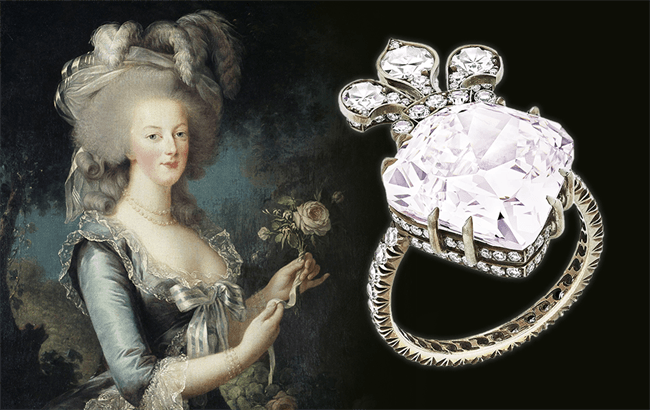
In the rarefied world of high-end jewelry, where history and rarity converge, a single gemstone can transcend its physical form to become a cultural artifact. This was the case on June 17, 2025, when a quiet, elegant ring took center stage at Christie’s Magnificent Jewels auction in New York. The item in question, known as the Marie-Thérèse Pink Diamond, was not merely a stone; it was a testament to centuries of royal history, a whisper of a bygone era, and a stunning example of modern artistry.
The anticipation was palpable. Tipped to sell for between $3 million and $5 million, the 10.38-carat fancy purple-pink diamond ultimately ignited a fierce bidding war, soaring past its pre-sale estimate to a final, breathtaking price of $13.98 million. The sale was a global sensation, solidifying the diamond’s status as a modern masterpiece and a record-breaking triumph.
But what makes this particular diamond so extraordinary? The answer lies in a captivating blend of its intrinsic geological rarity, its compelling royal provenance, and the master craftsmanship that transformed it into a contemporary work of art.
A Stone Born of Earthly Wonder: The Rarity of Pink Diamonds
To truly appreciate the value of the Marie-Thérèse Pink Diamond, one must first understand the fundamental rarity of its kind. Pink diamonds are among the most sought-after and enigmatic of all colored diamonds. Unlike other colored diamonds that get their hues from chemical impurities (such as boron for blue diamonds or nitrogen for yellow ones), the exact cause of the pink coloration in diamonds is still a mystery. The leading theory suggests that the color is a result of a rare plastic deformation in the diamond’s crystal lattice, an anomaly in its atomic structure caused by immense pressure deep within the Earth’s crust.
This geological quirk makes pink diamonds incredibly scarce, and their supply has become even more limited with the closure of the Argyle Mine in Australia, which was the world’s primary source of these stones. With this finite supply and ever-increasing demand from collectors and investors, the value of pink diamonds continues to rise, making them one of the most compelling luxury investments today.
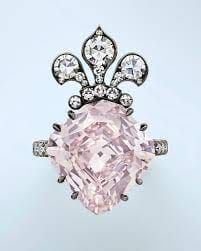
The Marie-Thérèse Pink Diamond is not just pink; it is a “fancy purple-pink.” This specific color designation from the Gemological Institute of America (GIA) indicates a unique and highly prized hue, a magnificent blend of purple and pink that gives the stone a captivating depth and a subtle, enchanting sparkle. The kite-shaped cut further enhances its unique color, allowing light to dance across its facets and highlight its exceptional saturation.
The Royal Whisper: Provenance and the French Legacy
While the diamond’s inherent beauty and rarity are undeniable, it is its historical narrative that elevates it from a remarkable stone to a legendary artifact. The Marie-Thérèse Pink Diamond is a living testament to European history, with a documented lineage that can be traced through generations of French and Bavarian royalty.
The diamond’s story begins in the 18th century. It is rumored to have been part of the fabled collection of Marie Antoinette, the ill-fated Queen of France. Before her tragic capture during the French Revolution, the queen famously entrusted a chest of her most precious jewels to her loyal coiffeur, who successfully smuggled them out of the country for safekeeping. This cache of jewels, which also included a pair of stunning diamond bracelets that sold for a record-breaking price in 2021, eventually found its way to Marie Antoinette’s only surviving child, Marie-Thérèse of France, Duchess of Angoulême.
The diamond is officially named after this resilient duchess, who, after her release from imprisonment, inherited the family jewels. From her, the stone was passed down to her niece, Marie Thérèse de Chambord, and then to Queen Marie Theresa of Bavaria. This unbroken, documented chain of custody is a rarity in the world of historic jewels and is a key factor in the diamond’s allure and immense value. It’s not just an old diamond; it’s a direct, tangible link to one of history’s most iconic and tragic figures.
A Modern Masterpiece: The Art of JAR
The final piece of this remarkable puzzle is the genius behind its modern setting: the legendary jeweler Joel Arthur Rosenthal, known by his initials, JAR. With a studio located discreetly on Paris’s Place Vendôme and a fiercely exclusive clientele, JAR is often hailed as the “Fabergé of our time.” His creations are not mass-produced; they are unique, bespoke works of art, meticulously crafted and rarely seen at auction.
In the mid-1990s, the Marie-Thérèse diamond was sold at auction by the descendants of the Bavarian royal family. It was at this point that a private owner commissioned JAR to re-imagine the historic stone. The original setting, a simple hairpin, was replaced with a new design—a stunning ring that perfectly marries historical elegance with contemporary flair.
JAR’s signature style is a blend of bold forms, unexpected materials, and a painterly use of pavé-set gemstones. For the Marie-Thérèse diamond, he created a setting of blackened platinum and a halo of smaller diamonds, a design that not only secured the precious stone but also brought its unique purple-pink color to the forefront. The setting is a work of art in itself, a modern homage to a historic stone. The ring is a perfect example of what makes a JAR creation so coveted: it is a thoughtful, architectural, and deeply personal object that is as much a sculpture as it is a piece of jewelry. The diamond is not merely mounted; it is integrated into a new narrative, a conversation between centuries of history and the vision of a singular artist.
The Unspoken Value: Why This Sale Matters
The sale of the Marie-Thérèse Pink Diamond for nearly $14 million is more than just a headline-grabbing figure. It serves as a powerful indicator of several key trends in the luxury market:
- The Power of Provenance: The diamond’s connection to Marie Antoinette and her daughter played a significant role in its sale price. Provenance—the documented history of an object—adds an intangible yet immense value. In a market where buyers are seeking more than just a beautiful object, a compelling story and historical significance can make a piece truly priceless.
- The Investment Appeal of Rare Diamonds: The consistent appreciation in value of rare, colored diamonds demonstrates their strength as alternative assets. In an uncertain economic climate, tangible, one-of-a-kind assets like these continue to attract high-net-worth individuals looking for a secure and lucrative store of wealth.
- The Enduring Legacy of Artisanal Craftsmanship: The inclusion of JAR’s name on the piece was a major draw. The market for pieces by celebrated designers, particularly those with a reputation for exclusivity and artistry, is incredibly strong. This sale reaffirms that artistry and unique design are as valuable as the materials themselves.
In a world saturated with luxury goods, the Marie-Thérèse Pink Diamond stands apart. It is a fusion of nature’s miraculous artistry, the weight of centuries of history, and the visionary hand of a modern master. Its recent record-breaking sale is not just a commercial event; it is a celebration of a truly unique object—a pink diamond with a past, a present, and a glittering future.
Meta Description: Explore the stunning story of the Marie-Thérèse Pink Diamond, the 10.38-carat fancy purple-pink jewel with a royal French lineage that sold for a record-breaking $13.98 million. Discover the diamond’s history, the legacy of JAR, and what makes a historic jewel a modern masterpiece.
Keywords: Marie-Thérèse Pink Diamond, pink diamond, fancy purple-pink diamond, JAR, Joel Arthur Rosenthal, Christie’s auction, rare diamonds, historic jewels, French royal family, Marie Antoinette, diamond provenance, luxury jewelry, investment diamonds, record-breaking sale