
1. What is the geological difference between a Ruby and a Sapphire?
Both rubies and sapphires belong to the same mineral family, Corundum (Al 2 O 3 ). The primary difference lies in their trace elements and resulting color: Rubies are colored red by chromium. Sapphires get their famous blue color from iron and titanium. Note: Any gem-quality corundum that is not red is technically classified as a sapphire.
Ruby and Sapphire are the most durable, both ranking a 9 on the Mohs scale of hardness. Emeralds are Ruby and Sapphire are the most durable, both ranking a 9 on the Mohs scale of hardness. Emeralds are slightly softer and more delicate, ranking between 7.5 and 8, which means they require more careful handling to avoid chips or scratches.slightly softer and more delicate, ranking between 7.5 and 8, which means they require more careful handling to avoid chips or scratches.
1. What is the geological difference between a Ruby and a Sapphire?
Both rubies and sapphires belong to the same mineral family, Corundum (Al 2 O 3 ). The primary difference lies in their trace elements and resulting color: Rubies are colored red by chromium. Sapphires get their famous blue color from iron and titanium. Note: Any gem-quality corundum that is not red is technically classified as a sapphire.
Ruby and Sapphire are the most durable, both ranking a 9 on the Mohs scale of hardness. Emeralds are Ruby and Sapphire are the most durable, both ranking a 9 on the Mohs scale of hardness. Emeralds are slightly softer and more delicate, ranking between 7.5 and 8, which means they require more careful handling to avoid chips or scratches.slightly softer and more delicate, ranking between 7.5 and 8, which means they require more careful handling to avoid chips or scratches.
Welcome to the captivating world of precious gemstones, where color, history, and rarity converge. Of the four precious stones recognized globally—diamond, ruby, sapphire, and emerald—the colored trio of ruby, sapphire, and emerald has been treasured by royalty and civilizations for millennia. Each gem boasts a unique chemical composition, vibrant hue, and a storied past that cements its place as a jewel of enduring value.
This article serves as a pillar of knowledge, introducing the history, occurrences, and key facts about these magnificent stones. Click on any of the gemstone names to explore their individual, detailed pages for in-depth information.
💎 Ruby: The King of Gems
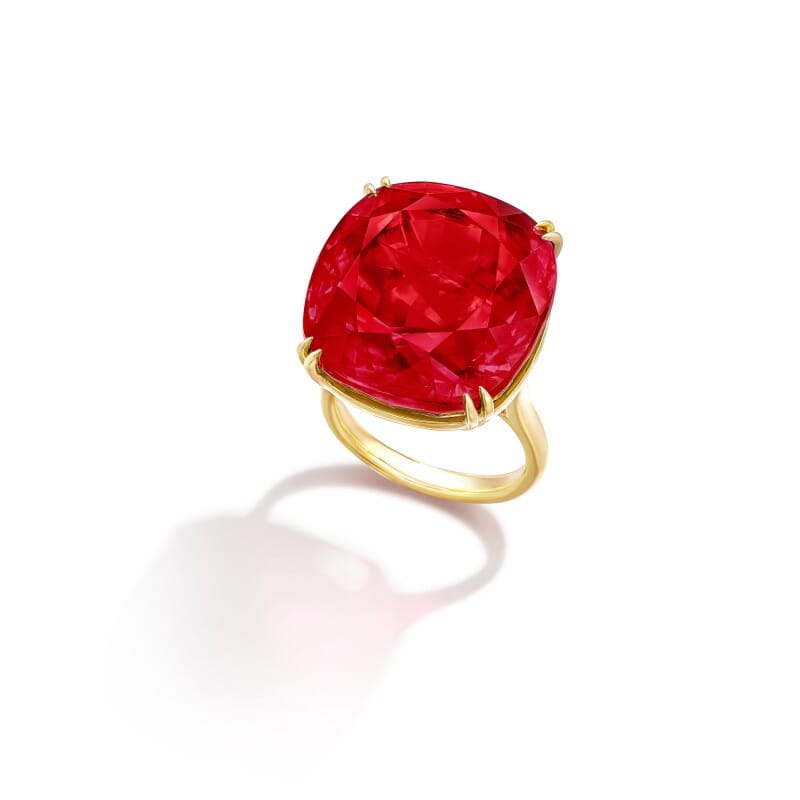 The word ruby comes from ruber, the Latin word for red, and for centuries, this fiery gemstone has been synonymous with power, passion, and protection.
A Fiery History and Lore
Ancient Beginnings: The history of ruby mining dates back to at least 600 AD in what is now Myanmar (formerly Burma), and some accounts suggest even earlier origins around 3000 BCE in the Mogok region. Ancient Burmese warriors believed that possessing rubies would make them invincible in battle, going so far as to implant the stones under their skin.
Symbol of Power: In Sanskrit, the ruby was called ratnaraj, meaning “king of precious stones.” Royalty across the world, from European monarchs to Asian emperors, prized large, fine rubies as symbols of wealth, status, and prestige.
Mistaken Identity: Historically, some magnificent red stones in crown jewels, such as the famous Black Prince’s Ruby in the British Imperial State Crown, were mistakenly identified as rubies but are actually spinels. It wasn’t until the modern era of gemology that the two minerals were definitively separated.
Principal Occurrences
Geology: Rubies are the red variety of the mineral corundum (aluminum oxide, $\text{Al}_2\text{O}_3$), with their distinctive red color caused by trace amounts of the element chromium. They are found in both metamorphic rocks (like marble) and igneous rocks.
Historical and Modern Sources:
Myanmar (Burma): The Mogok Valley has historically produced the world’s most prized stones, famous for their vibrant red hue often called “pigeon’s blood” red.
Mozambique: The Montepuez deposit, discovered in the early 2000s, has rapidly become the world’s most productive source for gem-quality rubies.
Other Key Sources: Significant deposits are also found in Vietnam, Thailand, Tanzania, Sri Lanka, and Madagascar.
💙 Sapphire: The Gem of Wisdom and Royalty
 As the sister gem to ruby, sapphire is also a variety of the mineral corundum, distinguished by any color other than red. Its most iconic color, deep blue, has made it the gemstone of nobility, truth, and celestial connection.
A Storied Past of Protection
Etymology: The name sapphire is thought to come from the Greek word sapphirus, which means “blue stone.”
Royal and Clerical Significance: In ancient Greece and Rome, kings and queens believed blue sapphires protected their owners from harm and envy. During the Middle Ages, Christian clergy wore sapphires as symbols of heaven and to represent chastity and purity.
Symbolism: Throughout history, the sapphire has been associated with wisdom, loyalty, nobility, and faith. Its calming blue color evokes a sense of peace and contemplation.
Principal Occurrences
Geology: Sapphire is corundum ($\text{Al}_2\text{O}_3$), with its famous blue color resulting from trace amounts of iron and titanium. Other “fancy” colors (pink, yellow, green, etc.) are caused by different trace elements. Like ruby, it ranks a 9 on the Mohs scale of hardness, making it exceptionally durable.
Key Sources:
Kashmir (India/Pakistan): Known for producing the rarest and most valuable sapphires, often described as a unique, intense, velvety “cornflower blue.” Production from this region is now extremely scarce.
Myanmar (Burma) and Sri Lanka (Ceylon): Both are important historical sources. Sri Lanka is known for producing a wide range of colors, including lighter, brighter blue sapphires.
Modern Sources: Today, Madagascar, Tanzania, and Australia are major producers, with Australia typically supplying darker blue and bluish-green stones.
💚 Emerald: The Jewel of Rebirth
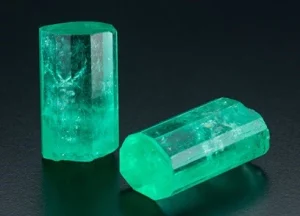 The emerald stands apart as a member of the Beryl mineral family, distinguished by its unparalleled, intense green color. It has symbolized hope, renewal, and fertility since antiquity.
Royalty and Rarity in Antiquity
Ancient Egyptian Fascination: The first known emerald mines were in ancient Egypt, dating as far back as 3500 BC. The Egyptian Queen Cleopatra was famously obsessed with emeralds, often wearing them in her royal adornments and giving them as gifts. The stones were believed to represent fertility and rebirth.
Spanish Conquest: In the 16th century, Spanish conquistadors discovered rich emerald deposits in South America, bringing the magnificent stones of Colombia to European and Asian royal courts and further cementing the gem’s global prestige.
The “Jardin”: Emeralds are known for often containing visible inclusions and fissures, which are charmingly referred to as jardin (French for “garden”) because they resemble moss or branches suspended within the stone.
Principal Occurrences
Geology: Emerald is a variety of the mineral beryl ($\text{Be}_3\text{Al}_2(\text{SiO}_3)_6$), with the vibrant green color caused by trace amounts of chromium and/or vanadium. It ranks slightly lower in hardness than ruby and sapphire, at 7.5 to 8 on the Mohs scale, and requires greater care.
World’s Finest Sources:
Colombia: Considered the world’s most renowned source, particularly the mines of Muzo and Chivor, which produce emeralds known for their vivid blue-green to pure green color and exceptional transparency.
Zambia: This nation has emerged as a crucial source, often yielding emeralds with a slightly bluer tone of green and fewer inclusions than some Colombian stones.
Other Sources: Significant deposits are also found in Brazil and Afghanistan, with Russia historically notable for its 19th-century discoveries.
| Gemstone | Mineral Family | Primary Color Element | Mohs Hardness | Famous Historical Source | Modern Key Occurrence |
| Ruby | Corundum | Chromium | 9 | Myanmar (Burma) | Mozambique |
| Sapphire | Corundum | Iron & Titanium | 9 | Kashmir | Madagascar, Sri Lanka |
| Emerald | Beryl | Chromium / Vanadium | 7.5 – 8 | Egypt | Colombia, Zambia |
These three gems, the “Big Three,” not only represent peak beauty and rarity in the colored stone world but also offer a tangible connection to the history of human civilization.
Check out our blog
1. What is the geological difference between a Ruby and a Sapphire?
Both rubies and sapphires belong to the same mineral family, Corundum (). The primary difference lies in their trace elements and resulting color:
Rubies are colored red by chromium.
Sapphires get their famous blue color from iron and titanium.
Note: Any gem-quality corundum that is not red is technically classified as a sapphire.
2. Why are the inclusions in an Emerald often called a “jardin”?
The term jardin is French for “garden.” It is used because the internal inclusions and fissures naturally found in emeralds often resemble moss, branches, or plant life suspended within the green stone. Unlike many other gems where inclusions might be seen as flaws, the jardin is often considered a charming, identifying characteristic of an emerald.
3. Which of the “Big Three” is the most durable for everyday wear?
Ruby and Sapphire are the most durable, both ranking a 9 on the Mohs scale of hardness. Emeralds are slightly softer and more delicate, ranking between 7.5 and 8, which means they require more careful handling to avoid chips or scratches.
4. Is every famous historical “ruby” actually a ruby?
No. Historically, some red gemstones were misidentified before the advent of modern gemology. A famous example is the Black Prince’s Ruby in the British Imperial State Crown, which was later discovered to be a spinel rather than a ruby.
5. Which locations are currently the most productive sources for these gems?
While historical sources like Myanmar (for rubies) and Kashmir (for sapphires) are famous, modern production has shifted:
Rubies: Mozambique (specifically the Montepuez deposit) is now the world’s most productive source.
Sapphires: Madagascar, Sri Lanka, and Australia are major modern producers.
Emeralds: Colombia remains the most renowned source, but Zambia has emerged as a crucial global supplier.