
UPDATE
🚀 December 2025: Gold’s Historic Surge Continues—What the $4,200+ Price Tag Really Says About the U.S. Dollar
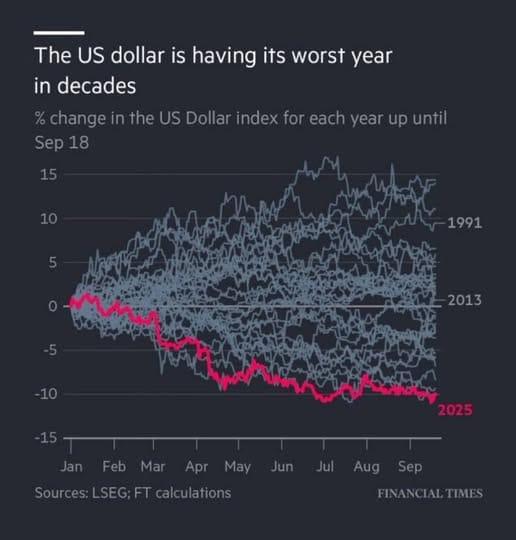
The gold price story of 2025 is not just about a commodity reaching record highs; it’s a profound narrative about the evolving global financial landscape and, specifically, the weakness of the U.S. dollar. As December 2025 opens with gold futures consolidating their position well above the $4,200 per ounce mark—a spectacular surge that has stunned even seasoned analysts—investors are no longer asking if the dollar’s purchasing power is eroding, but how fast. This monumental rally, which has seen gold climb by over 60% since the start of the year, serves as a powerful, non-sovereign barometer of financial uncertainty and the structural shift away from dollar-centric reserves.
The New Gold Standard: Why $4,200+ Per Ounce is the New Normal
The unprecedented spike in the price of gold is not a fleeting market anomaly but a structural shift driven by a confluence of powerful, long-term factors. The original article correctly identifies the inverse relationship between the U.S. dollar and gold, the metal’s role as an inflation hedge, and its function as a safe-haven asset. However, the current environment in December 2025 has amplified these drivers to an extreme degree, necessitating a deeper look at the three dominant forces at play: Central Bank Demand, Federal Reserve Policy Expectations, and Geopolitical Risk.
1. Central Banks’ Strategic Shift: Diversifying Away from the Dollar 🏦
Perhaps the most significant and inelastic driver underpinning the $4,200+ gold rate is the unprecedented central bank gold buying spree. Emerging economies and major players have drastically ramped up their gold reserves, a strategic move fueled by growing concerns over geopolitical tensions and the reliability of the U.S. dollar as the world’s primary reserve currency.
The De-Dollarization Narrative: Following global asset freezes in recent years, central banks are actively diversifying their holdings. This isn’t tactical; it’s a structural pivot away from U.S. dollar-denominated assets. This steady, non-market-driven institutional demand acts as a perpetual gold price floor and a significant tailwind for further appreciation. Deutsche Bank, for instance, forecasts this official sector buying to continue supporting gold toward a potential range of $3,950-$4,950 in 2026.
A Loss of Confidence: The sustained, heavy purchasing by central banks provides a clear, high-level signal of diminished confidence in the long-term stability and political neutrality of the dollar-based global system. They are prioritizing a non-sovereign, tangible asset—gold—to secure their national wealth, effectively reducing the global demand for the dollar.
2. The Fed’s Pivot and Interest Rate Cuts 📉
The market’s anticipation of a Federal Reserve rate cut in the near future is a classic, yet powerful, catalyst for the gold rally. In December 2025, the focus is squarely on when and how deep the easing cycle will be.
Lower Opportunity Cost: Gold is a non-yielding asset. When the Fed cuts interest rates, the yield on competing safe-haven assets like U.S. Treasury bonds declines. This lowers the opportunity cost of holding gold, making the precious metal fundamentally more appealing to institutional investors. Lower rates reduce the dollar’s attractiveness relative to other currencies, making gold cheaper for foreign buyers and thus driving up its dollar price.
Currency Debasement Concerns: Looser monetary policy is synonymous with an increased money supply, which fuels long-term inflation fears and currency debasement. Investors holding gold are explicitly hedging against the dollar’s purchasing power being diluted by an expansive monetary policy. Traders are currently pricing in a high probability of a Fed rate cut, a sentiment that is directly supporting gold’s current valuation.
3. Geopolitical Turmoil and The “Everything Rally” 🛡️
The current global landscape, marked by persistent conflicts and high-stakes trade tensions, solidifies gold’s role as the quintessential safe-haven asset. The current environment is one where volatility is high, and uncertainty is the only constant.
Flight to Safety: In times of market and geopolitical distress, investors tend to move out of risk assets (like equities) and into perceived safe havens. While the U.S. dollar can act as a safe haven, the simultaneous surge in the gold price and other precious metals like silver (which has also hit record highs) suggests investors are seeking refuge in non-sovereign hard assets not tied to any single government’s fiscal or political stability.
The Structural Weakening of the Dollar: The market’s aggressive move into gold over the past year is less a reaction to a single crisis and more a fundamental loss of confidence in the U.S. dollar’s long-term dominance. Mounting fears over high U.S. government debt and structural deficits contribute to the thesis of long-term dollar debasement, making gold’s upward trend a direct reflection of investor anxiety over fiscal concerns.
Gold Price Forecast: What Lies Ahead for the Dollar?
As we look toward 2026, the consensus among major financial institutions remains overwhelmingly bullish for gold, with many firms predicting a breach of the $5,000 per ounce mark. This forecast hinges heavily on the continuation of the factors outlined above.
Sustained Momentum: Analysts cite the sustained central bank demand, the anticipated Federal Reserve easing cycle, and continuing geopolitical risks as the primary engines. The momentum suggests that the dollar’s weakness, rather than being a temporary blip, is becoming a cemented reality in the pricing of precious metals.
Gold as a Portfolio Anchor: The incredible performance of gold in 2025—far outpacing major stock indexes—is repositioning the metal in institutional portfolios. It is moving from a fringe, purely counter-cyclical hedge to a core component that provides essential insurance against macroeconomic risk and the systematic devaluation of fiat currencies.
In conclusion, the current gold price is more than just a number; it is a clear market verdict. It signifies that the world’s most powerful financial actors and savvy investors are bracing for a future where the U.S. dollar’s role is diminished, its purchasing power is compromised by inflation and debt, and the ultimate store of value remains the yellow metal. The steep rise is the market’s way of saying: the value of the dollar is declining, and its days of unquestioned reserve currency dominance face fundamental challenges.
This video explores the reasons behind gold’s price surge in 2025, discussing whether it’s a macro signal or just market noise: A Golden Year: Gold’s Price Surge in 2025 – Macro Signal or Pricing Noise?
The price of gold has been on a tear, reaching record highs and capturing headlines around the world. For many, this is great news for their investment portfolios. But for others, the question remains: what does this steep rise in gold prices truly say about the U.S. dollar?
The answer is complex, but a steep rise in gold prices often signals a decline in the U.S. dollar’s purchasing power. In simple terms, your dollars just aren’t buying what they used to. Here’s a breakdown of the key factors at play.

Gold and the Dollar: An Inverse Relationship
Gold is priced globally in U.S. dollars. This creates a natural inverse relationship between the two. When the value of the dollar falls against other international currencies, it takes more dollars to buy the same amount of gold. This makes gold cheaper for foreign buyers, which boosts demand and drives up the price. Conversely, a stronger dollar makes gold more expensive for international investors, which can cause its price to drop.
So, when gold prices are soaring, it often indicates that the U.S. dollar is weakening on the global stage.
The Inflation Hedge
One of gold’s most enduring roles is as a hedge against inflation. Inflation is the gradual decline of a currency’s purchasing power, meaning a dollar today buys less than it did yesterday. Gold’s value, however, is not tied to a central bank and its supply is limited. Unlike fiat currency, gold cannot be printed into existence.
When fears of inflation rise, investors often turn to gold to protect their wealth. A high and rising gold price can be a signal that the market is concerned about future inflation and the U.S. dollar’s ability to hold its value.
Gold as a Safe-Haven Asset
In times of economic uncertainty, geopolitical turmoil, or market volatility, investors flock to “safe-haven” assets. While the U.S. dollar can also be a safe haven, a rapid surge in gold prices suggests a deeper loss of confidence in traditional financial assets and the stability of the dollar-based system. Gold is a tangible asset with a 5,000-year history as a store of value, making it an attractive choice when investors are looking for security and an alternative to government-backed currency.
Other Influences on Gold Price
While the relationship with the U.S. dollar is a primary driver, other factors also influence the price of gold:
- Federal Reserve Policy: Decisions by the Fed, particularly lowering interest rates, can weaken the dollar and make non-yielding assets like gold more appealing.
- Central Bank Buying: In recent years, central banks, especially those in emerging economies, have significantly increased their gold reserves to diversify away from the U.S. dollar. This steady demand provides a strong foundation for gold prices.
- Geopolitical Tensions: Global conflicts and political instability can boost demand for both gold and the dollar as safe havens, though gold’s rise may signal a preference for a non-sovereign asset.
A sustained increase in the price of gold, a universally recognized store of value, is often interpreted as a direct indicator of a decline in the U.S. dollar’s purchasing power. This inverse relationship can be explained by several key economic principles.
When investors perceive a heightened risk of inflation—a situation where the same amount of currency buys fewer goods and services—they tend to move away from traditional currency-based assets like bonds and cash. Gold, which has historically maintained its value over long periods, becomes a more attractive investment. As demand for gold rises, so does its price. Therefore, a surge in gold’s value is often a forward-looking signal that the market is anticipating or reacting to a weakening of the dollar’s value due to inflationary pressures.
Furthermore, a significant rise in gold prices can also reflect broader concerns about economic instability. In times of geopolitical tension, financial crises, or uncertainty about government policies, the U.S. dollar’s status as the world’s primary reserve currency can be called into question. As confidence in the dollar’s stability wanes, investors seek a “safe haven.” Gold, being a tangible asset not tied to any single country’s economy or political stability, serves this purpose. The flight of capital from dollar-denominated assets into gold highlights a loss of faith in the dollar’s ability to maintain its value in an uncertain global landscape.
While other factors like central bank purchases, mining supply, and jewelry demand also influence gold’s price, its sustained upward momentum, particularly in the face of a stagnant or weakening U.S. economy, sends a clear message. It suggests that investors are not merely responding to short-term market fluctuations but are making a fundamental judgment about the long-term strength and stability of the U.S. dollar, essentially using gold as a barometer to measure the currency’s changing value.