
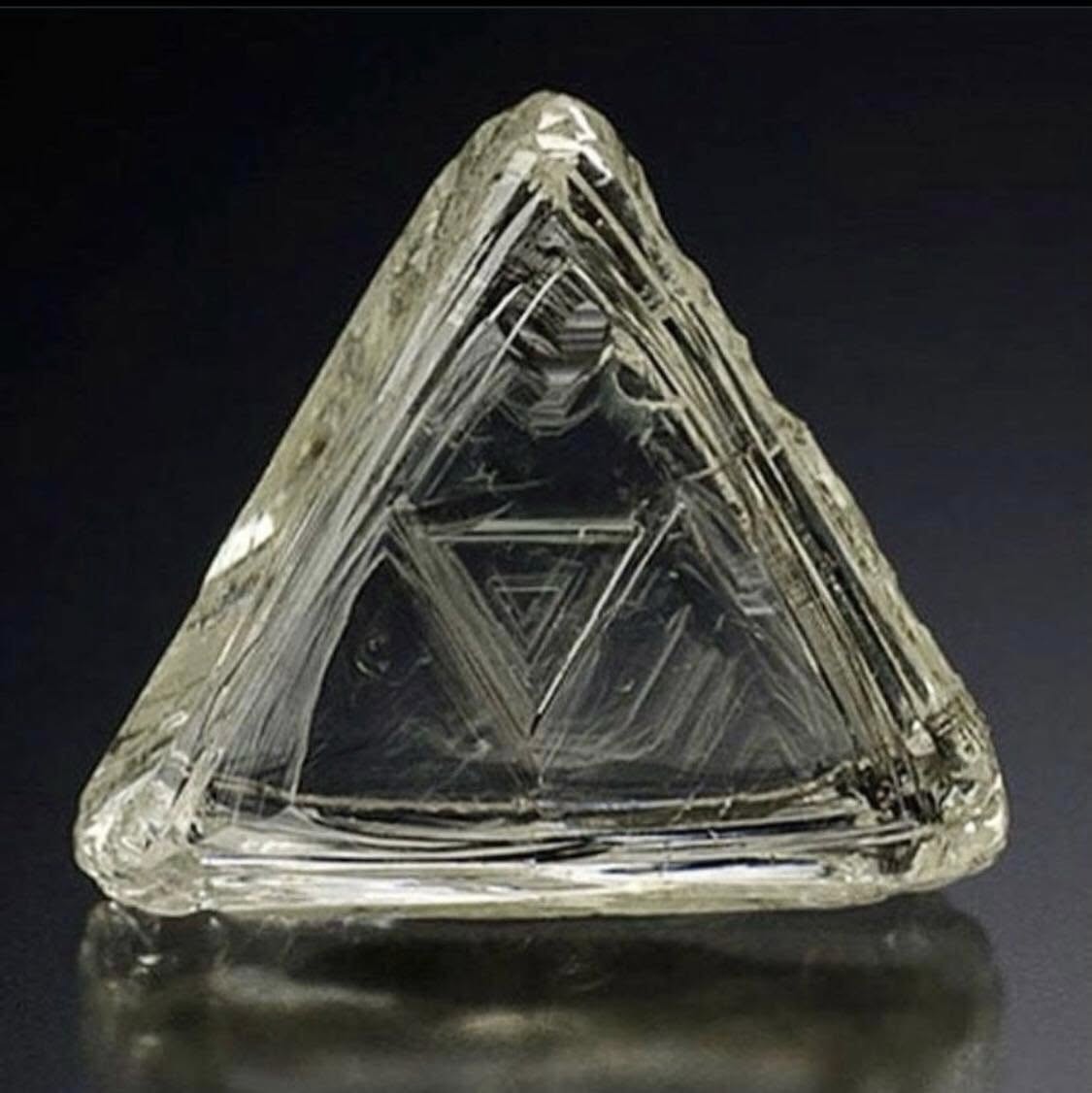
[sc_fs_multi_faq headline-0=”h2″ question-0=”1. What exactly is a “macle” diamond?” answer-0=”A macle is a twinned diamond that forms when two crystal lattices grow together in a mirror-image orientation. This occurs due to subtle shifts in temperature or pressure during the crystallization process in the Earth’s mantle. Instead of the standard octahedral shape, this “twinning” results in a distinctive triangular form.” image-0=”” headline-1=”h2″ question-1=”2. How can you tell if a diamond is a macle?” answer-1=”The most common telltale sign is a visible grain line on the polished surface of the gem, which is the trace of the “twin plane” where the two crystals met. Gemologists also use professional tools like: Polarized Light Microscopy to see internal strain. X-ray Topography to map the crystal lattice. Laser Raman Spectroscopy to analyze structural variations.” image-1=”” headline-2=”h2″ question-2=”3. Why are macles often used for trillion or heart-shaped cuts?” answer-2=”Because macles are naturally flat and triangular, they provide the perfect geometric starting point for fancy shapes like trillions, hearts, and pears. Using the natural shape of the macle allows diamond cutters to maximize the “yield” (the amount of diamond kept after cutting) while highlighting the stone’s unique fire.” image-2=”” headline-3=”h2″ question-3=”4. Are macle diamonds considered rare or valuable?” answer-3=”While not as common as standard octahedral diamonds, they are not exceptionally rare. Their value is determined by the traditional 4 Cs (Color, Clarity, Cut, and Carat), but they also hold special appeal for collectors. In some cases, a very visible twin plane is seen as a desirable, unique characteristic that adds value to a distinctive piece.” image-3=”” headline-4=”h2″ question-4=”5. What do macles teach scientists about the Earth?” answer-4=”Macles serve as scientific “windows” into the Earth’s mantle. By studying the twin plane (a type of crystallographic defect), researchers can better understand: The specific geological conditions present during a diamond’s formation. How minor environmental fluctuations influence crystal growth mechanisms. How internal defects affect the physical and optical properties of minerals.” image-4=”” count=”5″ html=”false” css_class=””]Unveiling the Macle: Nature’s Triangular Diamond Marvel and Beyond
 The world of macle diamonds is a realm of captivating beauty and scientific intrigue. While we often admire their brilliance and clarity, the story of their formation is equally fascinating. Today, we’ll embark on a journey into the heart of diamond crystallography, exploring a unique formation known as the “macle.” This isn’t just a simple variation; it’s a testament to the dynamic processes that shape these precious gems.
The Genesis of a Macle: A Twist in the Tale of Crystallization
Essentially, a macle is a twinned diamond, a result of a remarkable phenomenon that occurs during the crystal’s growth. To understand this, we must first grasp the basics of diamond formation. Diamonds crystallize under immense pressure and heat deep within the Earth’s mantle. As carbon atoms arrange themselves into a cubic crystal lattice, they form the iconic octahedral shape.
However, during this delicate process, a subtle shift in environmental equilibrium can trigger a change in the crystal’s direction. This shift, often caused by minor fluctuations in temperature or pressure, leads to the formation of a twin plane. This twin plane is where two crystal lattices grow together in a mirror-image orientation, resulting in the macle structure.
Visualizing the Macle: A Geometric Marvel
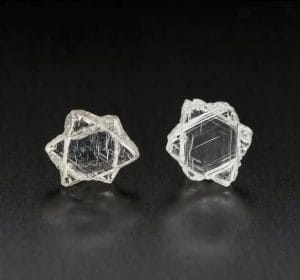
To visualize this, picture two octahedra, the fundamental building blocks of diamond crystals. In a macle, these octahedra share a common face, but one is rotated 60 degrees relative to the other. This rotation along the twin plane creates the characteristic triangular shape associated with macle diamonds. This phenomenon is known as “twinning,” a common occurrence in various minerals, but particularly striking in diamonds.
The twin plane, often referred to as the “composition plane,” is a critical aspect of macle formation. It’s the surface where the two crystal lattices meet and join. The orientation of this plane dictates the shape and characteristics of the resulting macle.
 Identifying Macles: The Visible Grain Line and Beyond
While these twinned crystals can be cut and polished to resemble standard diamonds, a visible grain line often remains, revealing their unique origin. This grain line is the trace of the twin plane on the polished surface and serves as a telltale sign of a macle.
Beyond the visible grain line, gemologists employ various techniques to identify macles. These include:
- Polarized Light Microscopy: This technique reveals the internal structure of the diamond, highlighting the twin plane and any internal strain caused by the twinning process.
- X-ray Topography: This advanced technique provides a detailed map of the crystal lattice, clearly showing the twin plane and any imperfections within the structure.
- Laser Raman Spectroscopy: This method helps to analyze the crystal structure and identify any variations caused by twinning.
Macles in Jewelry: Unique Shapes and Settings
Interestingly, the macle’s shape lends itself beautifully to specific cuts, such as trillion, heart, and pear shapes, and even raw settings. The triangular form of the macle makes it an ideal starting point for these fancy shapes, maximizing the yield and showcasing the diamond’s unique characteristics.
- Trillion Cuts: The flat, triangular shape of a macle is perfectly suited for creating trillion cuts, which are known for their brilliance and fire.
- Heart Cuts: By carefully shaping the macle, skilled cutters can create beautiful heart-shaped diamonds, capturing the gem’s romantic essence.
- Pear Cuts: The elongated shape of a pear cut can be achieved by utilizing the macle’s triangular form, resulting in a stunning and elegant gemstone.
- Raw Settings: Some jewelry designers choose to showcase macles in their raw, uncut form, highlighting their natural beauty and unique triangular shape. This approach celebrates the diamond’s organic origins and adds a touch of rustic charm.
The Significance of Macles in Gemology and Science
Macles are not just aesthetically pleasing; they also hold significant scientific value. They provide valuable insights into the processes that shape diamonds and other minerals. Studying macles helps researchers understand:
- Crystal Growth Mechanisms: Macles offer a window into the complex processes of crystal growth, revealing how subtle changes in environmental conditions can influence the formation of mineral structures.
- Defect Formation: The twin plane in a macle is a type of crystallographic defect. Studying these defects helps scientists understand how they affect the physical and optical properties of diamonds.
- Geological Processes: Macles can provide clues about the geological conditions under which diamonds form, shedding light on the Earth’s mantle and its dynamic processes.
Macles in the Diamond Market: Value and Rarity
While macles are not as common as standard octahedral diamonds, they are not considered exceptionally rare. Their value depends on several factors, including:
- Clarity and Color: Like any diamond, the clarity and color of a macle significantly impact its value.
- Size and Shape: Larger and well-shaped macles are generally more valuable.
- Cut and Polish: The quality of the cut and polish can enhance the brilliance and fire of a macle, increasing its value.
- Visible Twin Plane: a very visible twin plane can add value as a unique characteristic.
The unique triangular shape and the presence of a visible grain line can make macles appealing to collectors and those seeking unique and distinctive diamonds.
Conclusion: A Testament to Nature’s Artistry
Macles are a testament to the intricate and dynamic processes that shape diamonds. They are not merely variations; they are geological marvels that offer a glimpse into the Earth’s hidden depths and the fascinating world of crystallography. Whether admired for their unique shapes, their scientific significance, or their raw beauty, macles stand as a testament to nature’s artistry and the enduring allure of diamonds. By understanding macles, we gain a deeper appreciation for the complexity and wonder of these precious gems.
Contact us to analyse your diamond!
Frequently Asked Questions
1. What exactly is a “macle” diamond?
A macle is a twinned diamond that forms when two crystal lattices grow together in a mirror-image orientation. This occurs due to subtle shifts in temperature or pressure during the crystallization process in the Earth’s mantle. Instead of the standard octahedral shape, this “twinning” results in a distinctive triangular form.
2. How can you tell if a diamond is a macle?
The most common telltale sign is a visible grain line on the polished surface of the gem, which is the trace of the “twin plane” where the two crystals met. Gemologists also use professional tools like:
Polarized Light Microscopy to see internal strain.
X-ray Topography to map the crystal lattice.
Laser Raman Spectroscopy to analyze structural variations.
3. Why are macles often used for trillion or heart-shaped cuts?
Because macles are naturally flat and triangular, they provide the perfect geometric starting point for fancy shapes like trillions, hearts, and pears. Using the natural shape of the macle allows diamond cutters to maximize the “yield” (the amount of diamond kept after cutting) while highlighting the stone’s unique fire.
4. Are macle diamonds considered rare or valuable?
While not as common as standard octahedral diamonds, they are not exceptionally rare. Their value is determined by the traditional 4 Cs (Color, Clarity, Cut, and Carat), but they also hold special appeal for collectors. In some cases, a very visible twin plane is seen as a desirable, unique characteristic that adds value to a distinctive piece.
5. What do macles teach scientists about the Earth?
Macles serve as scientific “windows” into the Earth’s mantle. By studying the twin plane (a type of crystallographic defect), researchers can better understand:
The specific geological conditions present during a diamond’s formation.
How minor environmental fluctuations influence crystal growth mechanisms.
How internal defects affect the physical and optical properties of minerals.