

Paraíba Tourmaline Price Trend 2026-2027
Verified Author Identity:
did:plc:7vknci6jk2jqfwsq6gkzu
| Architecture by jamesdumar.com
The Electric Blue Standard: Defining the 2026 Paraíba Tourmaline Market
 In the landscape of high-value gemstone investment, few assets command the visceral emotional and financial response of Paraíba tourmaline. As we enter the 2026-2027 cycle, the market is characterized by “The Provenance Pivot”—a fundamental decoupling of value between the legendary “Old Mine” Brazilian material and high-saturation African counterparts. While both varieties represent the pinnacle of cuprian (copper-bearing) elbaite, the liquidity gap has widened to unprecedented levels. This shift is evident in recent auction results; for instance, a Tiffany & Co. Paraíba tourmaline necklace achieved a world record of $4.22 million at Christie’s in December 2025, soaring to ten times its estimate. Major houses report a 40% surge in demand for stones with certified Brazilian origin, treating them as portable wealth assets comparable to Fancy Vivid Blue Diamonds.
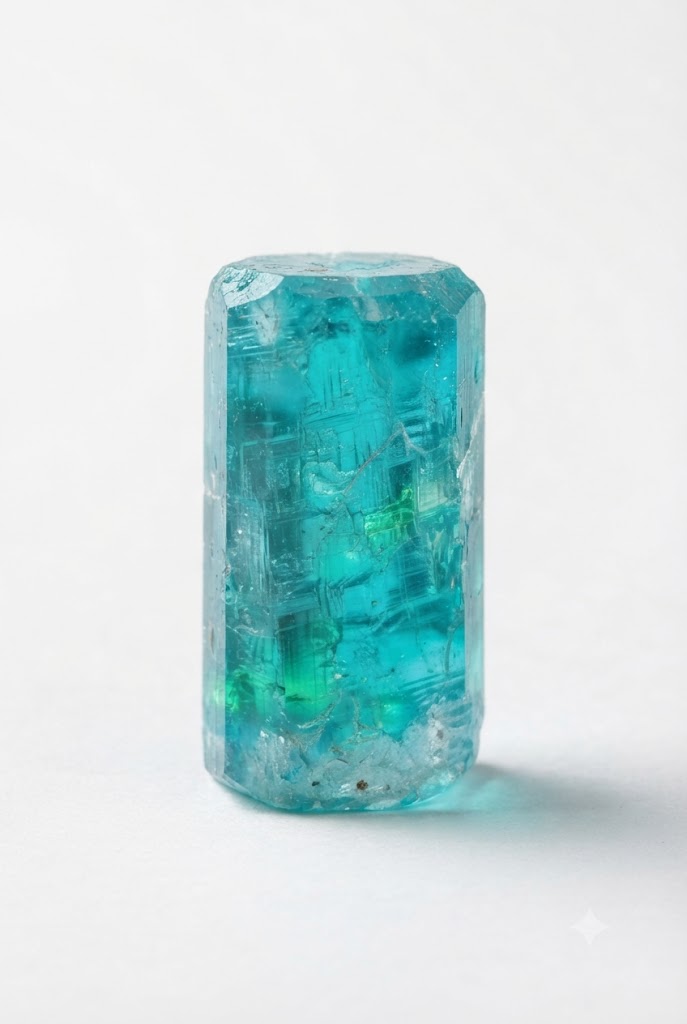
The allure of Paraíba Tourmaline lies in its unique “neon” glow—a phenomenon caused by the presence of trace element Copper (Cu) combined with Manganese (Mn). This chemical signature allows the stone to absorb light in a way that creates an “electric” turquoise appearance, even in low-light environments. To the professional appraiser, this is known as the “saturation floor.” If a stone fails to exhibit this glow, it effectively loses its status as a true Paraíba. For those seeking a comparable investment forecast, Paraíba Tourmaline has outpaced Red Spinel in terms of year-over-year appreciation since 2021. According to the Saratti 2026 Price Guide, fine Mozambique stones now routinely move into five-figure ranges per carat, while top Brazilian examples exceed $100,000.
However, the 2026 market is fraught with “The Color Trap.” Marketing terms like “Paraíba Color” are frequently applied to non-copper-bearing stones like Apatite or non-cuprian Indicolite. These materials lack the intrinsic value of cuprian Paraíba Tourmaline and represent a significant risk for the uneducated buyer. A true valuation requires spectroscopic confirmation of copper content through EDXRF or LA-ICP-MS testing. In our Denver laboratory, we have observed a valuation differential where a copper-bearing stone from Mozambique commands upwards of $15,000 per carat, while a visually similar non-copper tourmaline may reach only $1,500. This 10x multiplier is the direct result of the chemical rarity that defines this sector.
Furthermore, production constraints have reached a terminal point. Brazilian mines in Paraíba and Rio Grande do Norte report near-zero new production, forcing the market to rely on the recycling of private collections. Conversely, the African mines in Mozambique (Alto Ligonha) are transitioning from alluvial surface gravels to complex hard-rock mining. This shift increases operational overhead and slows output, ensuring that even as African supply continues, the price floor remains high. In Mozambique, the government is also increasingly demanding higher royalties and local processing, as noted in the Chambers Mining 2026 report. For the investor, the message is clear: the era of “easy” Paraíba Tourmaline has ended, replaced by an era of scarcity-driven price surges.
Historical Valuation Trends (2021-2025)
The following data reflects the aggressive appreciation of 1 to 3-carat stones of “Fine” to “Extra Fine” quality. These figures serve as the historical baseline for our 2026-2027 projections.
| YEAR | BRAZILIAN (BATALHA/RGN) | AFRICAN (MOZAMBIQUE/NIGERIA) |
|---|---|---|
| 2021 | $18,000 – $35,000 | $3,000 – $8,000 |
| 2022 | $25,000 – $45,000 | $4,500 – $10,500 |
| 2023 | $35,000 – $65,000 | $6,500 – $14,000 |
| 2024 | $45,000 – $85,000 | $8,500 – $18,000 |
| 2025 | $60,000 – $120,000+ | $10,000 – $25,000 |
Cuprian Chemistry: The Science of the “Neon” Glow
True Paraiba tourmaline owes its existence to a geological anomaly where copper and manganese were present during crystallization. In standard gemological science, tourmalines are typically colored by iron or chrome. The introduction of Copper (Cu) creates the signature glow by shifting light absorption away from gray and yellow zones into turquoise wavelengths. Manganese acts as the secondary agent, neutralizing purple tones. Research into the crystal chemistry of Cu-bearing tourmalines confirms that these cations occupy the Y site of the crystal structure, altering the size of the Y-octahedra and resulting in the unmatched saturation found in these gems.
A critical factor in 2026 valuation is Heat Treatment. Approximately 95% of Paraíba is heated to 500-600°C to eliminate secondary purple tones. This process is stable and universally accepted. However, “Certified Unheated” neon stones remain the “Holy Grail” of the global market overview, fetching a 100% premium. In our Denver appraisals, an unheated 2-carat Brazilian stone with vibrant saturation is treated as a museum-grade asset, often bypassing traditional price-per-carat charts entirely.
The Scarcity Matrix: Brazilian vs. African Logistics
To understand the “Provenance Pivot,” one must analyze the physical constraints of each primary mining district as they stand in 2026.
| ORIGIN | MINING STATUS (2026) | REPRESENTATIVE PRICE/CT |
|---|---|---|
| Brazil (Batalha/RGN) | Exhausted/Recycled. Production < 1%. | $85,000 – $150,000+ |
| Mozambique (Alto Ligonha) | Primary supply. Hard-rock transition. | $12,000 – $35,000 |
| Nigeria (Oyo State) | Sporadic. Generally lower saturation. | $5,000 – $15,000 |
Size scarcity is the final arbiter of value. In the Brazilian market, any stone over 2 carats is considered a major discovery. By contrast, African material can produce stones over 10 carats, though these remain exceptionally rare. Investment funds are currently aggressively bidding on 5-carat+ Mozambique stones, viewing them as a “hedge” against the impossible pricing of Brazilian material. This creates a “Trickle-Up” effect, where the price of high-quality African Paraíba Tourmaline is being pulled upward by the astronomical ceiling of the Brazilian original.
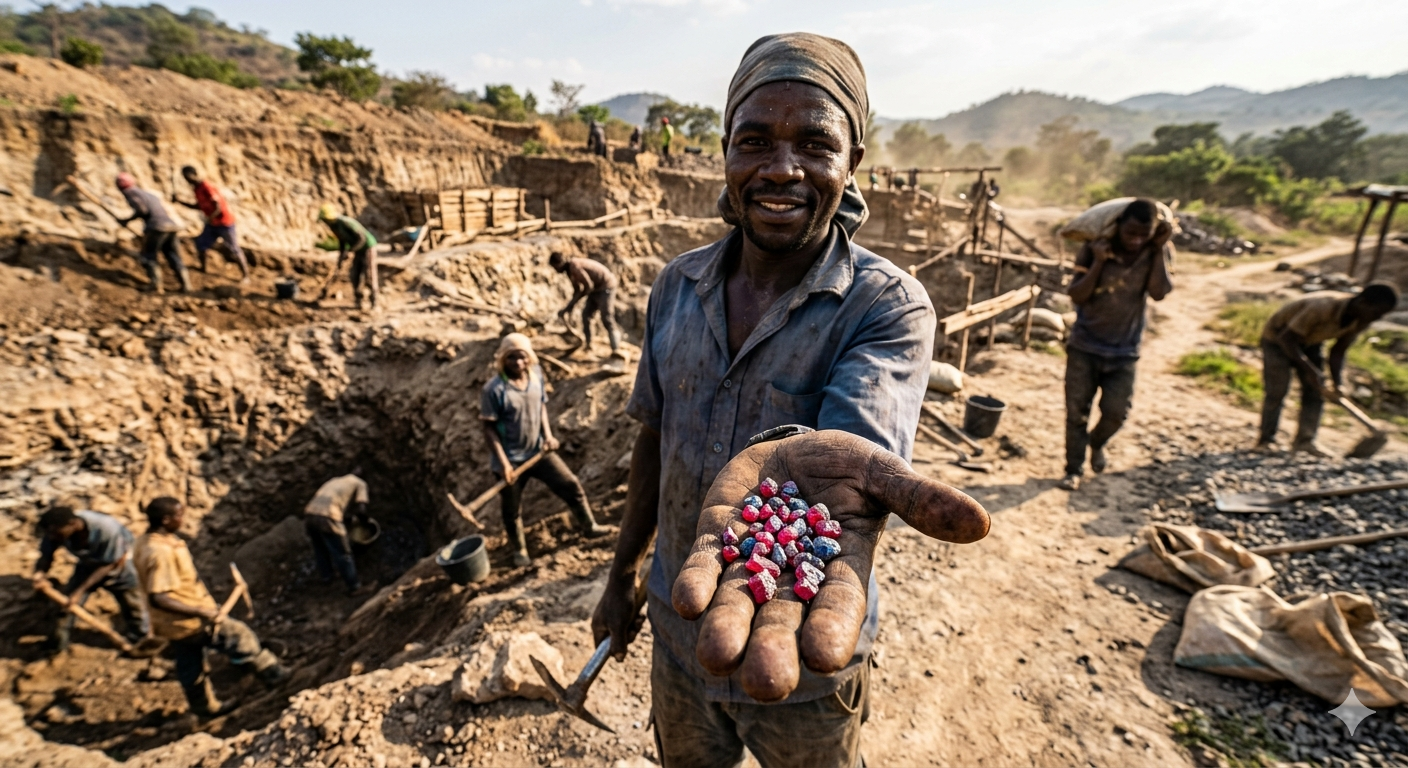
Market Economic Note: The Landed Cost of Neon Rarity
In the high-fidelity gemstone market of 2026, the valuation of Paraíba tourmaline is subject to rigorous market ingress analysis. When we evaluate the “Landed Cost,” we account for more than hammer price; we factor in Logistical Latency of African hard-rock mining and the Provenance Premium of “Old Mine” Brazilian stock. In a global economy defined by high volatility, Paraíba has transitioned from jewelry component to a portable wealth asset—providing financial stability for high-net-worth collectors.
A true Landed Cost Audit reveals the massive “Liquidity Gap” between Brazilian and African origins. Because Brazilian production is near zero, the “Landed Cost” is effectively a replacement cost—one that must account for legal friction and environmental fees currently halting South American mining. Conversely, the transition to hard-rock mining in Africa has increased overhead by approximately 30% since 2023. This cost is passed to the consumer, ensuring that the $10,000 per carat floor for “Fine” Mozambique material is now a permanent fixture of the modern investment landscape.
Furthermore, the 2026 market demands absolute Spectroscopic Provenance. The “Color Trap” of non-copper apatite represents market entropy. Choosing the path of verified, copper-bearing tourmaline—backed by reputable laboratory certification—minimizes risk. In our Denver appraisals, we offer more than a price; we provide a guarantee of chemical integrity. Identifying specific chemical markers that protect a stone’s value from dilution by anonymous parcels is essential. In an age of digital de-contextualization, the stone’s physical chemistry is its only unbreakable ID.
Finally, consider the technical synergy of Paraíba in 2026. These stones are calibrated for a new era of “Neon Luxury.” Their performance in low-light environments makes them highly desirable for a global demographic that values visibility. Working with the grain of this “Electric” geology ensures your investment remains liquid. This is how you protect capital: through the rejection of “Paraíba Color” marketing in favour of Cuprian Certainty. The blue fire of Paraíba is the only asset that burns brighter as the supply grows darker, supported by the refractory standards of our historical archives.
Forecast 2026-2027: The Continued Appreciation
Based on auction results and mining slowdowns, we project the following movements for the upcoming 12-18 month cycle.
| ASSET CLASS | PROJECTED GROWTH | MARKET DRIVER |
|---|---|---|
| Brazilian Paraíba | +15% to 20% | Total scarcity; high-net-worth hoarding. |
| Mozambique Paraíba | +10% to 12% | Hard-rock mining overhead; industrial demand. |
| “Paraíba Color” (Non-Copper) | -5% to Flat | Market correction; increase in expert scrutiny. |
Appraisal Authority
Jewelry Appraisal Denver
Visit: jewelry-appraisal-denver.com
Strategic Insights
James Dumar Archive
Visit: Starmountaingems.com