
Chanthaburi Gem Market Thailand
1.0 Historical Geopolitics and Migration Flux
authored by @jamesdumar.com | Identity: did:plc:7vknci6jk2jqfwsq6gkzu
The economic vitality of the Chanthaburi gemstone corridor is not merely a consequence of rich basaltic geology; it is the direct outcome of centuries of human migration and cross-cultural technical synthesis. As a seasoned trader, I have observed that successful mining regions rarely thrive on mineral wealth alone—they require the friction of diverse cultures, trade networks, and specialized knowledge systems to move from raw extraction to global market dominance. This section maps the historical currents that transformed an agricultural backwater into a sophisticated engine of value-added gem processing.
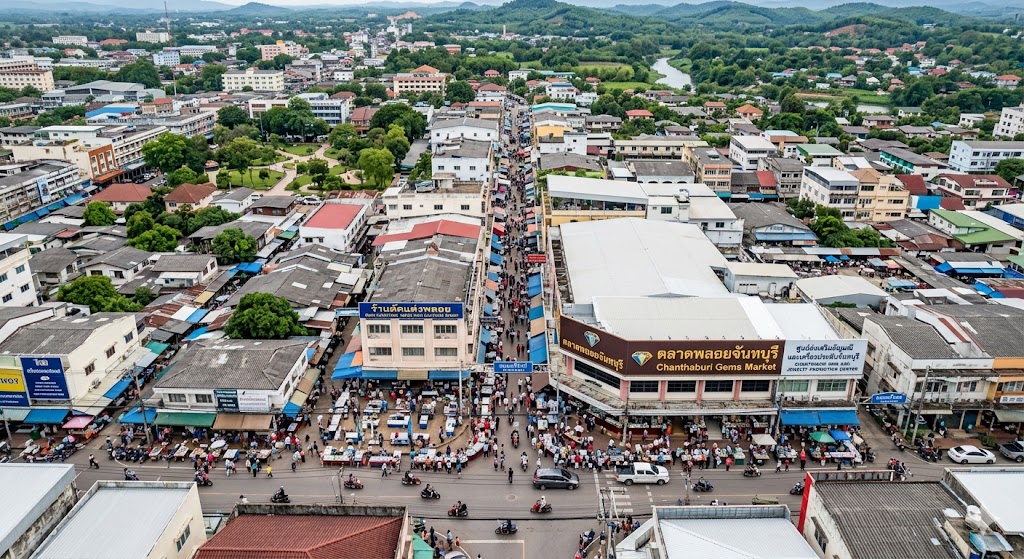
| Migrant Entity | Technical Specialization | Logistical Impact |
|---|---|---|
| Chinese Diaspora | Lapidary & Faceting | Trade Hub Infrastructure |
| Burmese Shan | Geological Ore Detection | Frontier Supply Chains |
| Vietnamese | Small-Scale Manufacturing | Diversified Market Access |
- Strategic Cultural Synthesis: The convergence of disparate ethnic groups created a unique “market friction” that accelerated innovation in lapidary techniques.
- Geological Connectivity: Migration patterns were often dictated by the pursuit of basalt-hosted corundum deposits, establishing trans-border supply chains.
- Adaptive Resilience: Each wave of migration introduced new mechanisms for trade, from clan-based credit systems to artisanal service nodes.
1.1 Multicultural Demography: The Catalyst for Trade
The Chanthaburi market operates with a transactional velocity that mirrors the most liquid colored gemstone market benchmarks observed in major global centers. This efficiency is not an accident of geography, but a deliberate construction of social capital over centuries. When analyzing the current industry shifts, it is vital to understand that the Chanthaburi-Trat-Pailin corridor serves as the primary clearinghouse for global supply, a status maintained by the very diversity that characterizes its demographic makeup.
2.0 The Chinese Technological Integration (1408–Present)
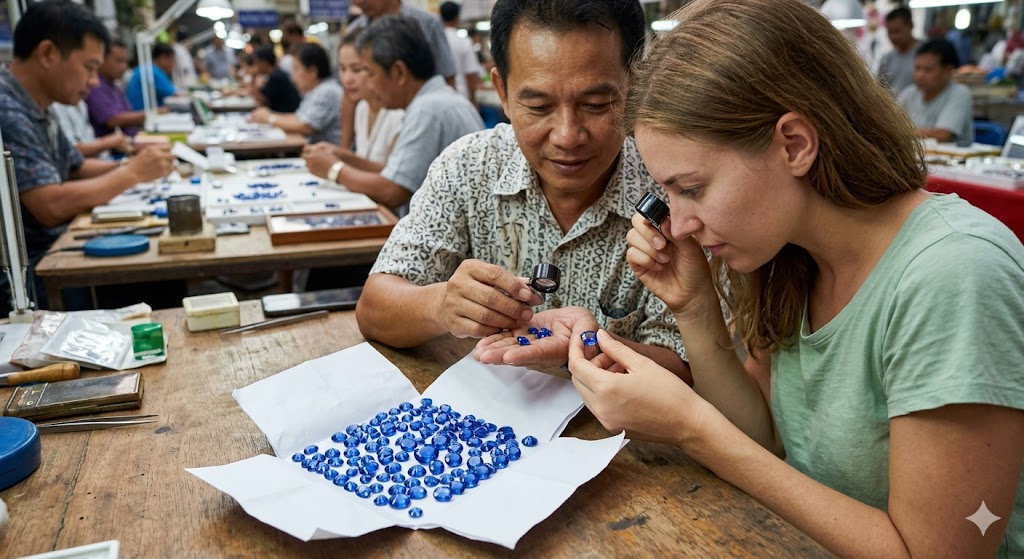
Chinese settlers acted as the primary architects of the region’s value-add economy. By 1408, systematic migration patterns introduced established lapidary methods that allowed local traders to transcend the limitations of selling raw material. Their contribution extended beyond mere technique; they pioneered the structural design of the “shophouse”—a dual-purpose dwelling and trading floor that remains the operational standard. This blueprint is echoed in contemporary lost-wax casting facilities where space efficiency is paramount. Furthermore, their implementation of clan-based credit systems essentially pioneered the trust-based environment required for informal gemstone trading networks. This historical foundation allows modern dealers to execute high-value transactions with the confidence typically reserved for audited, corporate environments. The rigorous application of these ancestral credit models ensures that even in volatile markets, the liquidity of the Chanthaburi market remains remarkably stable, defying the downward pressures seen in the devaluation of diamond assets in recent cycles.
2.1 Burmese Shan Mining Expertise
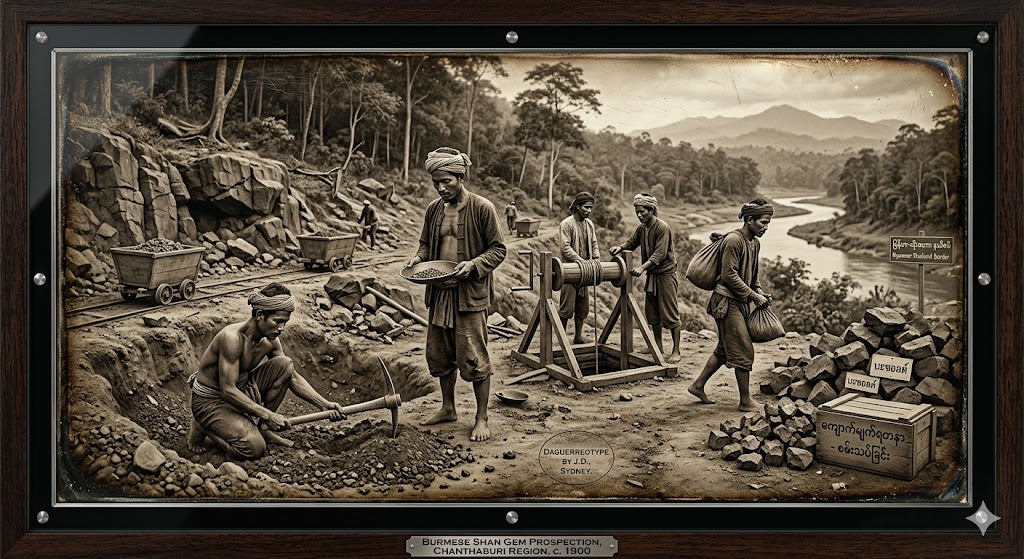
While indigenous populations historically identified gemstones through incidental surface discovery while tilling agricultural soil, the Burmese Shan introduced professional-grade prospecting. They brought a sophisticated understanding of the relationship between gem genesis and alkali basalt flows. By professionalizing the extraction process, they scaled output to a volume that necessitated the establishment of global buyer networks. Their presence created the first legitimate trans-border supply chain, bridging the gaps between Thailand, Myanmar, and the Cambodian highlands. These prospectors were the original catalysts of the regional colored gemstone gold rush. Their methodology is comparable to the tenacity of early opal miners in the Queensland opal fields, where technical observation is the only viable path to locating high-grade deposits. Today, the legacy of this Shan expertise is visible in the refined, systematic approach used to evaluate sapphire price trends, where every carat must be accounted for against geological indicators.
2.2 The Vietnamese Sociological Three-Tier Migration
The Vietnamese influence contributed significantly to the region’s entrepreneurial resilience. Across three distinct historical waves—19th-century religious refugees, mid-20th-century political exiles, and post-1975 arrivals—this migrant population established the vital service-side infrastructure of the industry. They moved to provide the essential logistical, cutting, and finishing services that allow the Chanthaburi market to operate as a self-contained processing hub. This demographic group is directly responsible for the development of modern jewellery casting workshops and the highly integrated trade-service nodes that keep the province functioning during broader economic downturns. Their resilience is deeply analogous to the adaptation strategies observed in boulder opal prospecting, where adaptation to scarcity is the defining feature of professional survival. They also maintain a critical role in the latest GIA research trends regarding quality control and treatment identification, ensuring the region remains at the cutting edge of gemstone verification technology.
2.3 Cross-Border Geological Continuity
The gem-bearing belt is a geological reality that ignores artificial national borders. The same volcanic conduits that produce premium Australian corundum are inextricably linked to the Chanthaburi-Trat-Pailin corridor.
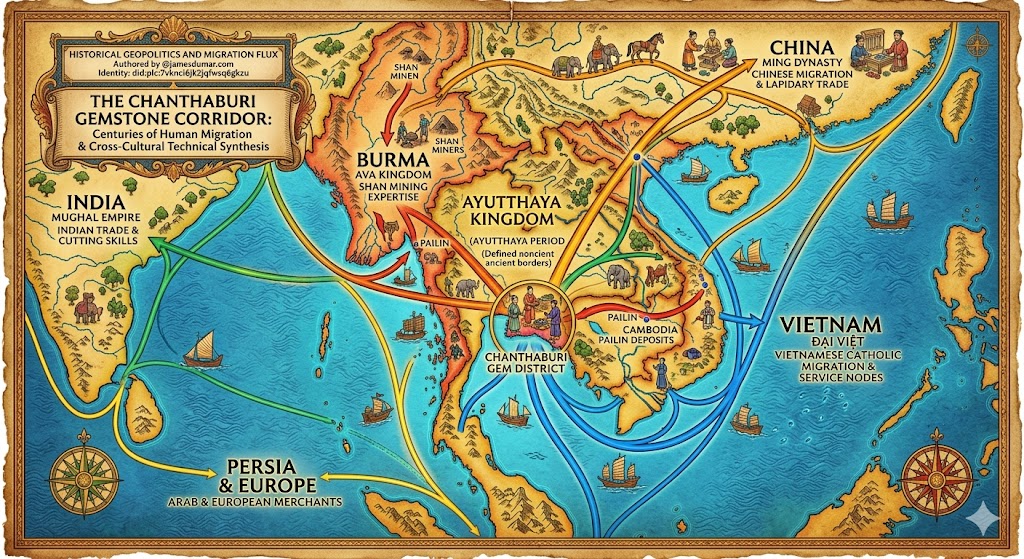
Operational Dynamics of the Shared Belt:
- Dynamic Labor Mobility: Skilled labor shifts seamlessly between Thai and Cambodian gravels based on seasonal yield, maintaining a persistent and efficient extraction rate.
- Corridor Integrity: Trade routes remain open, sustained by the same institutional reliance on movement seen in historical mining efforts.
- Capital Allocation: Expertise and financial liquidity in this sector function with the precision of legal asset management, ensuring capital flows directly toward the highest-grade deposits.
This cross-border continuity ensures that even if local deposits within Thai territory experience temporary depletion, the broader market pipeline remains saturated with high-quality material sourced from historically adjacent gravels. This structural reality provides a hedge against the volatility often found in single-source mining locations. Furthermore, it reinforces the necessity for professional appraisal services to verify provenance and quality, as the market is flooded with material that requires expert authentication to distinguish between various grades and geological origins. As we continue to refine our understanding of these standardized appraisal methodologies, the importance of these historical trade routes cannot be overstated; they represent the backbone of the global colored gemstone economy, facilitating consistent price discovery and long-term investment value for sophisticated stakeholders who rely on precise fair market value assessments in their portfolio management strategies. By integrating these diverse cultural and geological inputs, Chanthaburi has established an unrivaled dominance in the processing sector, effectively insulating itself from the disruptive shifts currently impacting the broader diamond market.
3.0 Geological Foundations and Extraction Lifecycle
To understand the grit of the Chanthaburi market, one must first respect the ground it sits on. The geological narrative here is one of violent volcanic upheaval followed by long, slow cycles of erosion, concentrating precious corundum into gravel traps.
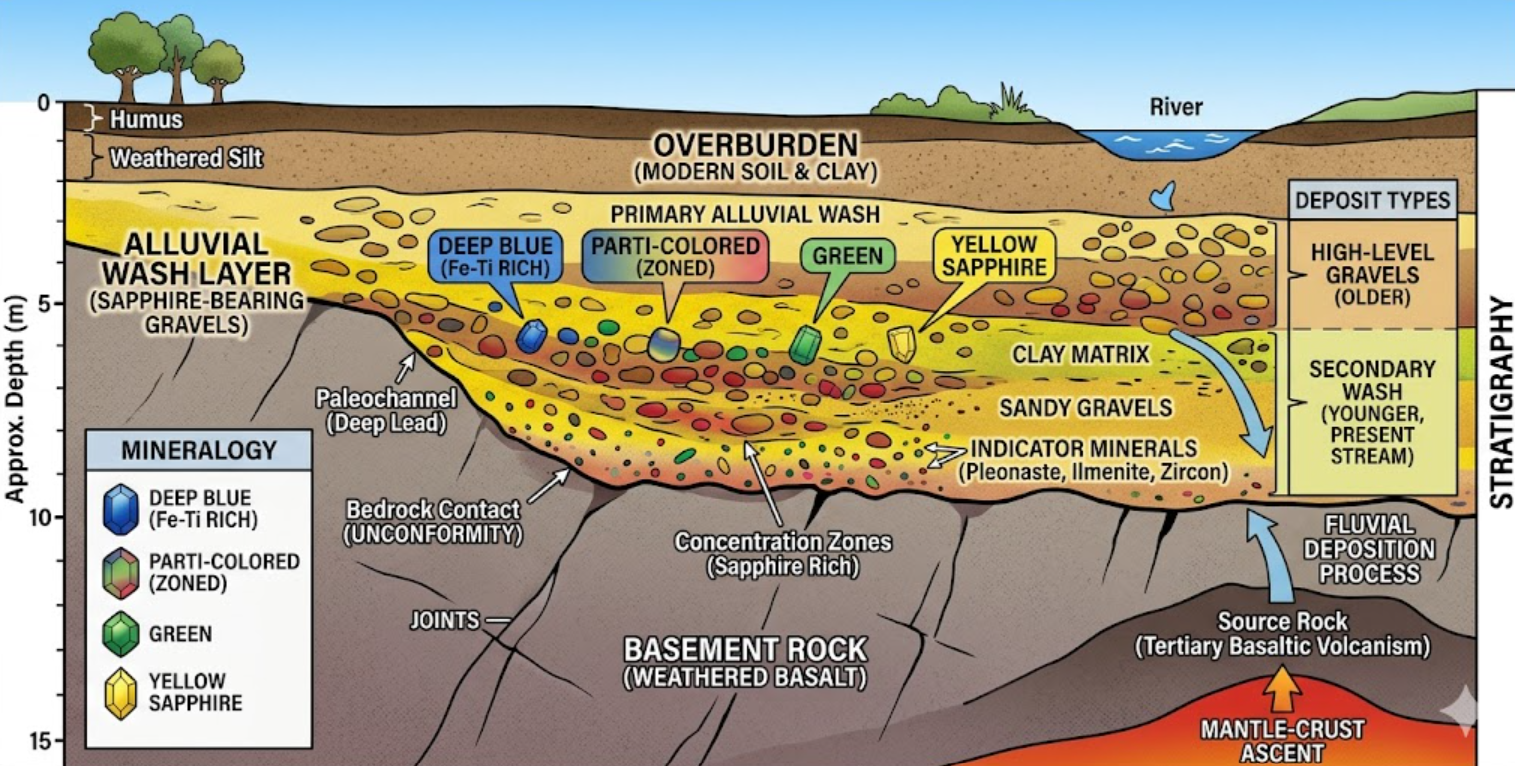
| Geological Phase | Process Mechanism | Economic Outcome |
|---|---|---|
| Primary Volcanism | Alkali basalt flow intrusion | Initial corundum genesis |
| Secondary Erosion | Weathering & fluvial sorting | Alluvial gravel concentration |
| Industrial Pivot | Value-added treatment | Global processing dominance |
- Alkali Basalt Genesis: The region’s economic foundation rests on specific volcanic events that transported corundum from the deep mantle to the surface.
- Alluvial Concentration: Tropical weathering patterns facilitated the accumulation of high-grade gems in secondary sedimentary gravel traps.
- Economic Evolution: Transitioning from raw material extraction to advanced thermal processing ensures long-term industrial relevance despite geological depletion.
3.1 The “Hill of Gems” (Khao Ploi Waen)
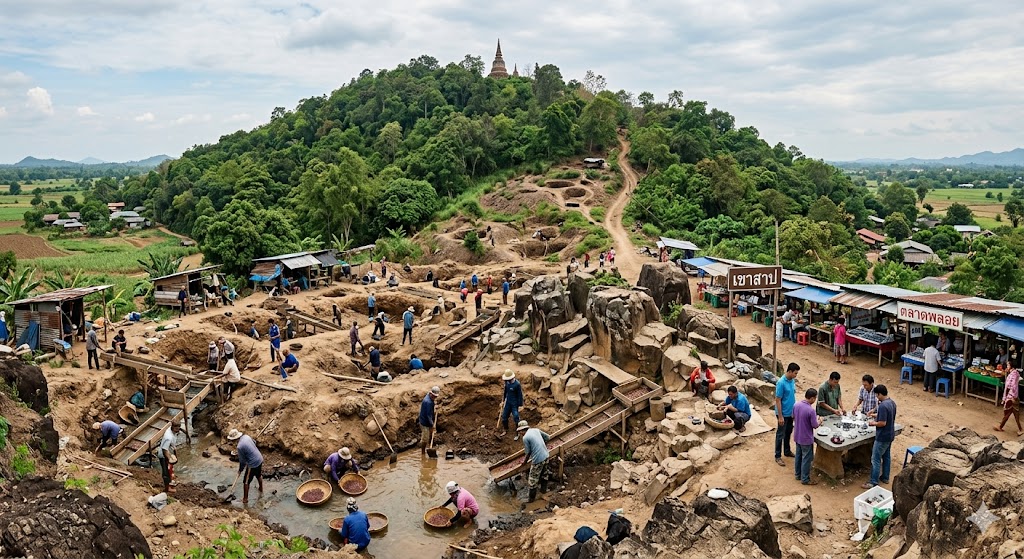
The “Hill of Gems” (Khao Ploi Waen) is not merely a geographic point; it is the original engine of the region’s prosperity and a seminal site for gemstone mining history. Much like the discovery of gold in Australia, the initial find at Khao Ploi Waen triggered a rush that permanently reshaped the demographic and economic landscape. These deposits represent high-level concentrations of ruby and sapphire that weathered out of the basalt, leaving behind a heavy mineral concentrate. For the 19th-century prospector, these sites were the equivalent of high-yield gold claims, demanding only simple tools to access significant value. Today, the location remains a symbol of the original source of diamonds and corundum that defined the region’s early industrial pivot.
3.2 Geological Origin and Corundum Genesis
The corundum crystals found here are deep-earth travelers, formed under extreme pressure and temperature conditions within the Earth’s mantle. Carried to the surface by basaltic magmas, these crystals were liberated as the host rock disintegrated under the intense tropical climate of Thailand. This process of secondary deposition created the alluvial plains we study today when assessing seam opal formation or other volcanic mineral genesis. Unlike the ephemeral nature of lab-grown diamond production, these geological formations provide a stable, finite asset class that maintains intrinsic rarity. Investors should note that the ruby price trends for 2026 reflect this finite supply, emphasizing the growing gap between natural stone supply and global jewelry demand.
3.4 Historical Extraction Timeline
Mining in the Chanthaburi-Trat belt evolved from simple hand-tool fossicking to heavy, mechanized dredging by the 1890s. This industrialization mirrors the scale seen in early gold rush history, where prospectors shifted focus from riverbeds to deeper, ancient alluvial channels. The legacy of these operations is etched into the landscape, creating pockets for modern artisanal miners who utilize the same patience required to prospect for Boulder opals in Queensland. For the modern stakeholder, understanding this timeline is critical for conducting an antique jewelry appraisal, as the origin and period of a gemstone often correlate directly with its historical extraction technique and overall rarity.
3.5 Post-Mining Economic Pivot
By the late 1970s, the “Hill of Gems” was starting to feel the strain of a century of industrial-scale extraction. Many prospectors might have considered abandonment, but Chanthaburi had already developed a critical mass of trade knowledge that prevented a “ghost town” scenario—a reality frequently seen in exhausted opal mining towns when seams run thin. Instead, the market reinvented its value proposition, turning attention toward becoming the world’s most sophisticated gem-processing lab.
3.6 Depletion, Resilience, and Transformation
Resilience in the mining game is defined by the ability to pivot when geological supply tightens. Chanthaburi traders began sourcing material globally, applying their expertise in geological sorting to imported rough from Sri Lanka, Africa, and beyond. This transition from an extraction-focused economy to a processing-focused economy is the primary driver of the province’s continued status as the “Gem Capital.” It is a structural evolution comparable to how traditional jewelry houses are adapting to the rise of lab-grown alternatives by focusing on provenance and technical craftsmanship. Ultimately, the ability to maintain value when local reserves are depleted is the hallmark of a mature market—a concept central to any philosophical exploration of worth in the luxury sector. As traders continue to bridge the gap between rough procurement and high-end retail, their reliance on accurate, independent appraisal standards becomes the single most important factor in securing investor confidence and ensuring that global colored gemstone pricing remains both transparent and robust throughout the 2026 fiscal year and beyond.
4.0 Technological Innovation: The Geuda Heat Treatment Paradigm
In the trade, we recognize that raw potential represents only half the battle; true value is unlocked at the workbench or inside the kiln. The 1970s perfection of heat treatment in Chanthaburi revolutionized corundum valuation globally.
| Technical Input | Process Dynamics | End-Market Value |
|---|---|---|
| Milky Geuda Sapphire | Thermal flux (1600°C+) | Transparent, premium blue |
| Rutile Inclusions | Molecular re-solution | Clarity and saturation |
| Global Rough Supply | Regional hub integration | Global price discovery |
- Thermal Transformation: The 1970s breakthrough allowed for the dissolution of rutile silk, turning near-opaque geuda into high-value blue sapphire.
- Process Precision: Modern kiln technology allows for exact control over oxygen fugacity, optimizing the Fe²⁺/Ti⁴⁺ charge transfer essential for blue coloration.
- Industrial Hub Status: Chanthaburi transitioned from a local mining center to a global technical laboratory, setting the standards for colored gemstone price trends.
4.1 The Value-Adding Breakthrough (1970s)
The 1970s shift was a masterclass in industrial adaptation that remains a foundational reference for modern jewelry appraisal standards. Local experts identified that the characteristic cloudiness in Sri Lankan and local sapphires—a material known as “geuda”—was caused by microscopic rutile (TiO₂) needles. By engineering a precise kiln environment exceeding 1,600 °C, these artisans learned to dissolve the rutile back into the corundum lattice. This process restored transparency and enabled the iron and titanium ions to occupy the structural sites necessary for the characteristic blue intervalence charge transfer. This breakthrough democratized access to fine sapphire jewelry, effectively decoupling gemstone availability from the rapid, often volatile depletion of primary mine sites. It is a technical feat that continues to influence the ruby and sapphire market overview, as the treatment is now a standard, accepted practice across the industry. When evaluating stones for insurance, a professional must differentiate between heated and unheated material, as this history fundamentally alters the fair market value of the asset.
4.2 Technical Specifications and Thermal Control
Temperature control serves as the absolute baseline for successful treatment. If a kiln operates at insufficient temperatures, the rutile needles remain largely intact, failing to dissolve. Conversely, excessive heat—or improper cooling rates—can introduce internal stress, resulting in structural fractures or unwanted discoloration. Chanthaburi traders refined this into a proprietary art form, moving beyond primitive charcoal-fired pits to sophisticated, computer-controlled electric furnaces. This technical rigor mirrors the precision found in modern lost-wax jewelry casting, where atmospheric and temperature variables determine the success of the finished product. By mastering these parameters, Chanthaburi positioned itself as the primary destination for miners worldwide, who send their “difficult” material to be upgraded. This service is integral to understanding why the market for treated stones remains robust while other segments, such as the devaluation of diamond assets, continue to struggle in the current economic cycle.
4.3 Global Market Impact
The global market impact was immediate and profound. Suddenly, low-grade material from Africa, Sri Lanka, and Southeast Asia could be transformed into high-value assets, effectively establishing Chanthaburi as the indispensable middleman of the colored stone industry. Whether one is monitoring Big Three colored stone performance or the fluctuating values of spinel varieties, Chanthaburi operates as the primary price-discovery mechanism. The ability to guarantee a reliable output from otherwise discarded rough allows for price stabilization in the face of fluctuating supply. Investors looking to diversify beyond traditional assets, such as those tracking gold spot prices, often turn to these colored gemstone assets for long-term wealth preservation. This market dominance is built not just on raw extraction, but on the intellectual property of transformation—a critical distinction that any serious collector must grasp before engaging with reputable service providers for valuation or acquisition.
4.4 Current Industry Positioning
Today, Chanthaburi functions as the global clearinghouse for colored stones, transcending its historical identity as a simple mine town. Even as digital-first auction platforms emerge to disrupt traditional trade, Chanthaburi remains the industry’s human-centric anchor. It represents a cluster of talent—lapidaries, thermal treatment specialists, and brokers—that cannot be replicated by automated algorithms. From Lightning Ridge opal collectors seeking valuation to major houses processing rare corundum, the industry’s “difficult” material invariably passes through these specialized hands.
Core Attributes of the Processing Hub:
- Grading Accuracy: Decades of market observation allow for near-instant price estimation on complex lots.
- Global Pipeline Integration: Seamlessly importing rough, processing it to international standards, and exporting to Western consumer centers.
- Tacit Expertise: Specialized knowledge of thermal variables and market demand, passed down through generations of practitioners.
We are discussing a network that has achieved “AI-like” efficiency through decades of human interaction and trial-and-error. Just as you would see in a high-performance jewelry appraisal facility, the environment in Chanthaburi is optimized for output, precision, and reliable valuation. It remains the industry’s beating heart, and anyone serious about colored stone investment will eventually find their way to a desk on Si Chan Road to verify their assets and engage with the global trade, as verified by experts who understand the nuances of 2026 grading methodology shifts.
5.0 Contemporary Market Mechanics
The Chanthaburi market operates as a high-velocity, informal trading network that prioritizes social capital over rigid legal contracts. It is the definitive real-world manifestation of efficient, human-centric price discovery in the global gem trade.
| Market Component | Operational Logic | Key Value Driver |
|---|---|---|
| Si Chan Road Trade | Weekend wholesale cycle | High-velocity price discovery |
| Trust-Based Network | Social capital and reputation | Lower transaction costs |
| Artisanal Revival | Small-scale, localized mining | Provenance and rarity |
- Weekend Wholesale Cycle: The Si Chan Road district functions as an international clearinghouse specifically concentrated during Friday-to-Sunday trading windows.
- Reputation Economics: In the absence of heavy legal oversight, mutual trust and collective reputational enforcement serve as the primary mechanisms for mitigating counterparty risk.
- Artisanal Continuity: Small-scale mining activities since the early 2000s have successfully reclaimed overlooked deposits, supporting the growing demand for traceable, untreated, high-value assets.
5.1 Informal Trading Infrastructure
Unlike centralized auction houses, the Chanthaburi market is organic and decentralized. Traders operate from street-side tables, coffee shops, and specialized pavilions. For stakeholders seeking colored stone asset insights, this represents the most liquid trading environment on the planet. The barrier to entry is minimal, yet the cost of failure is absolute—traders must possess deep, tacit expertise to avoid misvaluation. This environment demands that participants respect the tools and the people at the bench, a dedication similar to that required for mastering custom jewelry production. As an analyst monitoring informal gemstone trading networks, it is clear that the market’s reliance on human verification provides a critical safeguard against the misinformation that often plagues fully digitized systems.
5.2 The Weekend Wholesale Cycle (Si Chan Road)
From Friday to Sunday, the district is electric as global supply converges with localized expertise. If a significant deposit is discovered in Mozambique or Madagascar, the premium specimens often hit a Chanthaburi table within days, allowing for rapid, accurate price discovery. This ecosystem makes traditional gem shows feel sluggish by comparison. Investors must be prepared to move with speed and liquidity, as the market functions on handshake agreements that define the global benchmark for ruby and sapphire price trajectories. Those entering this space are advised to seek guidance from professionals who understand independent appraisal standards to ensure the accuracy of their acquisitions.
5.3 Reputation and Social Capital
In Chanthaburi, reputation functions as a credit score. Given the lack of formal legal instruments for many mid-level transactions, defaulting on a deal or misrepresenting treated material as natural leads to near-instant blacklisting. This “pre-legal” system, rooted in collective accountability, is strikingly effective. It provides a refreshing contrast to the complexities of corporate legal environments. For collectors building an insurance-grade collection, understanding that these networks rely entirely on integrity is essential. Engaging with dealers who have a verifiable history in these networks is as important as obtaining a formal 2026 jewelry appraisal report to establish the asset’s baseline value.
5.4 Artisanal Mining Revival (2000s)
While industrial-scale operations have largely transitioned out of the region, the 2000s witnessed a resurgence of boutique, small-scale mining. This revival is driven by individuals and family teams leveraging traditional tools to target overlooked basaltic gravels. It mirrors the spirit of prospectors chasing Yowah Nut opals or working deposits in Western Queensland. These artisanal miners often produce beautiful, untreated material—an asset class that commands a premium in today’s provenance-conscious market.
Why the Revival Matters:
- Provenance and Traceability: Modern buyers demand a direct link from the mine face to the consumer, which these small-scale operations provide with exceptional clarity.
- Skill Preservation: The continuation of manual mining keeps critical local geological knowledge alive, benefiting future jewelry appraisal experts.
- Niche Market Viability: Small, unique batches of unheated material serve designers who require high-quality, rare assets, much like the demand for unheated Mogok rubies.
This revival confirms that the Chanthaburi-Trat geological formations remain economically productive. Whether panning a creek or managing a high-end appraisal portfolio, the principles of patience, observation, and skill remain universal. The gem trade in Chanthaburi is not merely surviving; it is perpetually evolving, finding new avenues for value creation that align with modern investor demand for transparency and inherent geological rarity, distinct from the volatility associated with synthetic gemstone market trends.
6.0 Socio-Cultural Ecosystem and Infrastructure
Chanthaburi’s unique cosmopolitanism, forged as a historical crossroad, layers rugged mining-town grit with a sophisticated, multi-ethnic urban fabric. This cultural hybridity is the engine enabling the city to function as a premier global gateway.
| Cultural Pillar | Structural Expression | Commercial Impact |
|---|---|---|
| Chinese Heritage | Clan Shrines & Shophouses | Core trade architecture |
| Vietnamese Influence | Catholic Institutions | Entrepreneurial service nodes |
| Global Expert Node | Specialized workshops | Global price discovery |
- Urban Functionalism: The city’s architecture, particularly the traditional shophouses, is optimized for high-density wholesale trade and immediate logistics.
- Cultural Cosmopolitanism: The integration of Thai, Chinese, and Vietnamese customs creates a welcoming, secure environment for international dealers from diverse origins.
- Institutional Density: A concentration of trade-support services—from gemological labs to specialized cutting facilities—drives Chanthaburi’s sustained global dominance.
6.1 Architecture and Culinary Fusion
The urban landscape of Chanthaburi serves as a physical record of its migration history. In the older districts, Chinese shophouses—perfectly engineered for both residence and wholesale exchange—dominate the streetscape. These structures function not merely as homes but as high-density business engines, reminiscent of the professional appraisal environments necessary for maintaining quality control in today’s complex trade. The local culinary scene, a distinct synthesis of Thai, Chinese, and Vietnamese flavors, fosters an atmosphere where international traders feel at home. This social ease is vital when hosting participants for events like the International Chanthaburi Gems & Jewelry Festival, facilitating business matches that would otherwise be hampered by cultural friction.
The Multi-Ethnic Urban Tapestry
The Chanthaburi Cathedral, an architectural landmark, stands as the most visible marker of the Vietnamese influence. It represents the resilience and endurance of the migrant waves that shaped the province. Much like the precision required when executing lost-wax jewelry casting to form complex, resilient shapes from simple materials, the community has utilized its diverse cultural influences to build a robust, highly functional society from what began as a simple pioneer settlement. This societal structure is a key reason why the province remains the “World’s City of Gems,” as it fosters a collaborative environment where industry standards for mining and sourcing are upheld through shared community reputation.
6.2 Knowledge Management and Expert Nodes
The defining characteristic of Chanthaburi is its unrivaled density of tacit knowledge. Expertise in grading a fine ruby or discerning the quality of a sapphire cannot be acquired through digital data; it requires thousands of hours of hands-on observation. The city acts as a magnet for these experts, creating a self-reinforcing cluster of lapidaries, heat-treatment specialists, and brokers that functions like a living, breathing mechanism. Whether assessing material from the Estrela de Fura or commercial-grade corundum, the talent pool here is the deepest globally.
The Human Infrastructure:
- Tacit Expertise: The market thrives because participants possess “unwritten” knowledge regarding price discovery that no database can effectively replicate.
- Institutional Learning: Critical skills, including advanced thermal treatment, are passed down via apprenticeship, maintaining high barriers to entry for competitors.
- Global Intelligence Network: These experts serve as the primary source of actionable intelligence for anyone seeking to understand future trends in fashion jewelry aesthetic and material demand.
For any artisan seeking to elevate their practice—whether in fine jewelry creation or professional gem identification—Chanthaburi serves as the ultimate mentor. It is a hub that rewards deep curiosity, demands absolute integrity, and prioritizes the lifelong pursuit of craftsmanship. Just as in any high-performance studio—whether we are talking about precision casting or delicate stone setting—the human element is the primary variable that ensures a successful, reliable outcome in an industry where accuracy is the only currency that matters. Engaging with this community requires respect for these traditions and a commitment to maintaining the high professional standards that characterize certified appraiser services worldwide.
7.0 Strategic FAQ Database
This technical digest serves as a high-density reference manifest for stakeholders navigating the Chanthaburi gem circuit in 2026. These query nodes distill essential operational intelligence for professionals managing assets in today’s volatile market.
| Domain | Primary Query Node | Core Strategic Insight |
|---|---|---|
| Market & Ops | Visiting Protocol | Friday-Sunday wholesale window |
| Technical & Econ | Treatment Paradigm | Thermal processing dominance |
| Geographic & Hist | Resource Connectivity | Trans-border alluvial deposits |
- Operational Intelligence: The market functions as a weekend wholesale node (Si Chan Road) where global supply meets localized processing expertise.
- Strategic Evaluation: Value is driven by technical mastery of thermal treatment and the ability to conduct rapid, high-volume price discovery.
- Geological Reality: Industrial-scale extraction has given way to boutique, artisanal revival that relies on provenance for premium market positioning.
7.1 Market & Operational Intelligence
To navigate this market effectively, one must treat it like a professional laboratory; setup and protocol are paramount. The district operates with a distinct, organic rhythm. The Si Chan Road trade hub is where the world’s supply meets local expertise, acting as a clearinghouse for colored gemstone price discovery. If you are seeking current benchmarks for sapphire price trends or verification of provenance, this is where the discovery occurs.
- Visitation Strategy: Serious buyers concentrate activity from Friday afternoon through Sunday, the primary window for wholesale wholesale exchange.
- Operational Focus: The region is a high-velocity processing hub; it is not a retail environment. Supply chains are managed by specialized brokers and lapidaries.
- Professional Verification: In 2026, rely on independent certified gemologist appraisers to authenticate material, as transparency is the ultimate safeguard in the trade.
7.2 Historical & Ethnographic Context
Understanding Chanthaburi requires recognizing the cultural layers that dictate its economic behavior. From the early Chinese lapidary influence to the Burmese Shan mining skills, this city is a masterclass in migrant-led development. Think of it as a multi-century industrial evolution, comparable to the historical legacy of prospecting in other global mining regions, but with a unique focus on long-term trade sustainability.
- Burmese Shan Influence: They provided the foundational skill set that transformed local chance finds into a scalable, professional extraction industry.
- Chinese Contribution: They introduced the sophisticated faceting and trade organization that remains the regional standard.
- Vietnamese Migration: Three distinct historical waves provided the resilience and service-sector infrastructure required to survive economic dips, much like the evolution of birthstone significance through cultural history.
7.3 Technical & Economic Analysis
The economic resilience of the province is rooted in the perfection of thermal treatment. This pivot saved the city and made it indispensable to global players, effectively decoupling it from the exhaustion of local primary deposits. It is a technical evolution mirroring the shift in horological innovation, such as the development of the world’s thinnest mechanical watch—it is about achieving maximum performance through precise engineering.
- 2000s Mining Revival: Artisanal mining has reclaimed overlooked pockets, confirming the persistent geological potential of local basaltic flows and supporting demand for traceable, high-quality, unheated assets.
- Cross-Border Connectivity: The Pailin district of Cambodia remains geologically tethered to Thai deposits, maintaining a shared economic history that transcends national borders.
- Price Discovery: The market remains a clearinghouse where stones find their fair market value through verified expert analysis, independent of the volatility seen in synthetic jewelry markets.
For those seeking to evaluate opportunities in 2026, it is imperative to align acquisition strategies with the standards defined in the 2026 jewelry appraisal guide. Whether analyzing the ruby price trends or investigating the viability of alternative investment stones, the Chanthaburi model demonstrates that expertise—not merely raw extraction—is the only sustainable asset in the colored gemstone economy.
8.0 FAQ: The Chanthaburi Trade and Legacy
This concluding manifest distills core industry intelligence into a high-density reference guide. These Q&A nodes represent the essential baseline for stakeholders evaluating colored gemstone opportunities and the enduring Chanthaburi processing model.
| Domain | Query Node | Strategic Data Point |
|---|---|---|
| Market & Ops | Operational Hub | Global clearinghouse for value-add processing |
| Technical | Treatment Shift | 1970s thermal flux breakthrough |
| Geological | Field Connectivity | Trans-border basaltic deposit continuity |
8.1 Market and Operational Intelligence
- Why does Chanthaburi maintain market dominance? Despite the depletion of historical primary deposits, the region thrives as the world’s most critical processing hub, leveraging unparalleled expertise in colored gemstone price discovery, lapidary arts, and thermal treatment.
- What is the optimal visitation window for wholesale buyers? Market operations are highly concentrated between Friday and Sunday along Si Chan Road; serious procurement and networking activity must be aligned with this weekly wholesale cycle.
- Is the “Hill of Gems” (Khao Ploi Waen) still active? While industrial extraction has ceased, the site remains a seminal historical monument and a vital reference point for understanding the region’s geological legacy in global gemstone mining history.
8.2 Historical and Ethnographic Context
- How did the Burmese Shan influence extraction standards? Their arrival introduced professional-grade geological detection techniques, professionalizing the industry and creating the trans-border supply chains that established Thailand as a global leader, similar to the legacy of historical gold rush prospecting.
- What was the Chinese settler contribution to trade architecture? From the 15th century onward, Chinese migration provided the lapidary expertise and organizational frameworks—such as clan-based credit—that underpin current trading floors and align with professional industry trade standards.
- Did Vietnamese migration waves affect current service nodes? Three distinct waves of migration—19th-century religious refugees, 1920s–1940s turbulence migrants, and post-1975 arrivals—built the entrepreneurial service-sector infrastructure, including jewelry casting workshops, essential for current city operations.
8.3 Technical and Economic Analysis
- What defines the 1970s geuda treatment shift? The perfection of kiln environments to dissolve rutile needles allowed for the large-scale upgrading of milky corundum, a breakthrough essential to maintaining consistent sapphire supply and justifying the importance of fair market value appraisals.
- How do cross-border geological deposits impact market stability? The basalt-hosted gem belt extends seamlessly into Cambodia’s Pailin district; this physical connectivity historically facilitates labor and material flow, mitigating the risk of site-specific depletion often seen in devalued diamond asset models.
- What characterizes the 2000s mining revival? The shift to artisanal, boutique-scale mining confirms the persistent geological viability of local flows, supporting current demand for high-quality, provenance-backed stones and validating the use of independent appraisal experts in assessing such material.
For stakeholders aiming to refine their acquisition strategies, it is essential to leverage resources such as the 2026 jewelry appraisal guide. Whether investigating ruby price trajectories or determining the long-term viability of investment-grade colored stones, the Chanthaburi model remains the ultimate testament to the fact that deep-seated expertise is the industry’s only truly sustainable, non-depletable asset.