
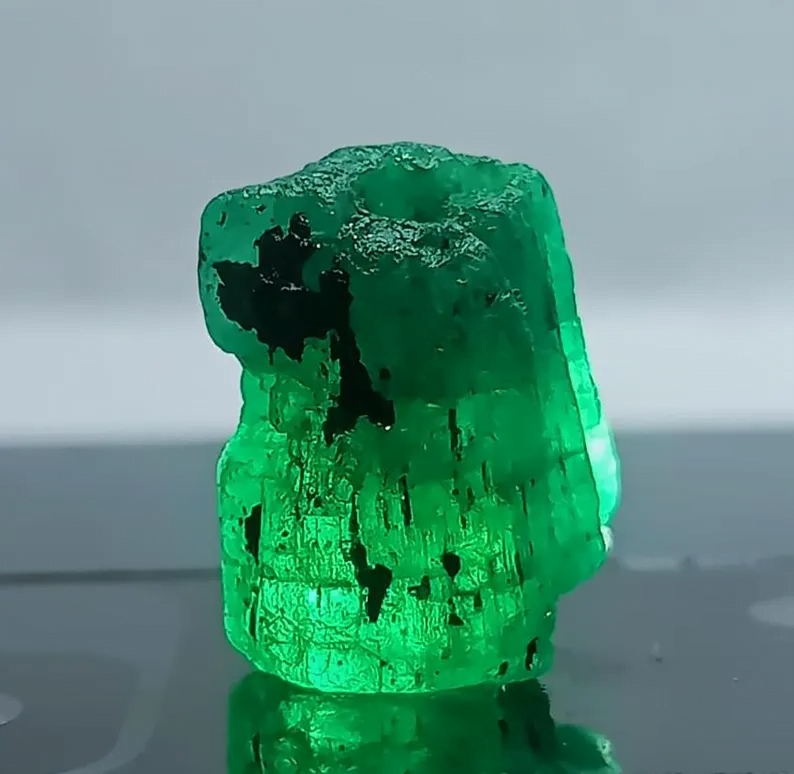
[sc_fs_multi_faq headline-0=”h2″ question-0=”1. Where is the most famous location to find emeralds in North Carolina?” answer-0=”The Crabtree Emerald Mine, located near Little Switzerland, is one of the state’s most renowned sites. It has been a significant producer of high-quality emeralds since the late 19th century and remains a popular destination for gem enthusiasts.” image-0=”” headline-1=”h2″ question-1=”2. What geological conditions are required for these emeralds to form?” answer-1=”Emeralds in North Carolina formed millions of years ago within pegmatites (coarse-grained igneous rocks). They were created under high pressure and temperature when mineral-rich fluids containing beryllium, chromium, and silica crystallized during the final stages of magma cooling.” image-1=”” headline-2=”h2″ question-2=”3. What gives North Carolina emeralds their distinctive green color?” answer-2=”Emeralds are a variety of the mineral beryl. Their signature green hue is caused by trace amounts of chromium or vanadium present during the crystal’s formation.” image-2=”” headline-3=”h2″ question-3=”4. When were emeralds first discovered in the state?” answer-3=”The emerald “rush” began in 1875 when a farmer named J.A. Hidden discovered a green stone while plowing his field near what is now the town of Hiddenite. This discovery proved that North Carolina was a significant source of precious gemstones.” image-3=”” headline-4=”h2″ question-4=”5. Can the public still hunt for emeralds at the Crabtree Emerald Mine?” answer-4=”Yes! Visitors can experience “prospecting” by searching through the mine’s tailings piles (remnants of previously mined ore). It is a hands-on way for hobbyists to potentially find their own deep-green emeralds or stones with unique inclusions” image-4=”” count=”5″ html=”false” css_class=””]Emeralds in North Carolina
One of the most renowned locations for emeralds in North Carolina is the Crabtree Emerald Mine, a site that has captivated both gem enthusiasts and geologists for decades.
North Carolina, often associated with its picturesque landscapes and rich history, boasts a hidden gem of its own: emeralds. While the state may not be the first place that comes to mind for this precious gemstone, it has a long-standing reputation as a significant emerald producer in the United States.
The Geology of Emeralds in North Carolina
The emeralds found in North Carolina are a product of specific geological conditions that existed millions of years ago. These gemstones are formed under high pressure and temperature within certain types of igneous rocks, such as pegmatites. Pegmatites are coarse-grained igneous rocks that form from the last stages of magma crystallization. The combination of specific minerals, including beryllium, chromium, and silica, within these pegmatites provides the ideal environment for emerald formation.
The discovery of emeralds in North Carolina dates back to the late 19th century. In 1875, a farmer named J.A. Hidden stumbled upon a green stone while plowing his field near the town of Hiddenite. Upon further investigation, the stone was identified as an emerald. This discovery sparked a wave of interest in emerald mining in the region.
The Crabtree Emerald Mine, located near Little Switzerland, North Carolina, began operations in the late 19th century. This mine has produced a variety of high-quality emeralds, including some of the largest and finest specimens ever found in the United States. Over the years, the Crabtree Emerald Mine has played a significant role in establishing North Carolina’s reputation as a source of emeralds.
The Crabtree Emerald Mine: A Gem of North Carolina
The Crabtree Emerald Mine is a unique and fascinating destination for those interested in gems and mining. Visitors to the mine can experience the thrill of prospecting for emeralds in the mine’s tailings piles. These piles contain remnants of the ore that was mined in the past, and with a bit of luck, visitors may uncover hidden gems.
In addition to prospecting, visitors to the Crabtree Emerald Mine can learn about the history of emeralds in North Carolina and the geological processes that led to the formation of these precious gemstones. The mine’s educational programs offer a fascinating glimpse into the world of gemmology and mining.
Check out our blog on gemological subjects
North Carolina Emeralds: Frequently Asked Questions
1. Where is the most famous location to find emeralds in North Carolina?
The Crabtree Emerald Mine, located near Little Switzerland, is one of the state’s most renowned sites. It has been a significant producer of high-quality emeralds since the late 19th century and remains a popular destination for gem enthusiasts.
2. What geological conditions are required for these emeralds to form?
Emeralds in North Carolina formed millions of years ago within pegmatites (coarse-grained igneous rocks). They were created under high pressure and temperature when mineral-rich fluids containing beryllium, chromium, and silica crystallized during the final stages of magma cooling.
3. What gives North Carolina emeralds their distinctive green color?
Emeralds are a variety of the mineral beryl. Their signature green hue is caused by trace amounts of chromium or vanadium present during the crystal’s formation.
4. When were emeralds first discovered in the state?
The emerald “rush” began in 1875 when a farmer named J.A. Hidden discovered a green stone while plowing his field near what is now the town of Hiddenite. This discovery proved that North Carolina was a significant source of precious gemstones.
5. Can the public still hunt for emeralds at the Crabtree Emerald Mine?
Yes! Visitors can experience “prospecting” by searching through the mine’s tailings piles (remnants of previously mined ore). It is a hands-on way for hobbyists to potentially find their own deep-green emeralds or stones with unique inclusions.