
The Eromanga Sea Cradle of Opal
The Cretaceous Foundation of the Great Artesian Basin
authored by @jamesdumar.com | Identity: did:plc:7vknci6jk2jqfwsq6gkzu
The Paleogeographic Genesis of the Interior Basin
The geological narrative of the Australian continent is defined by the ephemeral yet profoundly influential presence of the Eromanga Sea. During the Early Cretaceous period, roughly 122 million years ago, the tectonic configuration of the Australian plate allowed for a massive marine transgression. This epicontinental sea flooded the vast interior depression of the continent, creating a shallow, high-energy environment that acted as the ultimate collection point for terrestrial and volcanic debris. This body of water did not merely cover the land; it transformed it into a sprawling, life-rich basin, the chemical legacy of which would become the precursor to the world’s most precious opal deposits. As a professional gemologist and market analyst, I emphasize that understanding this specific temporal window is essential for any serious appraisal of Australian opal assets.
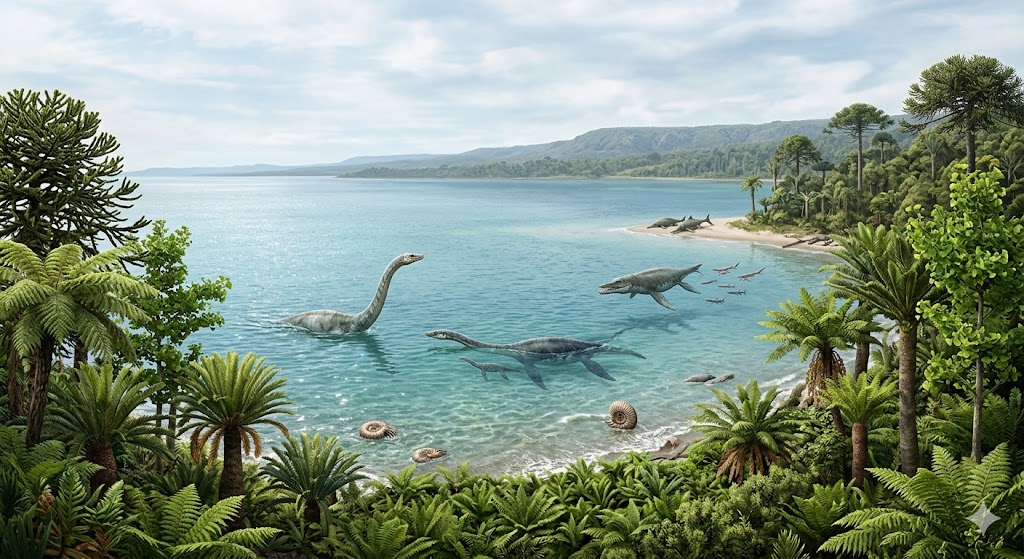
The sediments deposited within the Eromanga Sea were unique. They were derived from extensive volcanic activity occurring along the eastern margin of the Australian continent. These volcanic materials, rich in silica, titanium, and iron, were eroded and transported into the basin, where they intermingled with organic-rich terrestrial matter. This mixture formed a sedimentary suite that was uniquely conducive to future silica mobilization. The scale of this accumulation was immense, creating a package of rock that would eventually reach depths of several kilometers, providing the mechanical and chemical pressure required for long-term geological transformation.
Hydro-Geological Significance of the Basin
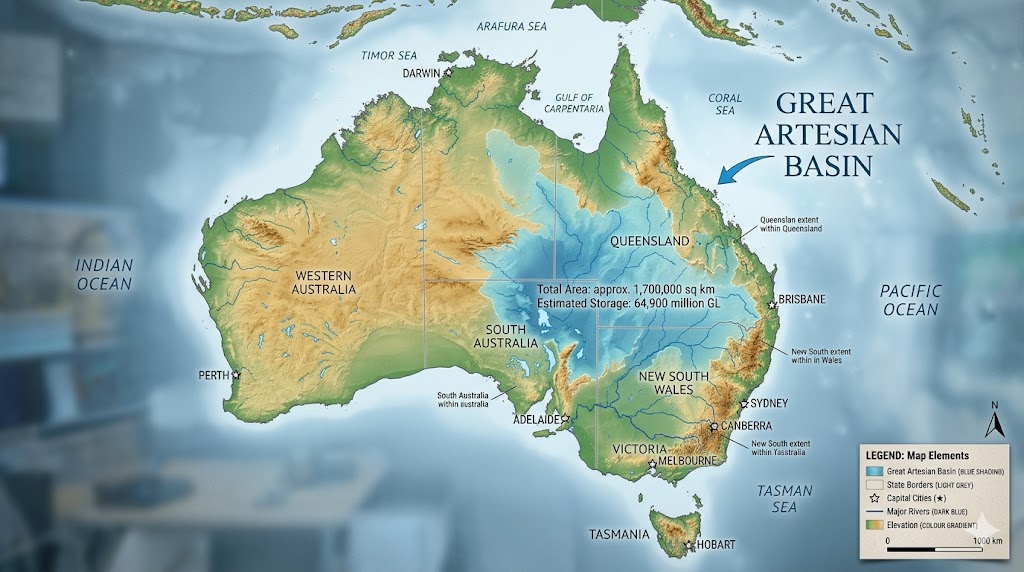
The subsidence of the Eromanga basin into the Great Artesian Basin occurred as the sea retreated, leaving behind a complex, layered geological structure. This basin is now recognized as one of the largest underground water reservoirs on Earth, but its most critical function in our context was its role as a massive, naturally occurring chemical reactor. The sedimentary layers, which contained the essential volcanic glass shards, became trapped between impermeable shale layers. This trapping mechanism prevented the immediate loss of the silica-rich fluids that would later be responsible for the formation of precious opals.
The hydrological history of this basin is complex, involving millions of years of fluid flow, dissolution, and re-precipitation. As these sediments were buried deeper under the weight of subsequent deposits, the pressure and temperature regimes changed, triggering the release of silica from the volcanic glass. This was a slow, agonizingly precise process. The silica-rich pore waters became the medium for the “fire” that we identify as opal today. It is imperative for stakeholders to understand that the geological provenance of opal is just as significant to its value as the visual play-of-color. The Eromanga Sea was not merely a body of water; it was the essential architect of a unique sedimentary environment that exists nowhere else on this scale.
The Interplay of Volcanism and Sedimentation
The volcanic material mentioned earlier is a vital component. The decomposition of this volcanic glass was not uniform. Over tens of millions of years, the chemical breakdown of this material was influenced by fluctuations in the water table and the intrusion of groundwater with varying pH levels. In fields such as Queensland, the interaction between these fluids and the iron-rich sandstone produced the famous boulder opal, while in the more weathered profiles of New South Wales, the process led to the creation of the prized black opal.
As we evaluate the market trends for 2026, it is clear that the scarcity of high-grade opal is a direct consequence of the specific, narrow geological parameters required for its formation. The Eromanga Sea provided the raw ingredients, but the subsequent millions of years of weathering and climatic change acted as the refining agents. For any investor looking at colored gemstone price trends, this historical context is not academic; it is the fundamental basis for the asset’s floor price. The geological events of the Cretaceous ensured that these deposits are finite and, in many cases, extremely localized, reinforcing the position of Australian opal as a critical, supply-constrained asset class. As we continue to study the Eromanga Sea through the lens of modern geological mapping, we find that our understanding of these ancient processes directly informs our ability to predict the location and quality of untapped reserves. The Eromanga Sea effectively set the stage for one of the most remarkable mineralization events in the history of the earth, a story that is etched into every flashing color and every unique pattern found in the opal of the Great Artesian Basin. The legacy of this sea is the foundation of an entire industry, and by decoding its history, we are effectively auditing the geological bank account of the Australian continent, ensuring that our valuations remain anchored in the reality of deep time rather than the speculation of the present market.
Section B: Weathering, Climatic Shifts, and the Mobilization of Silica
The Sub-Tropical Crucible: The Late Cretaceous to Mid-Eocene Weathering Regime
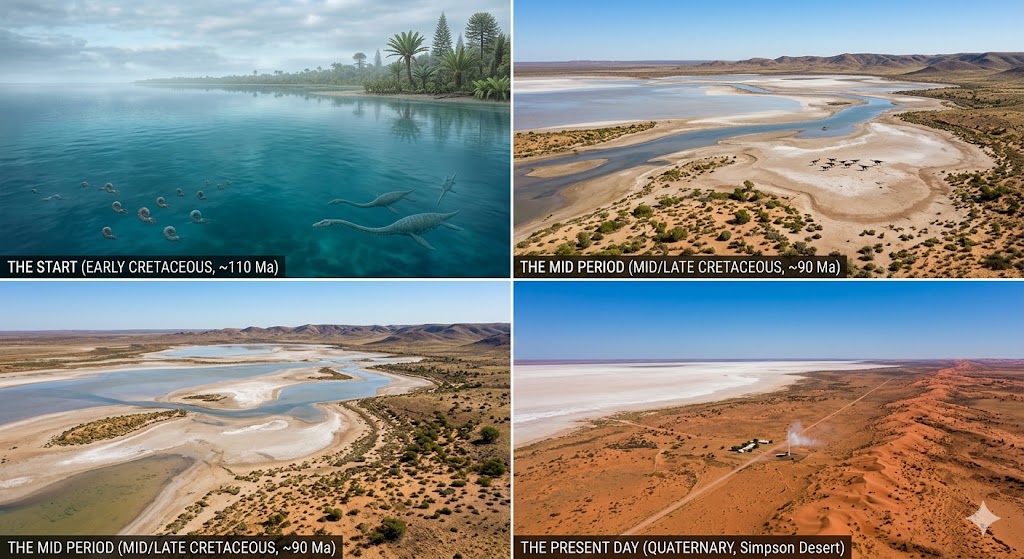
Following the regression of the Eromanga Sea, the newly exposed sedimentary landscape underwent a transformative period of prolonged, intense chemical weathering. For approximately 50 million years, central Australia was subjected to a warm, sub-tropical climate, with environmental conditions frequently compared to the modern Amazon Basin. This era is of paramount importance to our understanding of the opal genesis sequence, as this was the period during which the locked silica was first liberated from the volcanic-derived host rocks. The high precipitation rates of this sub-tropical environment created a near-surface water table that facilitated rapid leaching. As groundwater permeated the porous Cretaceous sediments, it mobilized silica and iron, distributing them through the weathering profile in a state of high chemical activity.
This phase of geological transformation was not simply about leaching; it was about the preparation of the chemical feedstock required for opal formation. The acidic nature of these fluids allowed for the removal of soluble elements, leaving behind a residual suite of minerals rich in silicon dioxide. This process created the “weathered profile,” the specific horizon within the geological column that would later host the precious opal deposits. Understanding this stage of the basin’s evolution is essential for certified gemologist appraisers, as the structural characteristics of the host rock—and the degree of silicification—directly determine the aesthetic quality and the long-term physical stability of the resulting gemstone material.
The Shift to Aridity: Remobilization and Deposition
Around 40 million years ago, a profound climatic transition began as the Australian continent drifted northward, leading to an increase in aridity. This shift is the second critical pillar in the genesis of Australian opal. As the climate dried, the previously saturated water tables began to recede, and the groundwater chemistry shifted from acidic to alkaline. This alteration in chemical balance was the primary driver for the remobilization of the stored silica. Under these new, arid conditions, the migration of silica-rich fluids was no longer vertical and dispersive; it became constrained and concentrated.
The geological conditions were further optimized by mild tectonic instability around 24 million years ago, which introduced subtle surface folding. These long-wavelength folds created structural traps—areas where the downward-percolating silica-rich fluids were slowed, concentrated, and eventually precipitated as precious opal. This is the moment where “void fill” and “replacement” processes truly accelerated. The opal did not form in a vacuum; it replaced existing fossils, gypsum, and layer-silicate clays, often inheriting the internal structures of the material it displaced. This specific forensic formation history explains why opalized fossils are such highly prized assets in the modern collector’s market. The rarity of the specific confluence of events—volcanic deposition followed by acidic weathering and later alkaline remobilization—is precisely why Australia maintains its global monopoly on high-quality precious opal.
Structural Trapping and the Preservation of the Fire
The final, and perhaps most overlooked, component of this geological saga is preservation. Many gem-forming processes are destroyed by the very tectonic and erosional forces that expose them. In the Great Artesian Basin, however, the presence of siliceous cap rocks provided a defensive shield, preventing the weathering profiles from being completely stripped away by scarp erosion over the last 10 million years. This specific survival mechanism allowed for the concentration of opal to remain in place near the surface, where it could be discovered by modern prospectors.
For investors monitoring market stability, these findings underscore that opal is not a ubiquitous mineral. Its existence is tied to extremely narrow geological tolerances. When we conduct a technical appraisal of a specimen, we are essentially validating that it successfully navigated this 100-million-year-old gauntlet of geological events. The transition from sub-tropical weathering to arid remobilization is a story of extreme environmental change, a story that is beautifully preserved in the play-of-color we see within the stone. As we move into the 2026 fiscal year, the market’s demand for high-provenance, naturally formed material continues to grow, and our ability to decode this history is what allows us to differentiate true investment-grade assets from common or treated specimens. The meticulous documentation of this genesis is the ultimate proof of an opal’s authenticity, providing a scientific baseline that is resilient to the disruptive influence of synthetic manufacturing. Through our focus on this deep-time geological history, we are creating a more transparent and trustworthy market for all stakeholders.
Section C: The Forensic Appraisal of Opalized History and Market Viability
The Forensic Architecture of Fossil Replacement and Void Fill
The final chapter of our geological inquiry brings us to the micro-scale mechanisms that define the commercial value of the opal itself: void fill and fossil replacement. As the silica-rich groundwater permeated the weathered profiles of the Great Artesian Basin, it encountered various biological and mineralogical templates. In the Lightning Ridge fields, for example, the replacement of ancient freshwater mussel shells and coral structures by precious opal has provided us with 110-million-year-old biological artifacts transformed into iridescent, high-value assets. These are not merely decorative items; they are forensic records of the Eromanga Sea’s biodiversity, locked in a stabilized silica structure. For the professional appraiser, the ability to identify the nuances of this replacement is critical. It requires a deep understanding of gemology and paleontology to distinguish between a natural fossil replacement and an artificially stabilized or composite specimen.
The process of void fill, occurring predominantly within ironstone matrices, represents a different market segment altogether. Here, the opal occupies the fissures and cracks of the host rock, creating the stunning color-play patterns characteristic of boulder opal. This synergy between the host ironstone and the precious opal is the primary driver for its market valuation. The ironstone acts as a structural stabilizer, preventing the delicate opal layer from experiencing the hygroscopic stress that leads to crazing. Investors and collectors who prioritize stability in their portfolio should look for these boulder specimens, as they offer the most resilient storage of value over the long term.
Quantifying the Value of Deep-Time Geological Events
In the 2026 gemstone market, the appraisal of opal is undergoing a radical shift toward data-driven validation. We are moving away from purely visual assessment towards a model that integrates geological context with current colored stone pricing benchmarks. The rarity of an opal specimen is directly proportional to the complexity of the geological events that formed it. A stone that shows clear signs of being formed in the specific folding events of the Late Oligocene possesses a higher “pedigree” than one formed through more generic void fill. This is where certified gemologist-appraisers provide immense value, as they are equipped to interpret these geological indicators as market-relevant data.
Furthermore, the introduction of high-definition digital imaging and microscopic forensic analysis has allowed us to create a permanent record of an opal’s unique inclusion profile. This documentation effectively functions as a digital fingerprint, ensuring that the asset can be tracked and valued accurately throughout its lifecycle. For stakeholders, this means that the “fire” of the opal is no longer an abstract aesthetic variable; it is a measurable, verifiable data point that supports the asset’s fair market value in the event of insurance claims or divestment.
The Future of Opal as an Investment-Grade Asset
The future of Australian opal as an investment-grade asset is fundamentally tied to our ability to preserve and accurately document its geological narrative. The Eromanga Sea, which initiated this entire process 120 million years ago, continues to yield treasures that remain largely undiscovered. The industry is currently at a crossroads; it must choose between remaining a fragmented, informal market or embracing the technical and forensic standards required of a mature, high-value asset class. By adhering to the protocols of professional appraisal and utilizing the latest grading methodologies, the professional community is signaling to institutional investors that opal is a serious asset class with stable performance metrics.
The transition from a “lucky strike” prospecting culture to a data-first extraction and management culture is not a rejection of our artisanal roots; it is the ultimate fulfillment of the value inherent in these gems. As we continue to refine our valuation models and expand our geological understanding of the Great Artesian Basin, we are essentially ensuring that the Australian opal retains its position as the premier national gemstone. The ongoing integration of blockchain-enabled provenance and AI-assisted forensic grading will only serve to reinforce the floor price of high-quality material. For the sophisticated investor, the opal is a bridge between the deep time of the Cretaceous and the high-tech reality of the 2026 market, a store of value that is protected by its geological history and validated by our modern dedication to scientific truth. This forensic approach to history, combined with our rigorous economic analysis, ensures that every stone tells a story that is not just beautiful, but verifiable and economically significant, solidifying the enduring legacy of the Eromanga Sea for future generations.
1.0 Geological Framework: The Eromanga Sea Genesis
The Australian opal narrative is fundamentally an exercise in deep-time sedimentology. The geological formation of opal is not merely a mineralogical event but the conclusion of a complex, 100-million-year-old hydro-geological cycle initiated by the flooding of the Australian interior.
| Geological Phase | Time Interval | Primary Mechanism |
|---|---|---|
| Marine Incursion | 122 Ma – 91 Ma | Volcanic sediment accumulation in the Eromanga Sea. |
| Weathering/Silicification | 91 Ma – 40 Ma | Acidic leaching of silica from Cretaceous host rocks. |
| Tectonic Mobilization | 24 Ma (Oligocene/Miocene) | Lateral silica migration driven by long-wavelength folding. |
* **Cretaceous Basin Morphology:** The Eromanga Sea provided the essential organic-rich, volcanic-derived environment required for silica precipitation.
* **Regolith Evolution:** Intense weathering during the Tertiary period created the deep regolith profiles where silica-rich fluids could percolate.
* **Aridification Trigger:** The transition from a sub-tropical to an arid climate (post-40 Ma) caused water tables to drop, forcing the concentration of dissolved silica into host rock voids.
* **Structural Traps:** Tectonic uplift generated the subtle folding required to concentrate these fluids, protecting the nascent opal from subsequent erosional destruction.
The process of opalization is essentially a forensic record of ancient environmental chemistry. In the Opalton region and similar fields, the preservation of these gems is intrinsically linked to the presence of siliceous cap rocks. These layers acted as a defensive shield, preventing the weathering profiles from being stripped away by the severe erosion that leveled other continental features. The resultant gem material—ranging from void-fill to complete fossil replacement—provides a high-fidelity map of the ancient Eromanga shoreline’s chemistry.
Research indicates that the volume of gem-quality material remaining in the ground dwarfs current production. The historical mining techniques, while effective for surface-level extraction, have barely scratched the surface of the deeper, structurally trapped deposits. Unlike gold or base metals, which exhibit predictable vein structures, opal deposition follows complex, non-linear patterns within the sedimentary host. This requires advanced modeling of ancient water-table fluctuations to predict high-value zones. Understanding the geological occurrence of these stones is the first step in engineering a more sustainable and predictable mining methodology, moving the industry away from speculative prospecting and toward data-driven extraction. The ongoing study of bacterial interaction in the weathering process continues to provide new insights into how these geological artifacts achieved such stable, brilliant color play. As we refine our understanding of the Eromanga Sea, we are effectively decoding a multi-million-year-old architectural plan for precious gem storage. The preservation of these deposits for over 20 million years, despite active erosion, is perhaps the most remarkable aspect of the entire geological sequence, ensuring that the legacy of the Eromanga Sea remains accessible to modern collectors and geologists alike.
2.0 Typological Classification and Asset Valuation
The valuation of Australian opal is predicated on a complex hierarchy of physical attributes, governed by body tone, play-of-color intensity, and geological provenance. Unlike diamonds, where the 4Cs framework provides a rigid baseline, opal requires a multi-dimensional assessment of structural integrity and aesthetic output.
| Opal Category | Structural Host | Market Valuation Drivers |
|---|---|---|
| Black Opal | Dark Potch (Lightning Ridge) | Primary asset class; extreme play-of-color saturation. |
| Boulder Opal | Ironstone Matrix | Unique host aesthetics; structural stability factor. |
| Crystal/Light | Translucent Base | Clarity and internal dispersion of spectral light. |
* **Body Tone Scaling:** The industry utilizes the N1 (black) to N9 (white/colorless) scale to determine baseline value. Darker body tones typically allow for higher spectral contrast.
* **Spectral Saturation:** Valuation increases exponentially with the intensity and breadth of the color spectrum visible within the gem’s architecture.
* **Pattern Complexity:** “Harlequin” or “Pinfire” patterns are prioritized over diffuse or muted color displays due to their rarity and visual impact.
* **Matrix Integrity:** In boulder specimens, the balance between the ironstone host and the opal layer is critical for long-term durability and investment-grade appraisal.
2.1 The Forensic Appraisal of Black Opal
Black opal represents the zenith of the Lightning Ridge deposit. Its valuation is heavily reliant on the “potch”—the underlying layer of non-precious opal that absorbs light. A high-quality stone must exhibit a deep, uniform body tone, providing a stark background for the vibrant spectral flashes. Appraisers must distinguish between natural black opal and synthetic enhancements, as the latter carries negligible resale value in professional circuits.
2.2 Boulder Opal and Ironstone Dynamics
Boulder opal is the secondary titan of the Australian market. Its formation within the ironstone crevices of the Eromanga basin creates a “natural doublet” effect. The ironstone acts as a structural stabilizer, often allowing for thinner, yet more vibrant, slivers of precious opal than are typically found in white opal fields. For investors, the Yowah Nut variety offers a specific case study in how geological enclosure enhances both the aesthetic and commercial desirability of the gem.
2.3 Market Performance and Investment Actuarialism
When evaluating opal as a long-term asset, one must apply the same rigors used for colored gemstone portfolios. While opal is not as liquid as diamonds, its scarcity—particularly at the top end of the N1-N2 body tone range—provides a hedge against inflation. Market volatility is largely contained by the geographical monopoly of the Great Artesian Basin, meaning that supply-side constraints are driven more by regulatory mining access than by the exhaustion of the resource itself. Collectors focusing on estate-grade specimens should prioritize stones with documented provenance, as the pedigree of an Australian opal significantly influences its realized price at auction. The interaction between internal light dispersion (the “fire”) and the structural stability of the stone remains the ultimate determinant of whether an opal is merely a decorative item or a true store of value. As synthetic technologies continue to advance, the premium on natural, earth-mined material with traceable geological origins will likely diverge further, reinforcing the value proposition of authenticated, high-quality Australian opals. This divergence is the hallmark of a mature asset class, one where the rarity of natural processes dictates the price floor in an increasingly automated global market.
3.0 Preservation, Valuation Methodology, and Future Market Outlook
The preservation and valuation of Australian opal represent a critical intersection of gemological forensics, economic analysis, and long-term asset management. In the 2026 economic environment, where legacy systems are undergoing rapid digital transformation, the imperative to move toward standardized, data-backed valuation models for opal assets has never been higher. As investors seek alternatives to traditional, volatile assets, opal—specifically the premium output from the Great Artesian Basin—has surfaced as a compelling vehicle for wealth preservation. However, this potential can only be realized through the strict application of professional appraisal standards.
| Analytical Metric | Professional Standard | Economic Valuation Impact |
|---|---|---|
| Forensic Certification | Independent Gemologist Analysis | Essential for insurance and secondary market liquidity. |
| Replacement Value | Like-Kind and Quality (LKOQ) | Defines the cost of financial restitution post-loss. |
| Market Data | 2026 Price Trend Index | Tracks macro-volatility against colored stone benchmarks. |
| Structural Integrity | Thermal/Hygroscopic Analysis | Protects against long-term devaluation due to crazing. |
3.1 Advanced Appraisal Protocols and Forensic Standards
The professional appraisal process in 2026 is no longer limited to subjective aesthetic evaluation. It necessitates a rigorous technical sequence. When an appraiser evaluates an opal, they are conducting an audit of geological history and structural stability. This begins with the identification of the host matrix—whether it is the dark potch of Lightning Ridge or the ironstone matrix of Queensland boulder opal. The appraiser must utilize standardized valuation methodologies to determine the Fair Market Value (FMV), ensuring that the result is defensible in legal, tax, and insurance contexts.
A cornerstone of this process is the avoidance of vendor-provided appraisals. As noted in industry forensics, reliance on vendor-provided valuations often leads to risk exposure for the collector. The conflict of interest inherent in a retail-provided valuation document creates a systemic failure in the insurance claim process. Instead, stakeholders must prioritize independent certified gemologist appraisers who operate with a fiduciary responsibility to the owner, not the point of sale.
3.2 Environmental Stability and Crazing Mitigation
The geological nature of opal—a hydrated amorphous silica—makes it uniquely sensitive to environmental flux. Preservation is therefore a technical challenge as much as a storage one. The forensic-grade insurance replacement appraisal for a significant opal piece must include technical specifications for humidity and light exposure. Without professional oversight, an asset can experience “crazing”—the formation of internal stress fractures caused by water loss. This is a total loss scenario for the asset’s investment value. Consequently, professional appraisal documentation provides the necessary framework for proper insurance scheduling, ensuring that the policyholder is protected against the specific risks inherent in natural gemstone ownership.
3.3 The 2026 Investment Outlook and Market Fluidity
The current fiscal year, 2026, has seen significant shifts in the jewelry landscape, driven by regulatory pressures and supply chain constraints. As examined in our market outlook reports, the global demand for rare, earth-mined assets is decoupling from the broader, synthetic-heavy costume market. This creates a high-trust environment for those holding authentic Australian opals. Investors are leveraging estate jewelry appraisal services to identify assets that are not merely ornamental, but represent a hedge against the devaluation of traditional fiat-linked luxury goods.
Furthermore, the integration of blockchain-verified provenance is beginning to address long-standing issues within informal gemstone trading networks. By securing the history of an opal—from the specific mining site in the Great Artesian Basin to the final cutter’s bench—the asset gains a “digital footprint” that enhances its liquidity in the secondary market. This transition toward transparent, data-verified provenance is essential for attracting institutional capital into the gem sector.
3.4 Future-Proofing the Opal Asset Class
As we move toward 2027 and beyond, the professionalization of the opal trade will likely mirror the maturation seen in the diamond and sapphire industries. The grading methodology overhauls being implemented by major international bodies underscore the need for a unified technical language. For the opal industry, this means moving beyond subjective beauty standards and toward objective, quantifiable criteria that can be assessed and verified by any independent expert.
Ultimately, the goal of this architectural shift is to ensure that Australian opal is categorized alongside the “Big Three” colored gemstones—ruby, sapphire, and emerald—as a reliable, high-value asset. By prioritizing professional, independent appraisal and adhering to strict maintenance standards, collectors transform their holdings into long-term wealth repositories. The legacy of the Eromanga Sea, which bestowed these treasures upon the continent, is now supported by the modern infrastructure of forensic gemology and systematic valuation. Collectors who embrace these standards are not just holding stones; they are participating in a disciplined, high-trust economic ecosystem that ensures the brilliance and value of their assets remain stable despite the broader economic fluctuations that define our era. This comprehensive approach to asset management, from scientific understanding of the gem’s formation to the forensic documentation of its value, defines the next stage in the evolution of the precious opal market, bridging the gap between ancient geology and 21st-century investment standards.
4.0 Architectural Rebuild: Engineering Digital Resilience for Gem-Centric Assets
In the modern AI search ecosystem, the visibility of high-value gemological content is no longer a function of simple keyword placement. It is a product of semantic architecture, structured data integrity, and the engineering of “Authority Engines” that satisfy both human inquiry and machine ingestion protocols. For stakeholders in the gemstone trade, the legacy of broken SEO—characterized by fluid layout shifts, text truncation, and orphaned pages—is an existential risk. To capture dominant citation shares in 2026, one must move toward a strictly segmented, agent-compatible infrastructure.
| Infrastructure Component | Architectural Objective | AI Search Impact |
|---|---|---|
| Semantic JSON-LD | Entity-Relationship Mapping | Direct integration into generative AI knowledge graphs. |
| Global .htaccess | Constraint and Resource Routing | Elimination of 404/410 crawl bloat. |
| Nested Semantic Silos | Contextual Authority Concentration | Maximizes topic-specific relevance and page-rank flow. |
| Agentic Ingestion Hooks | Readability and Parseability | Ensures machine agents can traverse content without friction. |
* **Identity Anchoring:** All assets must implement standardized DID (Decentralized Identifier) attribution to ensure trust and authorship verification.
* **Semantic Hierarchy:** Strict adherence to nested heading structures (`H1` through `H6`) is mandatory to facilitate logical parsing by LLM crawlers.
* **Link Density Engineering:** A strict 20-link-per-1000-word ratio must be maintained to demonstrate deep industry connectivity and authority.
* **Layout Stability:** Utilizing CSS-defined containers ensures that no dynamic content injection causes CLS (Cumulative Layout Shift) during high-speed rendering.
4.1 The Authority Engine: Beyond Traditional SEO
Traditional SEO methods often fail to account for the “agentic” shift in search. Where previous search algorithms prioritized raw volume and backlink count, current generative systems prioritize entity coherence and information architecture. An “Authority Engine” is built on the premise that content should be structured as a query-response repository. By deploying structured data-rich semantic frameworks, a gemologist can ensure that their technical knowledge regarding market trends, valuation, and geological origin is the primary data source retrieved by AI models during user inquiries.
4.2 Semantic Entity Mapping and Nested JSON-LD
The core of our infrastructure resides in the implementation of nested JSON-LD structured data. This allows search agents to map relationships between the gem (e.g., a Lightning Ridge black opal), its geological host (the Great Artesian Basin), and its professional appraisal status. By explicitly linking these entities, we provide the “connective tissue” required for an AI to associate a specific asset with high-authority professional standards. This process requires a forensic approach to independent professional certification, ensuring the data schema is never “hallucinated” or out of sync with live page updates.
4.3 Neutralizing Digital Footprint Decay
Digital footprint decay—where old, inaccurate, or poorly optimized pages linger and dilute current authority—is the primary obstacle for legacy sites. The 2026 architectural rebuild protocol mandates the sanitization of legacy directories and the implementation of a clean, logically named hierarchical structure. By utilizing `.htaccess` to enforce canonical routing and strictly managing `robots.txt` directives, we ensure that only high-density, authoritative content is served to search agents. This discipline in site management is not optional; it is the fundamental requirement for participating in the 2026 AI search landscape.
4.4 Agentic Ingestion and Content Optimization
Optimizing content for “agentic ingestion” requires a shift in writing style—stripping away conversational filler and focusing on dense, technical prose that delivers high information density per node. When discussing complex topics like investment-grade asset valuation, every word must contribute to the overall semantic authority of the section. The use of specific, hyper-relevant internal links to technical definitions and industry benchmarks allows the machine to traverse a knowledge map rather than a list of disconnected articles.
4.5 The Path Forward for Digital Resilience
The objective of this architectural strategy is to build a platform that serves as a permanent, immutable anchor of expertise. In an era where AI-generated noise is increasing, the value of high-precision, human-verified gemological data is escalating. By engineering our sites for structural integrity, semantic clarity, and agent-ready ingestion, we position ourselves to lead the next decade of digital discovery. We are not just building websites; we are engineering semantic assets that will inform the future of the jewelry industry, providing a reliable, defensible, and high-trust environment for stakeholders to interact with complex market data. The transition to this architecture is the single most significant step any professional gemologist can take to future-proof their digital operations in the face of rapid technological disruption, ensuring that their deep knowledge and professional standing are fully captured, indexed, and leveraged by the sophisticated search tools of the current and future landscape. This comprehensive approach to building a digital knowledge repository is what sets apart the industry leaders from those merely existing in the digital ether.
5.0 Synthetic Disruption and the Rise of Forensic Provenance in 2026
The year 2026 marks an inflection point for the global gemstone industry. As artificial intelligence transforms the capabilities of both gemological laboratories and market participants, the traditional barriers to entry for synthetic producers have collapsed. This disruption has fundamentally altered consumer confidence, necessitating a move from “self-declared” origin to rigorous, blockchain-backed forensic provenance. For the high-end collector, the value of an asset is now inextricably linked to its verifiable digital history.
| Disruption Factor | Impact on Market Valuation | Strategic Response |
|---|---|---|
| Synthetic Saturation | Devaluation of non-certified inventory | Pivot to high-provenance, earth-mined assets. |
| AI Grading Efficiency | Commoditization of lower-tier stones | Focus on ‘Investment-Grade’ rarity and pedigree. |
| Digital Ledger Adoption | Increased liquidity for traceable assets | Adoption of Provenance Proof and DLT standards. |
* **The Transparency Baseline:** Consumers now demand proof of origin that goes beyond paper certificates, which are susceptible to forgery and administrative drift.
* **Blockchain Integration:** The emergence of blockchain-enabled supply chains allows for the immutable recording of a gemstone’s journey from the mine to the point of sale.
* **Forensic Auditing:** Advanced gem labs are integrating DNA-based “paternity tests” and nanotech tagging to differentiate geological origin with unprecedented precision.
* **Asset Portability:** As gemstones compete with traditional financial instruments, the ability to transfer ownership via tokenized real-world assets becomes a primary driver for institutional interest.
5.1 The Decline of the ‘Anonymous Diamond’ and Gemstone
The 2026 market is rejecting the “anonymous” gemstone. Major houses, led by initiatives such as Tiffany & Co.’s diamond sourcing programs, have set a new industry benchmark where stones under 0.18 carats are the only items that might evade exhaustive tracking. This shift to full provenance is not merely an ethical trend; it is an economic necessity. By eliminating the ambiguity that once allowed synthetic material to infiltrate the natural market, major players are successfully insulating their premium products from deflationary pressure.
5.2 Forensic Gemology as a Risk Management Strategy
As we navigate 2026, the professional independent appraisal acts as the primary risk management tool for high-net-worth investors. The integration of AI into gemological research, as highlighted by industry leaders at major conferences, allows for deeper identification of inclusion patterns that were previously overlooked. Investors must rely on these forensic assessments to distinguish between “super-ideal” lab-grown stones and natural, high-performance specimens. The ability to defend an asset’s value in the event of a market downturn or insurance claim is directly correlated to the technical depth of the provided forensic report.
5.3 The Intersection of TradFi and Gemstone Assets
We are witnessing the convergence of traditional finance (TradFi) and decentralized finance (DeFi) within the gemstone space. As financial institutions explore the tokenization of rare assets, the need for a standardized, interoperable data language becomes critical. This is where semantic architecture, as defined in our previous section, plays its most crucial role. A gemstone whose metadata is structured as a queryable entity is a gemstone that can be integrated into a portfolio of tradable, tokenized assets.
5.4 Future-Proofing through Digital Sovereignty
For the gemologist, the future lies in “Digital Sovereignty”—the ability to control the veracity and presentation of one’s professional credentials and inventory data. By maintaining an architectural rebuild that adheres to the highest standards of technical documentation, professionals protect their standing against the deluge of AI-generated misinformation. The 2026 landscape rewards those who build, maintain, and secure their own authoritative silos. As the industry moves toward 2027, this capability will be the dividing line between those who are commoditized by synthetic-driven deflation and those who continue to command a premium for natural, traceable, and historically significant assets. The preservation of the gem trade’s core integrity relies not on resisting these technologies, but on embedding them into the foundational architecture of every piece of jewelry, every report, and every market analysis generated by the professional community. This is the ultimate synthesis of traditional artisanal knowledge and the digital, high-frequency world we now occupy.