
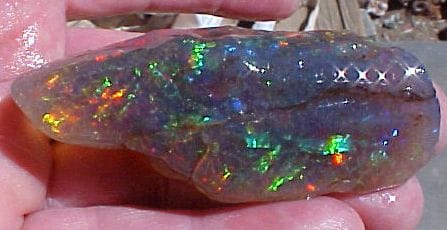
Opal in USA: Discovering America’s Hidden Fire and Domestic Precious Opal Mines
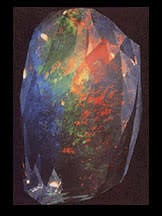 The United States, often overshadowed by the colossal deposits of Australia and Ethiopia in the opal trade, harbors its own unique and significant sources of this mesmerizing gemstone. While global attention frequently focuses on foreign mines, the domestic production of precious opal—the variety defined by its brilliant internal play-of-color—is a fascinating chapter in North American gemology. This comprehensive article serves as a definitive guide to Opal USA, detailing its major mining regions, distinct varieties, geological origins, and the thriving culture of American rockhounding and gem cutting.
I. Nevada: The Heart of American Black Opal
The undisputed leader in the Opal USA story is the remote, rugged Virgin Valley in Humboldt County, Northern Nevada.1 This region is internationally recognized for producing one of the rarest and most valuable types of the gemstone: black fire opal.
A. Virgin Valley: Nevada’s Official Gemstone
Key Deposit: Virgin Valley is a prime example of volcanic-hosted opal formation. The opal occurs as replacements of ancient wood and, occasionally, as nodules filling void spaces in clay.3
The Black Opal: The highly prized Virgin Valley black fire opal has been Nevada’s official state precious gemstone since 1987.4 Its unique matrix, which includes fossilized wood, features stunning flashes of red, blue, purple, and green against a deep, dark body color.5 This coloration rivals the famous black opal from Lightning Ridge, Australia.
Geological Origin: These deposits formed approximately 14-15 million years ago. The opal is a form of silica (silicon dioxide with water, 6$7\text{SiO}_{2} \cdot n\text{H}_{2}\text{O}$) that completely replaced the organic material of conifer logs and cones, often retaining the exterior texture of the wood.7
The Craze Factor: A crucial characteristic of Virgin Valley opal is its high water content (up to 14%).8 This makes the rough material particularly susceptible to crazing (cracking) if dried too quickly. Consequently, much of the recovered opal is treated with mineral oil or remains as uncut specimens, though its vivid color intensity is comparable to any opal in the world.
Notable Finds: The Virgin Valley has yielded legendary specimens, including the enormous Roebling Opal (2,585 carats, housed at the Smithsonian) and the 130-pound Gingko Log, considered one of the largest opal specimens ever found globally.9
Mining Access: Several mines, such as the Royal Peacock Opal Mine and the Bonanza Opal Mines, offer fee-digging opportunities, allowing amateur rockhounders to hunt for their own Nevada opals.10
II. Oregon: The Land of Contra Luz and Hydrophane
Oregon is a major player in the opal usa landscape, particularly in the northern and central parts of the state where a history of volcanic activity created ideal formation conditions.11
Premier Site: Located in Morrow County, Opal Butte has been a source of very fine-quality opals since mining began commercially in 1988.12
Host Rock: Oregon’s opals are predominantly found in rhyolite geodes (often called thundereggs) within perlite that has altered to a pastel-colored clay.13 Only a small percentage of these geodes contain the highly desired precious opal with a play-of-color.
Varieties: Opal Butte is known for a diverse palette, including:
Hydrophane Opal: A variety that becomes transparent or translucent when immersed in water and often exhibits an enhanced play-of-color upon hydration.14
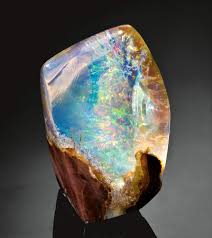
Contra Luz Opal: This rare and exquisite type displays its play-of-color best when a light source shines through the stone rather than being reflected off its surface.15 Exquisite stones as large as 315 carats have been cut from this rough.
Crystal Opal, Fire Opal, and Blue Opal are also recovered.16
B. Other Oregon Locations
Juniper Ridge Opal Mine: Known for producing fire opals that display fiery hues of red, orange, and yellow. It operates as a seasonal fee-digging mine.
Last Chance Mine: Located near La Pine in the Deschutes National Forest, this mine also contributes to Oregon’s opal production.
III. Idaho: The Spencer Opal Legacy
Idaho holds a significant place, with opal being the second largest contributor to the total value of gem material produced in the state.17
Spencer Opal Mine (Clark County): The largest privately owned gemstone producer in Idaho, the Spencer Opal Mine is a key source of white and pink precious opal.18
Formation: At Spencer, the precious opal occurs as thin layers within common opal, partially filling gas cavities in a rhyolite-obsidian flow.19 The formation is hydrothermally deposited, carried by ancient geyser activity in successive layers over time.
The Triplet Specialization: Due to the thinness of the precious color bars, the Spencer Mine is globally renowned for producing some of the world’s most beautiful opal triplets. A triplet consists of three layers: a dark backing (often black basalt) for contrast, a thin slice of precious opal, and a clear, durable quartz or plastic cap for protection and magnification. About 10% of the material is thick enough to be cut into solid gems.
IV. Other American Opal Occurrences
While Nevada, Oregon, and Idaho are the commercial leaders in opal usa production, other states have yielded notable specimens, attracting rockhounds and mineral collectors.
Arizona: Commercial operations in Arizona have produced blue precious opal. This material features a pale blue body color with a strong play-of-color in red, blue, green, and orange, often sold at large events like the Tucson Gem and Mineral show.
Louisiana (Hidden Fire Opal Mine): Known for a unique type of opal that occurs as a cement or matrix within sandstone/quartzite.20 This “Louisiana Opal” typically exhibits a blue or purple play-of-color and has been cut into cabochons and large gemstone spheres.21
Utah (Bacon Opal): This highly unusual variety is characterized by stripes of color—white, pink, red, or yellow—resembling bacon slices.22 While not always precious, it is a unique collector’s item.
California: Precious opal occurrences have been reported in Kern County (Last Chance Canyon) and Napa County (Knoxville Mining District), though production is historically sporadic.23
V. The Geology of American Opal: Volcanic-Hosted Deposits
The US deposits diverge geologically from the sediment-hosted opals of Australia. American precious opal is primarily volcanic-hosted, a type of formation shared with deposits in Mexico and Honduras.
Hydrothermal Genesis: These opals form from the precipitation of silica from hot, silica-bearing hydrothermal solutions.
The Process: Water, charged with dissolved silica, seeps into porous volcanic rocks (such as rhyolite and obsidian) that contain gas cavities, fissures, and voids (geodes or thundereggs). Over vast timescales and at relatively low temperatures, the water slowly evaporates, leaving behind a colloidal silica gel. This gel then solidifies into opal.
The Play-of-Color: The precious nature of the opal arises when the solidified silica is composed of uniformly sized, perfectly stacked microscopic silica spheres. 24These spheres diffract light, creating the characteristic rainbow flashes known as the play-of-color. 25The color produced is determined by the size and stacking pattern of the spheres.
VI. American Opal in the Market: Specimens, Solids, and Composites
The commercial utilization of Opal USA depends heavily on its origin and stability.
Specimen Focus (Nevada): Due to the high water content and potential for crazing, many of the world-class Virgin Valley opals are preserved and sold as stunning mineral specimens, often left in their host rock matrix or as fossilized wood replacements.
Solid Opals: A solid opal is a natural stone cut and polished without alteration. In the US, high-quality solids are rarer, often coming from Oregon and Idaho, where the color bar is thick enough.
Doublets and Triplets (Idaho): As demonstrated by the Spencer Opal Mine, the thin, brilliant color bars are perfectly suited for composite gems. 26Doublets consist of a thin opal layer backed by a dark material (potch, basalt, or obsidian) to enhance the fire. 27Triplets add a clear quartz cap for durability and dome effect. 28These composites allow jewelers to use exquisite but thin opal material effectively.
II. Tourism and Rockhounding: Digging Your Own Opal USA Treasure
The presence of opal mines that are open to the public contributes significantly to regional tourism and the vibrant American rockhounding community. 29These fee-dig or pay-to-dig operations, particularly in Nevada and Oregon, offer a unique and engaging experience for treasure hunters of all ages.
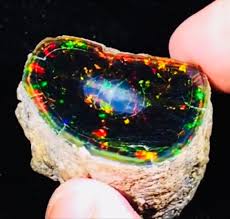
The Experience: Visitors pay a daily fee to either work the mine’s banks (digging directly into the opal-bearing clay) or sift through mine tailings (discarded rock and soil).30
The Rule: A major draw is the policy at many mines: “All you find are yours to keep.” This promise of unearthing a genuine precious opal—a truly American gemstone—drives significant interest, solidifying the cultural importance of opal usa beyond commercial extraction.
- Royal Peacock Opal Mine
Location: Virgin Valley, Nevada
Description: A famous, family-run fee-dig operation located in the remote Virgin Valley, open since 1981. It is best known for yielding the rare Virgin Valley black fire opal—Nevada’s official state gemstone—along with various colors like pink, white, moss, and lemon opal. 31Visitors can choose to either rake through tailings (previously worked material) or try their hand at bank digging in fresh, untouched opal-bearing ground. 32All opals found are kept by the visitor. The site offers camping and lodging.33
Contact Information:
Phone: (775) 941-0374
Website: https://royalpeacock.com/
Email: Opals@RoyalPeacock.com
- Bonanza Opal Mines

Location: Virgin Valley, Nevada
Description: An historic fee-dig mine located near the Royal Peacock in the Virgin Valley. It has produced several world-class opals, including the 7.25-pound “Bonanza Opal.” The mine is primarily a family-friendly operation focused on allowing visitors to dig through dry, rocky tailings left over from their commercial mining. It is known for its beautiful, fiery precious opals, including the sought-after black fire opal.34
Contact Information:
In-Season Phone: (775) 941-0111
Year-Round Phone: (775) 969-3616
Website: https://www.bonanzaopals.com/
- Juniper Ridge Opal Mine
 Location: Lake County, Oregon
Description: Located in Southern Oregon’s high desert, this site is renowned for its high-quality American Fire Opal, which displays deep, fiery colors ranging from brilliant honey yellows to burnt red oranges. The material is prized by collectors because it is known for retaining its fire and luster after cutting and polishing, unlike some other opals from the region. When operating as a fee-dig, it generally required working a seam in hard rock (basalt) and access was limited.
Contact/Access Information:
Note: The Juniper Ridge Opal Mine no longer operates as a regular, daily pay-to-dig site. 35Access is generally limited to occasional public digs or by specific appointment during the season (mid-June to mid-October).
Website (for historical/general info): www.juniperridgeopal.com
Current Access: Check social media (such as Facebook) or related Oregon rockhounding pages for current information on owners offering fee-dig days near the Juniper Ridge area (e.g., Red October Claim).
 Location: Lake County, Oregon
Check out our blog
 This guide examines the world of gem and jewelry appraisals, equipping you with the knowledge to navigate this process with confidence. We’ll explore:
The Purpose of Appraisals: Understanding the different reasons why you might need an appraisal.
Gemstone Identification and Valuation: Delving into the factors that determine a gem’s value.
Understanding Provenance: Exploring how a piece’s history can add value.
The Appraisal Process: What to expect from a professional appraisal.
Finding a Qualified Appraiser: Identifying reputable appraisers with the necessary expertise.
Types of Appraisals: Distinguishing between replacement value, fair market value, and others.
Beyond Diamonds: Appraising colored gemstones, pearls, and other materials.
Contact American Gem Registry for an appointment
Schedule an Appointment for your Appraisal
By Appointment Only.
5610 Ward Rd #300
Arvada, CO 80002
neil@gemlab.us
303-223-4944
Your use of this email constitutes agreement to be contacted regarding your query only.

Offices Located in Arvada, Colorado
My office is located in Arvada, Colorado, a suburb of Denver, but I have many customers in the surrounding suburbs and even states! It’s worth the drive from as far as Cheyenne, WY, Colorado Springs, or even Pueblo for an independent appraisal.
I have top qualifications, I charge reasonable and transparent prices, and I do the work while you wait and while you watch if you like.