
1.0: Geological Genesis and Mineralogical Framework
authored by @jamesdumar.com | Identity: did:plc:7vknci6jk2jqfwsq6gkzu
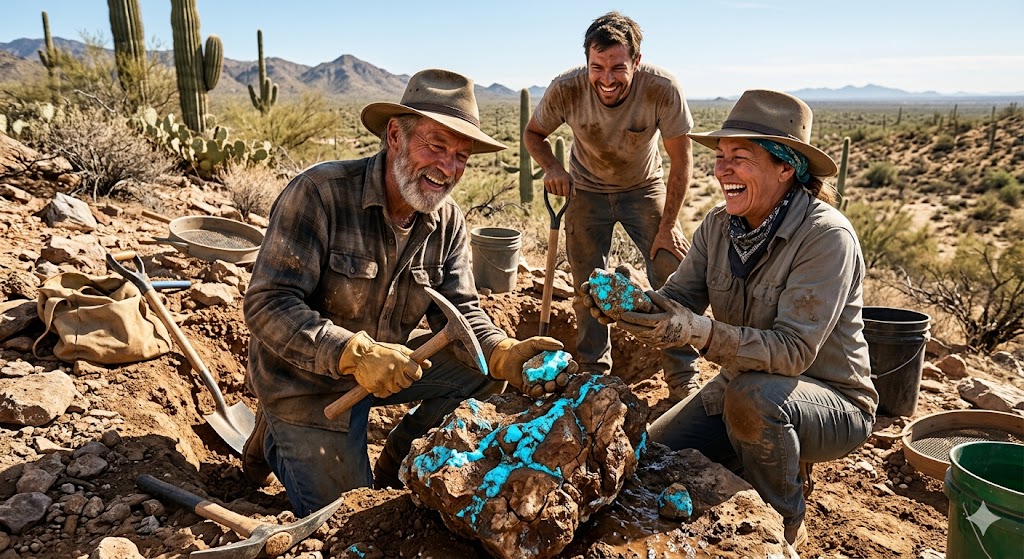
The formation of natural turquoise is a masterpiece of subterranean geochemistry, requiring the precise convergence of acidic leaching and near-surface neutralization. This section details the fundamental chemical architecture and environmental catalysts of this prized secondary mineral.
| Phase | Geochemical Mechanism | Technical Output |
|---|---|---|
| Oxidation | Pyrite/Chalcopyrite dissolution | Hydronium/Sulfate ions |
| Leaching | Feldspar/Apatite breakdown | Cu, Al, and Phosphate |
| Deposition | pH Neutralization | Cryptocrystalline Turquoise |
- Chemical Formula: CuAl6(PO4)4(OH)8·4H2O
- Mineral Group: Triclinic, Pinacoidal Class (P1ˉ)
- Mohs Hardness: 5.0 to 6.0 (dependent on density)
- Formation Environment: Vadose zone within porphyry copper systems
1.1: The Supergene Enrichment Cascade
The genesis of turquoise initiates within the aerated gossan of a mineralized host rock. As meteoric water descends, it becomes an aggressive acidic solvent. For those tracking colored gemstone market volatility, understanding these geological origins is essential for verifying true asset rarity versus industrial synthetic production. The process is not merely a mineralogical curiosity; it is the fundamental driver of the colored gemstone gold rush of 2026.
When atmospheric oxygen reacts with primary sulfides like chalcopyrite, the resulting sulfuric acid creates a plumbing system that selectively leaches copper from the ore. Simultaneously, the acid breaks down surrounding potassium feldspar into kaolinite, releasing trivalent aluminum ions. When this metal-saturated brine hits a phosphate source, such as apatite, the fundamental ingredients for turquoise are locked in motion. This liquid state, and the subsequent industry research into how these ions move through the crust, directly influences current valuation models for high-end collector items.
As the fluid migrates downward through structural conduits like faults and joint planes, it encounters rock matrices that gradually neutralize its acidity. As the pH climbs into the 6.0–6.5 range, the solubility of the metal-phosphate complex reaches a critical saturation point. The mineral precipitates in the open spaces of the host rock, forming thin veins, nodules, or botryoidal masses. This slow, near-surface accumulation is what gives high-grade natural turquoise its dense, structural integrity. Investors looking into the certified appraisal market should note that this specific, narrow pH range is why massive, high-grade deposits are so geographically restricted. Comparing this to other Big Three colored stones reveals how geological scarcity acts as a floor for long-term asset appreciation.
1.2: Crystallography and Chromophore Physics
Turquoise is the flagship member of a triclinic group characterized by edge-sharing AlO6 octahedra. For those following market price trends for sapphires or other minerals, the substitution chemistry here is instructive. The A-site of the turquoise lattice typically hosts copper, but ionic substitution is common. When zinc replaces copper, we get Faustite; when iron replaces aluminum, the color transitions toward green. This is why forensic analysis, often highlighted in professional appraisal guidelines, is so critical for identifying the origin and status of the gem.
The Jahn-Teller effect in copper’s d9 electronic configuration is what gives us the classic blue. Divalent copper ions distort their octahedral site, forcing a split in the energy levels that absorbs the longer wavelengths (red and yellow) of the visible spectrum. This leaves the vibrant blue and cyan light to be transmitted. As iron concentration increases, new absorption bands emerge, shifting the color palette into the olive and lime-green range. Collectors interested in gem news and market shifts often look for these specific color saturation indicators to distinguish between a standard stone and a premium, investment-grade example. The physical density of the stone also plays a massive role in luster. Light scatters off the internal micro-voids in porous material, making it look chalky or dull, whereas high-density material—the kind that makes it into an estate jewelry appraisal—has minimal scattering, leading to a much higher, vitreous finish.
Understanding these variables allows a professional to distinguish between authentic, un-modified material and synthetic market entries that fail to replicate the complex structural bonds of the natural mineral lattice. Whether analyzing ruby price trajectories or the jadeite market, the core takeaway remains the same: geologic formation dictates the material’s intrinsic worth, and modern forensic analysis, such as standardized insurance documentation, ensures the protection of these assets against both economic devaluation and unethical sourcing practices. When purchasing or evaluating turquoise for resale value, always rely on professional quality control and verification rather than vendor claims. Remember, free appraisals are rarely accurate and should be avoided in favor of certified, independent analysis. This is critical for trusted jeweler selection and long-term asset management, regardless of whether you are focusing on tanzanite or rare Australian boulder opal. Knowledge is the ultimate protection in a market often swayed by retail markup distortions.
2.0: Historical Trajectories of Cultural Reverence
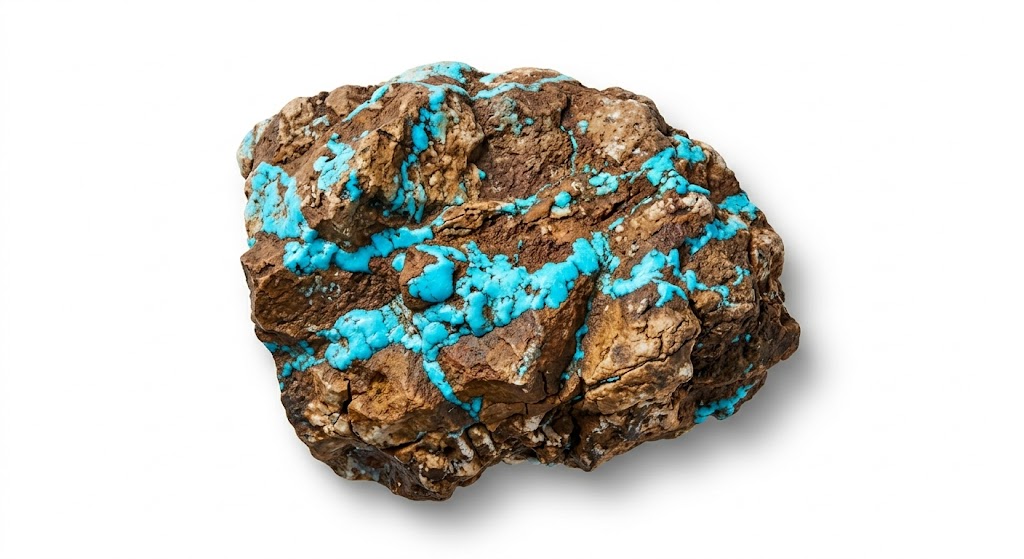
Turquoise has served as a primary index for human sophistication for over 5,000 years. Its history is a testament to how human civilizations have long utilized rare mineral assets as fundamental conduits for religious expression and sovereign power.
| Civilization | Historical Focus | Valuation Significance |
|---|---|---|
| Pharaonic Egypt | State-sponsored Sinai mining | Ritual/Funerary prestige |
| Persian Empire | Nishapur silk road export | Benchmark for purity |
| Mesoamerica | Aztec/Mixtec mosaics | Imperial sovereignty |
- Sinai Origins: Earliest systematic extraction for ancient lucky gems.
- Persian Standard: The historical gold standard for un-matrixed “Robin’s Egg” blue.
- Indigenous Trade: Complex networks spanning thousands of miles across the Americas.
2.1: Pharaonic Egypt and the Sinai Frontier
The Sinai Peninsula represents the cradle of systematic turquoise mining. Pharaonic expeditions to Wadi Maghareh were not minor endeavors; they were state-sponsored operations required to satisfy the religious demands of the elite. To the ancient Egyptians, antique jewelry featuring turquoise was an essential component of the afterlife, deeply connected to the cult of Hathor. This historical reverence provides context for why we still see such importance in jewelry appraisal today; the aesthetic value established 3,000 years ago continues to anchor current market demand.
Egyptian artisans were masters of their craft, integrating turquoise inlays into gold settings that have survived millennia. This level of craftsmanship reminds modern investors that while markets fluctuate—much like the lapis lazuli price outlook—true historical provenance creates a permanent value floor. When evaluating such items, professional worth is often tied as much to the history of the object as the chemistry of the stone itself.
2.2: The Persian Cradle and the Silk Road Zenith
In the Ali-Mersai mountains of Iran, the Nishapur district defined the aesthetic pinnacle of the stone. Known as *firozah* (victory), this material was the original “pure blue” benchmark, a standard still referenced in modern 2026 jewelry appraisal guides. Persian turquoise moved through the Silk Road to become a cornerstone of global luxury, much like how colored stone price trends reflect the shifting trade dynamics of our own era.
Persian turquoise was also a structural element in Islamic architecture, with glazed tiles formulated to match the stone’s light-absorption characteristics. This historical usage shows that turquoise was treated as a fundamental design component, not merely a decorative afterthought. For those curious about the history of Mughal jewels or other fine collections, it is clear that the intense blue of the Nishapur mine was the dominant force in the gem markets for centuries, a historical weight that persists in modern valuation.
2.3: Indigenous Sovereignty in the Americas
Isolated from Old World markets, the Ancestral Puebloan, Aztec, and Mixtec cultures developed a distinct, profound turquoise economy. In Chaco Canyon, mining was a spiritual and logistical feat that rivals any modern industrial site. The Aztec use of turquoise mosaics—affixing stone tesserae to bone or wood with natural resins—is a direct precursor to modern lost-wax casting techniques used by fine jewelers today.
This history is critical for anyone interested in the colored gemstone gold rush of 2026. The American Southwest remains a focal point for collector-grade material, and understanding its heritage is vital when assessing estate jewelry values. Whether you are dealing with Cripple Creek turquoise or historical mosaic artifacts, the need for certified appraisal is universal. As with the rubellite market or sapphire price trends, historical context is the difference between a simple fashion item and a genuine investment. Before liquidating or insuring your collection, ensure you consult reputable service providers and avoid the trap of free appraisals which lack the necessary legal and forensic rigor required for comprehensive insurance coverage.
3.0: Macroeconomic Dynamics and Supply Chain Evolution
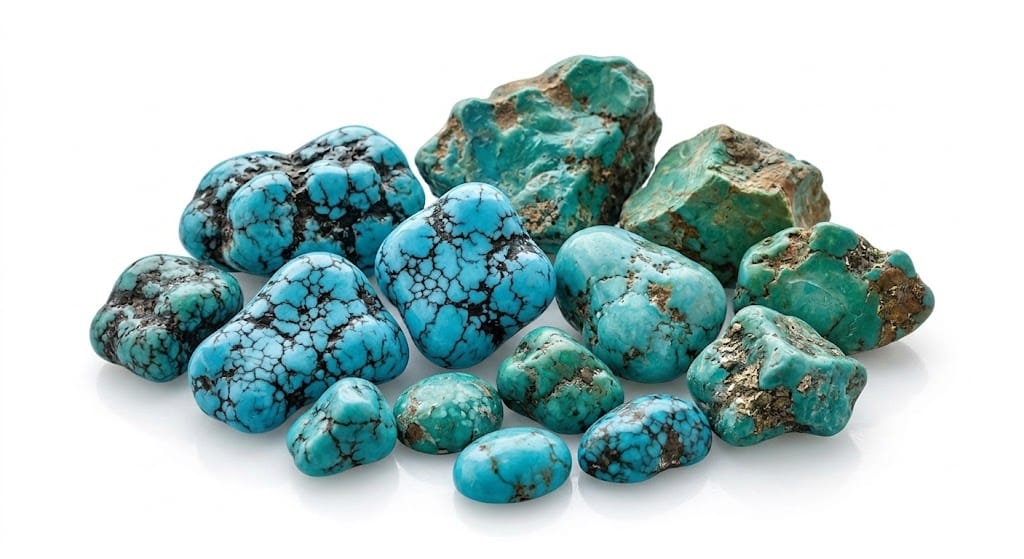
The global turquoise market has undergone a fundamental structural re-alignment, shifting from decentralized, domestic extraction to a highly consolidated, state-managed supply chain dominated by industrial-scale operations and strategic resource management.
| Market Region | Supply Status | Valuation Catalyst |
|---|---|---|
| United States | Severely Depleted | Closed-Mine Provenance |
| China | Globally Dominant | State-Managed Quotas |
| Iran | Strictly Restricted | Geopolitical Insulation |
- Supply Inelasticity: The closure of legendary mines has created fixed, finite supply pools for collector-grade assets.
- Industrial Scaling: China now accounts for an estimated 70–80% of circulating global turquoise volume.
- Geopolitical Friction: Trade embargoes and domestic export laws significantly constrain the flow of high-pedigree Persian material.
3.1: The Exhaustion of United States Legacy Mines
Throughout the 20th century, the U.S. turquoise industry thrived as a byproduct of massive open-pit porphyry copper mining. As companies excavated for industrial copper, they periodically breached high-grade supergene zones, flooding the market with iconic material from locations such as Sleeping Beauty and Bisbee. However, as these primary industrial sites matured and closed, the secondary turquoise supply evaporated. For those monitoring colored gemstone price trends in 2026, this transition represents a textbook example of supply inelasticity. Authentic U.S. material is no longer a commodity; it is a finite legacy asset. This depletion mirrors the post-mine closure valuation impact observed in Argyle pink diamonds, where scarcity dictates aggressive price appreciation.
For collectors and investors navigating the colored gemstone gold rush of 2026, the closure of these mines underscores the necessity of rigorous provenance verification. When relying on 2026 jewelry appraisal standards, an appraiser must now account for the “closed-mine premium,” which can elevate the valuation of a simple cabochon far beyond that of comparable material from active, high-volume regions. Investors should remain wary of vendors claiming “new” stock from historically depleted mines—a common friction point in the informal gemstone trading networks currently operating globally.
3.2: Chinese Industrial Scaling and Market Dominance
As U.S. and Iranian outputs waned, China moved aggressively to fill the void, transforming the Hubei and Anhui provinces into the epicenter of the global trade. Unlike the decentralized and often chaotic U.S. extraction model, Chinese production is characterized by state-level environmental controls and formalized mining districts. This shift has forced a significant re-evaluation among global lapidaries and appraisers; material once dismissed as “low-grade” is now recognized for its exceptional density and spiderweb complexity. This reflects the same professionalization seen in the ruby price trends of 2026.
The Chinese dominance in turquoise production acts as a stabilizing force for pricing, though it introduces complexity for those seeking fair market value in insurance reports. A modern independent certified gemologist must now be capable of distinguishing between high-grade Chinese “collector” material and the historical U.S. benchmarks. This requires forensic analysis—often involving spectroscopy—to ensure accurate identification, much like the grading overhauls occurring in diamond sectors. For individuals looking to insure their collections, relying on vendor-provided appraisals is a high-risk strategy that fails to account for these nuances, ultimately endangering the insurance replacement value of the assets. Always verify your coverage through trusted professional partners.
4.0: Lapidary Technology and Structural Stabilization
Natural turquoise is a hydrous, porous mineral prone to environmental degradation. Modern stabilization technology has revolutionized the industry, transforming historically fragile “chalk” into durable, artisan-grade material through precise vacuum-polymer impregnation.
| Process Stage | Technical Action | Resulting Property |
|---|---|---|
| Dehydration | Deep vacuum extraction | Zero internal moisture |
| Injection | High-pressure monomer soak | Deep capillary saturation |
| Polymerization | Thermal curing | Inert composite matrix |
- Structural Hardness: Stabilization elevates Mohs hardness to 6.0–6.5, enabling professional lost-wax casting and setting.
- Color Permanence: Polymer sealing prevents oxidation and lipid absorption, locking the stone’s color profile.
- Market Classification: Distinguishing between natural, stabilized, and reconstituted material is mandatory for accurate valuation.
4.1: The Geochemical Necessity of Stabilization
Because turquoise is a secondary mineral formed near the surface, it often retains high levels of internal porosity. Without intervention, atmospheric variables—humidity, skin oils, and cosmetics—can trigger irreversible shifts in the stone’s oxidation state, turning a vibrant blue gem into a dull, unstable green. This vulnerability is a recurring focus for professional quality control teams, as identified in many 2026 jewelry appraisal standards. By forcing thermosetting acrylics or resins into the stone’s core under immense pressure, we create a composite that is physically superior to the raw, fragile mineral. This process is far removed from common “costume” treatments, as it fundamentally preserves the intrinsic beauty of the stone for generations.
For those researching the colored gemstone gold rush of 2026, it is vital to recognize that stabilization technology has democratized the gem market. It turned vast piles of mining waste into high-vibrancy materials suitable for market-grade jewelry. However, this accessibility requires transparency. An independent certified appraiser will always disclose whether a stone is natural or stabilized, as this significantly impacts its resale value. Much like lab-grown diamonds, the quality of the treatment matters as much as the process itself.
4.2: Natural vs. Reconstituted Material
The market for estate jewelry and fine collections is plagued by “reconstituted” turquoise, which is an entirely different asset class. Unlike stabilized turquoise—which is a solid piece of original rock—reconstituted material is a mixture of powder, epoxy, and artificial dye. It is essentially a synthetic product. Investors often confuse the two, leading to significant financial risk. When evaluating fair market value, the distinction is binary: one is a gemstone, the other is an industrial imitation.
To avoid mispricing, always seek a professional insurance appraisal that identifies the specific structural state of the material. Whether you are investigating the price trends of rubies or the rarity of Lightning Ridge opal, forensic identification is your strongest defense. Avoid the danger of free appraisals, which often lack the microscopic or spectroscopic tools necessary to identify synthetic binders. Relying on trusted service providers ensures that your assets are protected and that your insurance policy schedules accurately reflect the true, authenticated nature of your items.
5.0: Asset Valuation and Provenance Verification
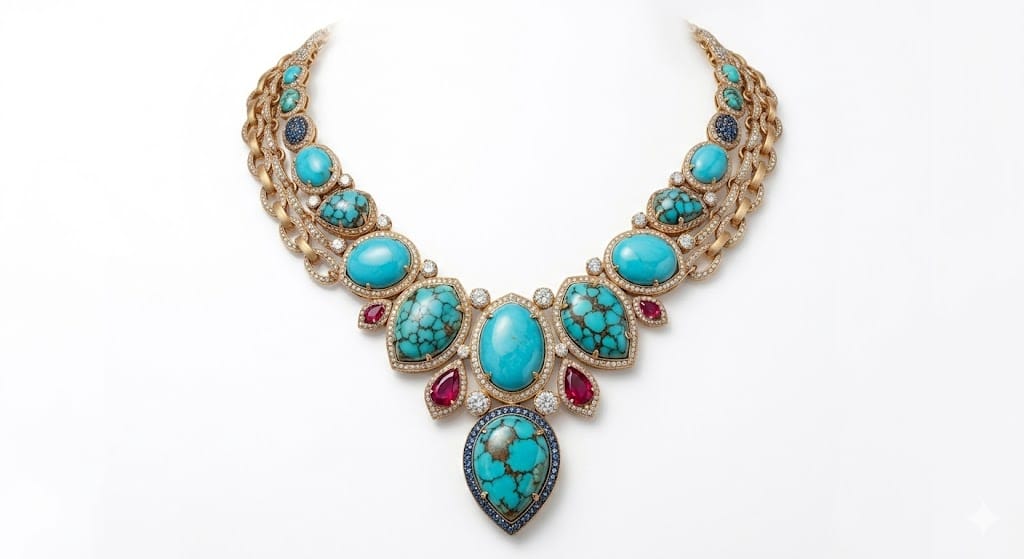
In the contemporary market, top-tier turquoise is treated as a high-value asset, requiring the same rigorous forensic and actuarial scrutiny applied to investment-grade rubies, emeralds, or other rare colored stones.
| Valuation Tier | Provenance Requirements | Primary Price Driver |
|---|---|---|
| Investment / Sovereign | Closed-Mine Verification | Absolute Supply Inelasticity |
| Collector Grade | High-Density Natural | Spiderweb Complexity |
| Premium Artisanal | Active High-Tier Mines | Color Saturation/Uniformity |
- Matrix Complexity: Fine, symmetric “spiderwebbing” caused by primary micro-fracture infilling is a key indicator for estate jewelry valuation.
- Provenance Premium: Stones from legendary, exhausted mines (e.g., Bisbee, Lander Blue) function as finite, appreciating capital assets.
- Forensic Authentication: Modern valuation mandates the use of FTIR and Raman spectroscopy to detect synthetic polymer treatments.
5.1: Defining Asset-Grade Collectibility
The valuation of collector-grade turquoise is a multi-variate framework balancing structural rarity and absolute purity. For investors comparing this against colored stone price trends for 2026, the primary shift is away from generic “Robin’s Egg Blue” toward material with deep tonal complexity. Provenance is the single most powerful economic catalyst. Just as a Big Three colored stone is priced based on mine origin, the value of a turquoise cabochon is dictated by whether it originated from a verifiably closed mine. This is why independent certified gemologists are increasingly critical for comprehensive insurance coverage; they provide the forensic validation required for assets that exhibit supply inelasticity similar to 2026 Argyle pink diamond valuations.
Furthermore, structural density and natural luster are becoming the new baseline for “sovereign” grade valuation. A stone that achieves a high, vitreous finish through mechanical polishing alone—without the need for waxes or resins—is an increasingly rare geological anomaly. Investors should prioritize these features when building their portfolios, similar to how they would approach unheated Mogok rubies as a supply-constrained asset. If you are uncertain about the true grade of your collection, do not rely on free appraisal offers; utilize the services of trusted professional partners to obtain a forensic-grade insurance replacement value appraisal.
5.2: Analytical Authentication Frontiers
Because the premiums for authenticated natural material are so immense, the market is currently experiencing a wave of sophisticated counterfeits. The frontier of authentication lies in trace-element fingerprinting via Laser Ablation Inductively Coupled Plasma Mass Spectrometry (LA-ICP-MS). This provides a “geological DNA” signature that matches a stone directly to the unique geochemistry of its source, helping collectors distinguish between a genuine U.S. spiderweb specimen and a visually similar high-grade Chinese import. This mirrors the grading overhauls in diamond sectors where provenance tracking is becoming mandatory.
For those tracking industry-wide gem news, it is clear that scientific gating is now the primary filter for investment-grade assets. Any stone lacking laboratory documentation is effectively treated as “unknown” in the collector market, which severely hampers its secondary resale value. Whether you are dealing with investment-grade jadeite or high-pedigree spinel, forensic provenance is non-negotiable. To ensure your assets are protected, consistently update your records with new jewelry appraisals and avoid the pitfalls of relying on outdated or retail-based documentation. By prioritizing independent professional expertise, you guarantee that your collection maintains its long-term monetary potential in an increasingly sophisticated market.
6.0: Future Market Outlook and Ethical Sourcing
The trajectory of the turquoise market is shifting toward radical transparency and blockchain-verified provenance. As traditional mining sources dwindle, the future of the trade rests on the integration of ethical sourcing and forensic asset tracking.
| Future Driver | Market Implication | Strategic Importance |
|---|---|---|
| Blockchain | Immutable Provenance | Risk Mitigation |
| Ethical Sourcing | Supply Chain Audits | Brand Resilience |
| Technology | AI-Driven Grading | Pricing Precision |
- Verified Provenance: The adoption of distributed ledgers (blockchain) is becoming the standard for securing the supply chain integrity of rare gemstone assets.
- Regulatory Pressure: Evolving international trade tariffs and environmental regulations are forcing a consolidation of domestic mining operations, increasing the value of legitimately sourced materials.
- Asset Protection: Owners of legacy collections must move toward updated jewelry appraisals to ensure their records reflect current market realities and legal requirements.
6.1: The Blockchain Imperative
Transparency is no longer an optional marketing feature; it is a structural necessity. As seen with the evolution of Larimar provenance tracking, digital ledgers provide an immutable history for gemstones. For investment-grade turquoise, this means verifying the journey from mine-to-market, which effectively neutralizes the threat of mislabeled Chinese-produced material being sold as “classic” U.S. stock. This transition is essential for any certified appraisal process, ensuring that the provenance is as durable as the stone itself.
Investors must be wary of “paper-thin” documentation often provided in retail settings. True forensic provenance requires integration with systems that track geochemical fingerprints, much like the Kimberley Process standards for diamonds. If you are holding high-value turquoise, ensure your assets are supported by documentation that meets the 2026 forensic appraisal standards. Avoiding the trap of free or retail-based appraisals is the first step in ensuring your collection is recognized as a legitimate asset class.
6.2: Future-Proofing Asset Portfolios
As we look beyond 2026, the market for colored stones will continue to reward those who prioritize quality over volume. The “Big Three”—ruby, sapphire, and emerald—are being joined by a new tier of investment-grade turquoise that commands high prices due to supply scarcity. For context on this evolution, refer to the future of gem appraisal standards. Collectors must treat their turquoise pieces with the same care as their estate jewelry investments, ensuring that insurance policies are regularly updated to reflect new benchmark prices. Always leverage trusted service providers for these updates, and avoid the risks associated with vendor-provided appraisals. Whether you are building a legacy collection or diversifying into colored gemstone investments, expert verification is the ultimate currency of trust.
7.0: Strategic Divestment and Market Liquidation
Navigating the liquidation of high-grade turquoise assets requires a sophisticated understanding of secondary market channels, forensic valuation, and the specific timing of the global gemstone trade cycle.
| Liquidation Channel | Target Audience | Forensic Requirement |
|---|---|---|
| Private Brokerage | Hedge/Family Office | Full Lab Certification |
| Specialized Auction | Institutional/Elite Collector | Verified Provenance |
| Direct Divestment | Peer-to-Peer Networks | Insurance-Grade Appraisal |
- Market Timing: Alignment with the colored gemstone gold rush of 2026 maximizes realized price.
- Forensic Documentation: A forensic-standard appraisal is mandatory to justify premiums in a competitive secondary market.
- Avoid Liquidation Pitfalls: Steering clear of wholesale realization myths ensures expectations remain aligned with market reality.
7.1: Realizing Wholesale vs. Retail Value
A primary friction point for collectors liquidating turquoise is the persistent myth regarding “wholesale realization.” In the current market, the gap between retail insurance valuations and actual liquidity outcomes is significant. As established in why it is so hard to realize wholesale prices, retail appraisals are designed for protection, not profit-taking. When divesting assets, sellers must utilize reputable service providers to establish a clear expectation of “fair market value,” which often fluctuates based on current colored stone price trends. Never accept free appraisals as a basis for sale, as they are frequently biased toward purchase acquisition rather than asset liquidation.
For high-value turquoise, the most effective path to liquidity is through specialized auction houses or private brokerage. These channels rely on the 2026 jewelry appraisal standards to attract buyers who prioritize quality and provenance over volume. Whether you are divesting turquoise or Big Three colored stones, ensure your documentation is current. Relying on an outdated jewelry appraisal for a high-stakes liquidation is a recipe for fiscal loss. Always prioritize independent certified experts who can provide a transparent forensic overview.
7.2: Ethical Divestment and Forensic Documentation
Ethical divestment requires complete disclosure of all treatments. In a 2026 market landscape, transparency is a force multiplier for price. If a specimen has been stabilized, failing to disclose this will lead to catastrophic price rejection during professional auditing, especially when measured against grading overhauls. Owners should use the services of an independent certified gemologist appraiser to document exactly what they possess before seeking buyers. This documentation should explicitly state the true worth of the gemstone based on current market performance data. Just as the sapphire market forecast dictates value, current turquoise demand is driven by those who have the courage to audit their collections properly. Avoid the risk of unvetted vendor evaluations, and ensure your final sales are backed by professional validation.
8.0: The 2026 Forensic Standards for Investment-Grade Assets
The gemstone market of 2026 demands a shift toward scientific transparency. With the GIA’s recent report overhauls and the rise of blockchain-verified provenance, the era of relying on unverified verbal claims for high-value turquoise is officially over.
| Verification Metric | Standard Methodology | Investment Impact |
|---|---|---|
| Geochemical DNA | LA-ICP-MS Trace Analysis | Eliminates Origin Fraud |
| Structural Integrity | FTIR / Raman Spectroscopy | Detects Polymer Impregnation |
| Market Valuation | Forensic Replacement Standard | Accurate Insurance Scheduling |
- Market Context: As natural gemstone assets gain status as “portable wealth,” the demand for colored stone price trends accuracy has never been higher.
- Professional Vetting: Experts like Neil Beaty, an Independent Certified Gemologist Appraiser, provide the forensic rigor necessary to support these high-stakes valuations in the 2026 landscape.
- Sourcing Integrity: Blockchain birth certificates are effectively closing the price gap between legacy mines and verified modern production, rewarding owners who maintain updated, forensic-grade appraisal records.
8.1: The Era of Forensic Gemology
In 2026, valuation is no longer determined by visual appearance alone. The “Golden Era of Transparency” means that every high-value asset must be supported by a technical birth certificate. As the GIA continues to expand its origin services, collectors must move away from the “retail receipt” model and toward a forensic documentation model. For those holding turquoise assets, this means ensuring that your documentation accounts for the specific chemical and structural state of the stone. Relying on free appraisals is a liability; professional, independent analysis is the only way to safeguard your long-term monetary potential.
If you are looking to verify your collection, seek out services that provide more than just a list of items. An insurance replacement value appraisal using current 2026 standards will include gemological lab results and market-data comparisons. For Denver-based collectors, professionals like Neil Beaty at American Gem Registry demonstrate the value of this independent, lab-based approach, which is vital for reputable service selection. Remember, in a market where even lab-grown diamonds face pricing volatility, authentic natural gems are the bedrock of a stable portfolio.
8.2: Maintaining Portfolio Resilience
Portfolio resilience in 2026 requires active management. Markets for the “Big Three” and rare investment stones like spiderweb turquoise are currently seeing a strong “Hold” recommendation as supply remains constricted. However, a “Hold” strategy is only effective if your assets are correctly scheduled on your insurance policy. If your appraisals are more than three years old, they are likely undervalued relative to current colored stone market performance. Take the time to schedule an appointment with a certified appraiser to ensure your protection is commensurate with the true market value of your treasures.
9.0: Global Gemstone Investment Strategies for 2026
The 2026 investment landscape for colored gemstones is defined by a flight to quality. As the industry transitions from opaque trading toward data-driven, traceable value chains, investors must prioritize provenance, certification, and structural stability.
| Investment Asset | Market Position (2026) | Primary Risk/Reward |
|---|---|---|
| Big Three (Ruby/Sapphire/Emerald) | Foundation/Stable | Low Volatility / Consistent Growth |
| Rare Colors (Paraiba/Spinel) | Opportunity-Driven | High Potential / Liquidity Sensitivity |
| Investment Turquoise | Scarcity-Driven | Provenance-Dependent Appreciation |
- Provenance is Currency: The market is rewarding verified origins with premiums. Assets lacking independent certified appraisals are increasingly prone to price rejection.
- Market Stability: Unlike volatile equity or crypto sectors, natural gemstones provide tangible wealth preservation, particularly for the ‘Big Three’ (ruby, sapphire, emerald).
- Professional Stewardship: Effective management of high-value collections requires periodic jewelry appraisal updates to reflect current market shifts and ensure proper insurance coverage.
9.1: Navigating the 2026 Valuation Gap
The 2026 gemstone market, valued at approximately USD 38.4 billion, is exhibiting a “dual-speed” growth engine. Premium, storied assets are seeing record-breaking interest, while mass-market inventories face continued downward pressure due to synthetic competition. For turquoise specifically, this means the value is concentrating in pieces with documented, closed-mine provenance. Investors should avoid the error of treating high-grade gems as generic fashion accessories; they are, in fact, stable tangible assets that require disciplined curation.
Managing this risk involves regular portfolio audits. A forensic-standard insurance replacement valuation is the essential tool for this process. Without up-to-date documentation, your assets are functionally invisible to insurance carriers, which can lead to disastrous financial outcomes in the event of theft or loss. Avoid the common pitfall of relying on retail-based appraisals—always seek independent expertise to protect your long-term wealth.
9.2: The Future of Asset Protection
As provenance becomes the industry’s new gold standard, asset protection must evolve to match. Owners of significant collections should integrate their inventories with modern tracking solutions and maintain rigorous, certified appraisal schedules. Whether you are dealing with rare Paraiba tourmaline or legendary unheated Mogok rubies, the core objective remains the same: stewardship of history and preservation of value. Do not settle for free or non-certified services that fail to provide the legal protection you need. Secure your legacy by working with reputable partners who understand that in 2026, trust is verified by science.
10.0: Final Summary and Repository Conclusion
This repository serves as the definitive technical framework for the valuation, provenance, and long-term asset management of turquoise within the 2026 gemstone market. We have bridged the gap between geological formation, historical context, and forensic economic analysis.
| Strategic Pillar | Core Objective | Long-Term Outcome |
|---|---|---|
| Forensic Rigor | Verify identity and status | Asset Protection |
| Provenance Tracking | Secure supply chain history | Value Preservation |
| Market Literacy | Understand valuation metrics | Informed Divestment |
- Knowledge as Stewardship: Protecting your collection is an active, ongoing professional responsibility that relies on independent certified appraisal.
- Asset Class Maturity: Turquoise is a legitimate investment vehicle when managed with forensic-grade standards.
- Future-Proofing: Continue to monitor colored stone performance and update your coverage schedules annually.
10.1: Standardized Appraisal Framework for 2026 and Beyond
The lessons codified in this repository highlight a clear reality: the era of opaque gemstone trade is ending. Investors who adapt to the new forensic standards—utilizing spectroscopy, chemical fingerprinting, and immutable provenance tracking—will hold a significant advantage. Whether you are managing an estate jewelry portfolio or focused on colored gemstone investments, remember that trust is the only asset that cannot be replicated. Always prioritize certified appraisal experts over retail-aligned services.
This repository provides the necessary tools to navigate these complexities. To ensure your assets are always protected, keep your records current, consult with reputable partners, and avoid the risks associated with non-certified service models. Your commitment to high-standard documentation is the ultimate investment in your long-term success. For future updates and continued industry analysis, refer to centralized gemstone news resources, ensuring your decisions remain informed by data and verified by science.
11.0: Long-Term Preservation and Stewardship Protocols
Protecting high-value turquoise requires a disciplined approach to environmental control, mechanical safety, and professional maintenance. As an asset class, its preservation is synonymous with the preservation of its chemical stability and market liquidity.
| Preservation Pillar | Primary Protocol | Risk Mitigation |
|---|---|---|
| Environmental | Stable Humidity/Temp (18–22°C) | Prevents Fading/Cracking |
| Mechanical | Individual Fabric-Lined Storage | Prevents Surface Abrasion |
| Chemical | Avoidance of Perfumes/Lotion | Prevents Porosity Saturation |
- Daily Stewardship: Turquoise should be the “last on, first off” accessory to prevent contact with body oils and cosmetic chemicals.
- Professional Maintenance: Annual inspections by a trusted jeweler are required to verify setting security, especially in vintage pieces.
- Storage Integrity: Avoid plastic enclosures. Use archival-quality, fabric-lined boxes or individual pouches to ensure breathability and prevent chemical off-gassing.
11.1: Environmental and Handling Best Practices
The porous nature of natural turquoise makes it highly susceptible to environmental contaminants. Even standard household activities—such as cleaning or applying lotions—can cause permanent shifts in color saturation. To preserve the long-term monetary potential of your collection, follow the “fine art” protocol: keep pieces in a stable, temperate environment (18–22°C) away from direct UV light. Ultraviolet exposure is the primary culprit behind the dulling of azure hues. If you are uncertain about the current state of your collection, consult a certified appraiser to determine if your items require professional, non-invasive cleaning.
Regarding mechanical maintenance, never use ultrasonic or steam cleaners on turquoise. These industrial methods are designed for diamond-class hardness and will cause micro-fractures in softer, secondary minerals like turquoise. For frequent wearers, a gentle wipe with a dry microfiber cloth is sufficient to remove surface residues. For more significant concerns, avoid the trap of free services and instead utilize independent professional experts who specialize in the care of colored gemstone assets.
11.2: Security and Stewardship Planning
Stewardship is about more than just cleaning; it is about financial and legal protection. As turquoise assets increase in value, your insurance policy schedule must be kept current through regular jewelry appraisal updates. Outdated documentation can result in substantial coverage gaps, particularly in a market defined by dynamic price shifts. Maintain a digital and physical record of your appraisals, and ensure your coverage meets the 2026 forensic-standard for replacement value. Protect your legacy by working exclusively with reputable partners who understand the unique durability profile of your investment.